Repointing means raking out the worn mortar between the bricks and filling the joints with fresh mortar. On a chimney stack that is more than tidying. The stack stands above the roof with every face exposed, so rain, frost and wind work on the joints harder than they do anywhere on the walls below. When the mortar goes, water gets into the brick, the brick starts to flake, and what was a small job becomes a bigger one.
Done at the right time, repointing is one of the cheaper chimney jobs and one of the most useful. Done too late, it cannot rescue brick that has already gone soft. This guide covers the signs to look for from the ground, how often a stack tends to need attention, how the mortar is chosen for old and new brick, how the work is reached safely, and what changes the cost. It forms part of our chimney repairs service, and it is written for owners who want to understand the job before anyone climbs up to price it.
Signs a stack is ready for repointing
You can learn a fair amount with binoculars and a clear morning. Stand back from the house, look at each face of the stack in turn, and compare it with a wall you can see close up.
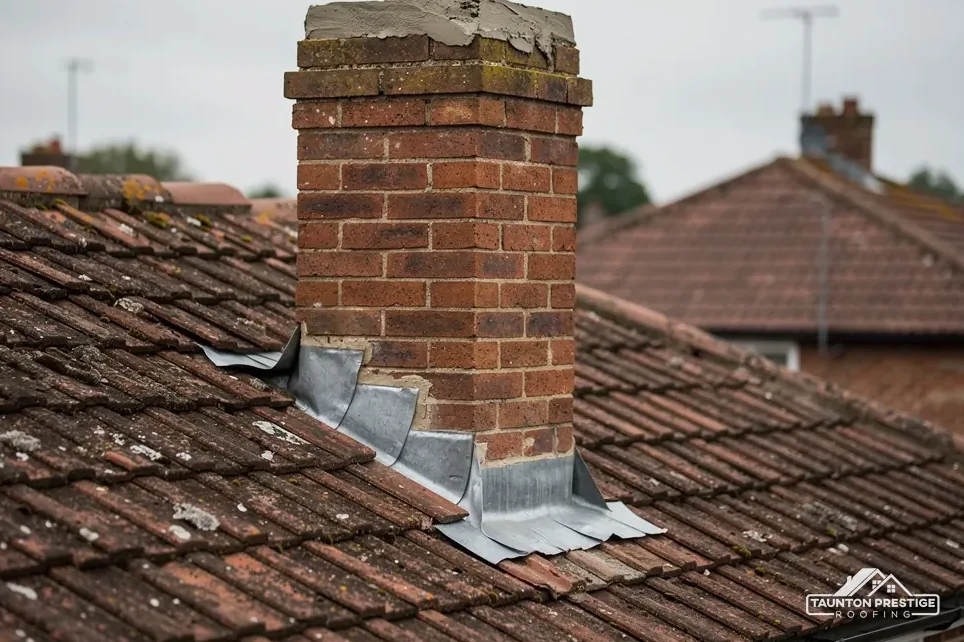
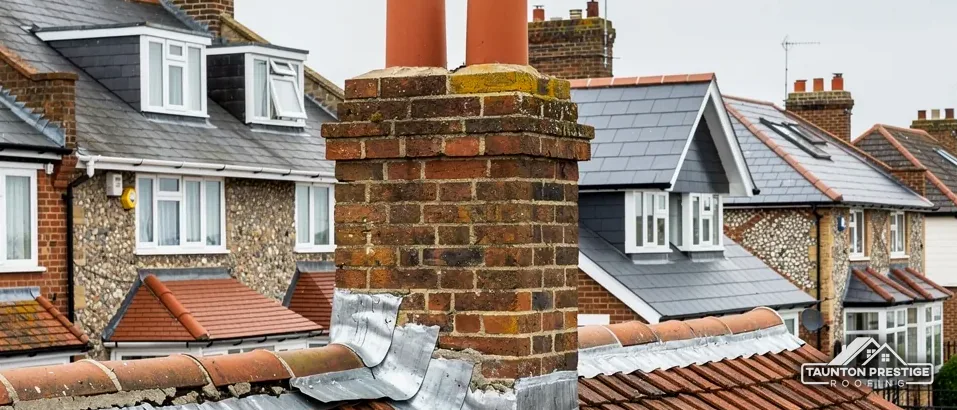
- Joints that are recessed deeply, so each brick looks like it sits in a groove.
- Mortar that is crumbly, sandy or missing in patches.
- Fine grit or small pieces of mortar in the gutter, on a flat roof below or on the ground.
- Dark streaks or damp patches on the brick, especially on the weather side.
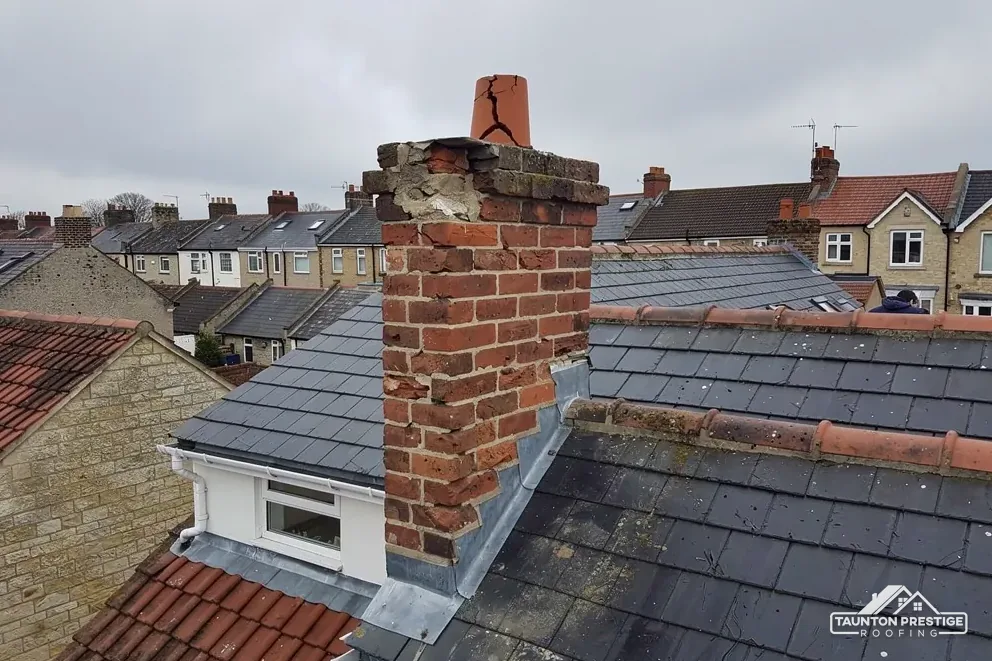
- Bricks that have started to lose their face, the outer skin that gives the brick its colour.
Is it only the mortar that has failed?
That is the first question at the survey. If the bricks are sound, new mortar will grip and the stack is good for many more winters. If the bricks are soft or splitting, pointing alone will not hold, and we tell you before you pay for it. Crumbling brick is a bigger job than pointing, and it changes the plan.
Look at the pots and the mortar bed around them as well. Flaunching that has cracked lets water into the top of the stack, and repointing below it will not stop that. The same goes for lead flashings that have lifted from the brick, which let water run behind the joints.
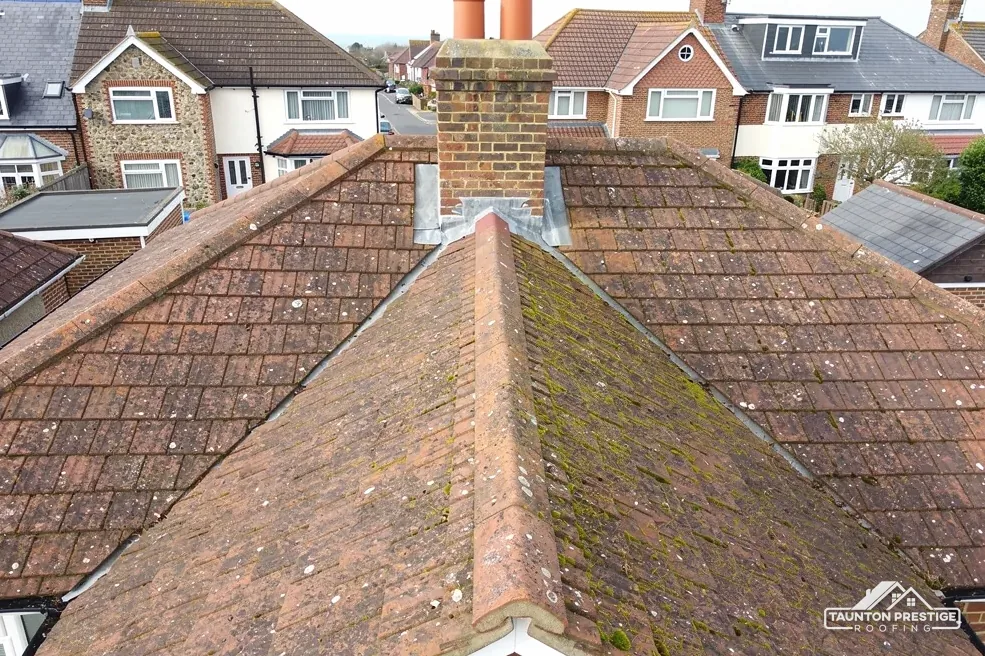
Photos taken from the ground are useful, though from the ground they hide the worst joints, the ones along the top courses.
One more sign worth a glance: a stack that has been repointed before. Patches in a different colour, or joints standing proud of the brick, mean an earlier repair that may have used the wrong mix, and that deserves a closer look.
How often does a chimney need repointing?
People want a number, and no honest number exists. A stack on a sheltered street in Taunton, built in hard brick with a good mortar, may go decades without needing attention. A stack on an exposed farmhouse in the Blackdown Hills, in softer brick and an older mix, can need looking at much sooner. How long yours lasts is set by its exposure, its brick and the mortar already in the joints, and the survey of your own stack is what settles it.
What decides how long pointing lasts?
Four things matter most. First, exposure: a gable stack facing the prevailing weather wears faster than one tucked beside a ridge. Second, the brick, since soft old brick sheds water differently from hard modern brick. Third, the mortar, which should be a sensible match for the brick around it. Fourth, the details above the stack, because a failed flaunching or flashing floods the joints with water.
How do I know when it is time to look?
Check the stack by eye once a year, usually after the winter, and after any storm that has moved slates or pots. Our chimney flaunching page explains the top detail that is easiest to miss.
If you cannot see the stack well from the garden, a roofer can photograph it from a safe position and send you the pictures. That is a cheaper way to keep an eye on it than waiting for damp to appear inside.
An older house with a stack that has never been touched may be overdue, and one that was repointed badly may need it again sooner than it should.
Choosing the mortar: lime, cement and matching
The mortar is chosen for the brick, not for the roofer's convenience. A joint that is much harder than the brick makes the brick take the wear, and the brick faces start to pop off. On older brick the mortar is usually meant to be softer than the brick, so the joint wears first and can be renewed.
When is lime mortar the right choice?
On older houses with soft brick, lime mortar is the usual answer. It lets moisture move out through the joint instead of through the brick. Newer stacks in harder brick often take a cement-based mix that suits them. We write the proposed mix into the survey notes, and you are welcome to ask why. Our page on lime mortar on chimneys explains the differences in more detail.
Does the colour matter?
Yes. Mortar colour and joint profile change how a stack looks from the street. Matching the old joint, flush, struck or recessed, is part of doing the job properly. A bright grey patch on an old red-brick stack stands out for years.
On a listed house or one in a conservation area, a change of mortar may need consent. The council can confirm what applies, and checking beats guessing.
Sand matters too. Its colour and grain decide how the finished joint looks once it has weathered, so the sand is matched along with the binder.
Ask any roofer who prices your stack what mortar they propose and why. A clear answer about the brick, the mix and the joint finish tells you the job has been read properly.
Reaching the stack safely
Access is half of a chimney job. A stack cannot be pointed well from a ladder leaning on the roof, because the roofer needs both hands free and a firm place to stand.
Is scaffold always needed for repointing?
On most houses, yes. A scaffold with a platform all round the stack gives a safe place to work, keeps tools from falling and lets the roofer see every joint. On some low or single-storey stacks a scaffold tower or a roof ladder with a safe working position is enough. We say which at the survey and show you why.
Scaffold is often a large share of a chimney bill. How much depends on how high the eaves sit, how many sides of the house it must reach, how long it stands and whether it sits on the highway. Look at whether each quotation shows scaffold and VAT as included.
Does a chimney scaffold need a licence?
If the platform takes up pavement, section 169 of the Highways Act 1980 makes the highway authority the authority that issues the licence. Each authority words its rules differently, so ask who applies before the scaffold goes up. Our page on scaffolding for chimney repairs covers the planning of access.
Scaffolding is also the moment to do the other jobs on the stack. With the platform up, a loose pot, a cracked flaunching or a worn flashing costs far less to put right than it would on a second visit.
Whichever way the stack is reached, ask who is responsible for the platform while the work goes on, and that the ground below is cleared or fenced. Sites should be tidy and safe for everyone, including the people next door.
What the work involves, day by day
A repointing job is steady, quiet and mostly done in a day or two once the scaffold is up. Knowing the order helps you spot a rushed one.
- The joints are raked out, cutting back the worn mortar to a sound depth without damaging the brick edges.
- Dust and loose material are brushed and blown clear, and the brick is dampened so it does not pull water out of the new mortar.
- New mortar is pushed firmly into every joint and finished to match the old profile.
- The finished joints are brushed back once they have started to set, and the stack is checked from every side.
- Flaunching and flashings are checked, and any weak ones are dealt with before the scaffold comes down.
Will it make a mess inside?
It should not. The work is outside, but a chimney that is open inside may drop dust into the grate. We ask you to cover the hearth and tell you if the flue needs sealing for the day.
What if I find more once the old mortar is out?
It happens. Raking out sometimes shows a brick that has gone soft behind its face. We stop, show you a photo and talk through the options before carrying on. A quiet day of extra work is better than a stack that has been pointed over a problem.
Each day ends with the stack swept, the tools gone and the debris cleared from the roof, and you are told what happens the next morning. If rain stops the work, the joints already done are protected, and we come back when it is dry.
What decides the price and your next step
MyJobQuote (Oct 2026) gives £450 to £1,200 as the typical UK range when repointing a chimney. Where a particular stack falls depends on a handful of things we can name.
- The size of the stack and how many faces are showing above the roof.
- The depth of the old mortar to be removed and the condition of the brick.
- Whether lime mortar is needed and whether the colour has to be matched.
- The access, since scaffold may be a large part of the figure.
Is repointing the cheaper option?
Usually, if the brick is sound. A stack that needs rebuilding costs far more than one that was pointed in time, and the difference is why a yearly look from the ground is worth the minute it takes. Where flashings need renewing on the same visit, MyJobQuote gives chimney leadwork as £150 to £250 for a patch and £350 to £920 for a full job (MyJobQuote, Sep 2026).
Lead flashing "can last for over 80 years" as a lower bound, so a good one need not be touched when the pointing is done.
Once the stack has been surveyed you receive a single written total. Your next step is to send a photo of the stack or book the survey, and we will tell you whether the brick will take new mortar.
If the survey finds something bigger than pointing, such as a stack out of plumb, we tell you then, before any price is set.
Repointing questions
Can I repoint a chimney myself?
You can, but a stack is a poor place for a first attempt. Working at height on a roof without proper access is risky, and joints done badly let water in. If you want to help, check the stack from the ground and send us photos so we can judge how urgent it is.
Does new pointing show on an old chimney?
It can, for a while. Fresh mortar is paler than weathered mortar, and a mix that is too hard or the wrong colour stands out. A matched mix and a joint finished to the old profile settles into the brick within a season or two.
Will repointing stop damp on the chimney breast inside?
Only if failed pointing was the cause. Damp inside can also come from flashings, a cracked flaunching, an uncapped flue or condensation. We check the whole stack, not only the joints, and say which one looks most likely before we price anything. Ask us first.
More on this subject: Chimney repairs in Taunton