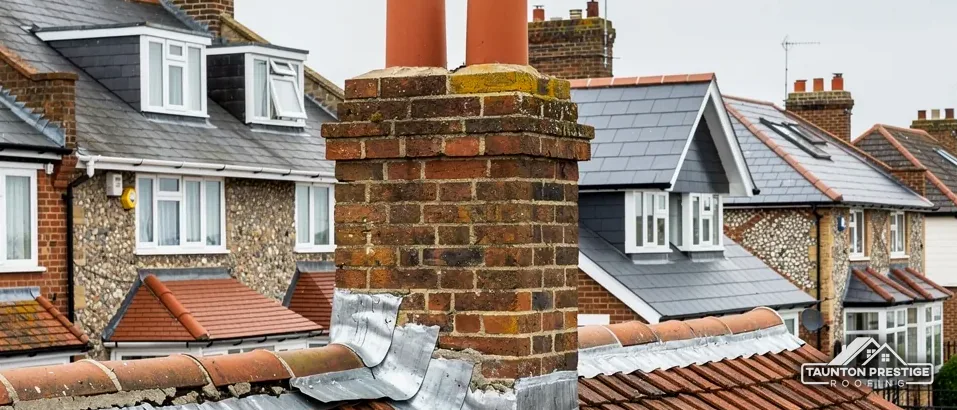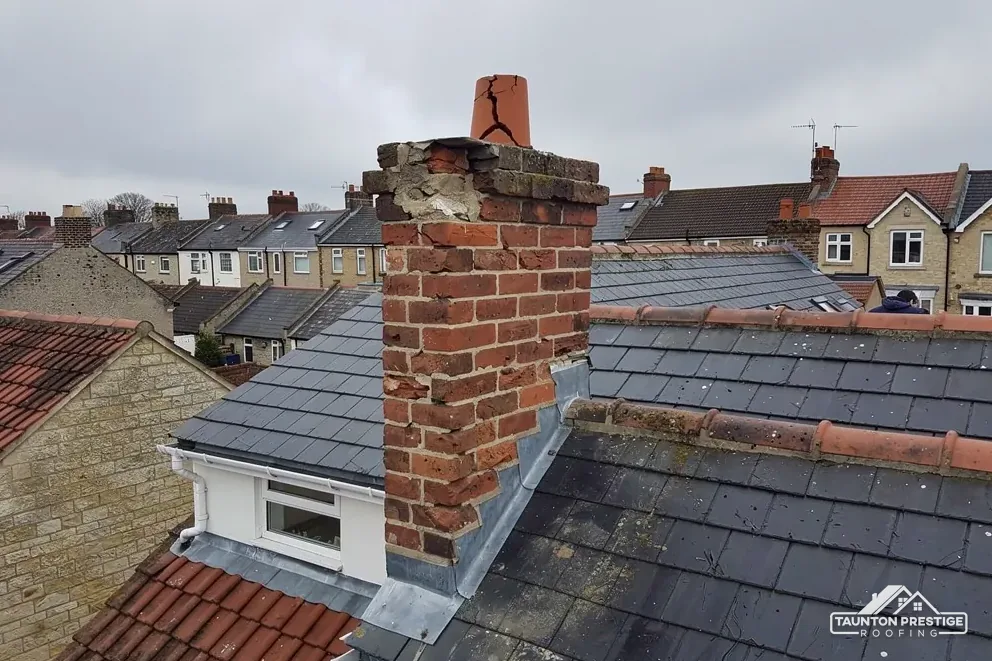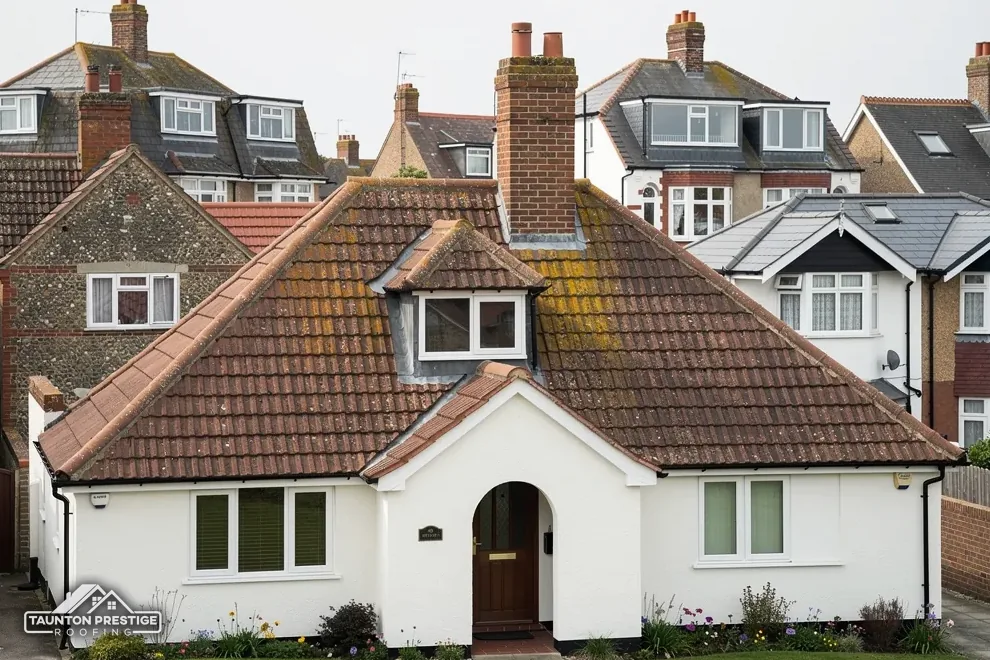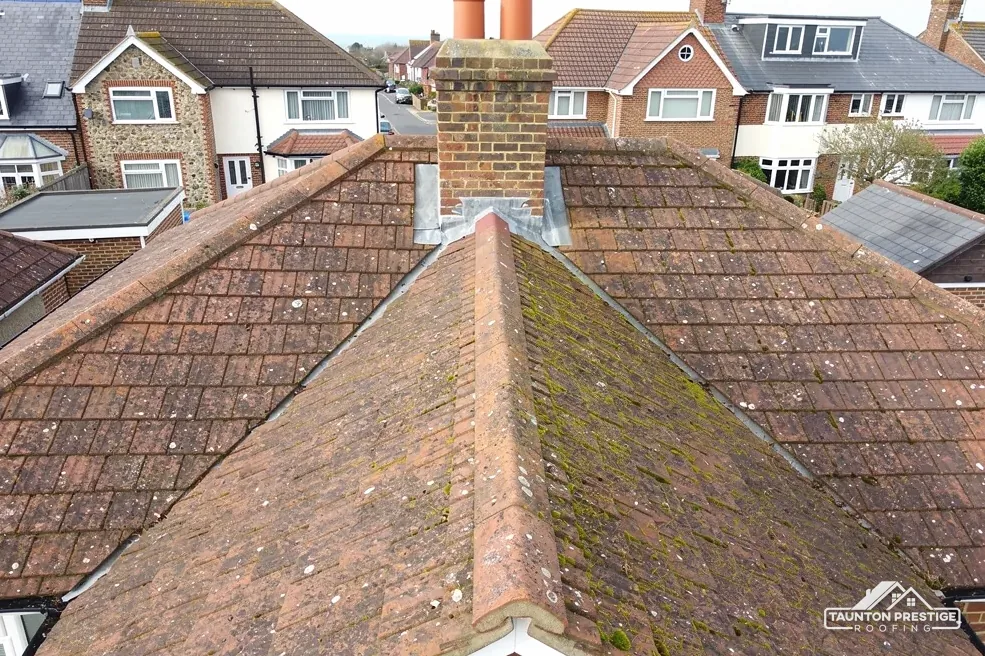
A chimney stack is the most exposed masonry the building has, rising clear of the roof, taking rain from every direction and getting wet outside while smoke and warmth work on it from within. On an older Somerset cottage the stack is often built of stone or soft, hand-made brick, laid in a lime-based mortar long before cement was common. Over a century or two the joints wear back, and the usual repair instinct is to fill them with whatever is in the bag.
That instinct is where trouble starts. A mortar that is much harder than the stone or brick around it forces the masonry to take the strain, and the faces start to flake instead of the joint. This guide explains what lime mortar is for, how to spot a stack that needs attention from the garden, what a proper repoint involves, which consents can apply to older houses, and what a typical repair costs. It belongs to our chimney repairs service for older homes near Taunton.
What the mortar in a chimney is really for
Mortar is often thought of as glue. In an old chimney it does a different job: it is the part of the wall designed to wear out first. Rain soaks into a stack, and that water has to leave again, through the joints or through the face of the stone or brick. A joint that lets moisture out and dries quickly protects the masonry. A joint that traps it pushes the drying onto the masonry itself.
The mortar also carries the weight of the courses above and lets a wall move a little as it warms, cools and settles. Old stacks were built with that give in mind. They are not rigid boxes.
Why do chimney joints fail before the rest of the house?
Height and exposure. The stack takes wind from all four sides and has no overhanging eaves to shed water, so the joints on the windward face wear fastest. Smoke and flue gases also leave deposits that attack the inside of the brickwork over many years. Frost then works on any damp joint, which is why a stack that looked sound in summer can drop sand and crumbs after a hard winter.
Pointing is the visible finish of those joints, the face of the mortar between the stones or bricks. When people say a chimney needs repointing, they mean the outer layer of mortar has eroded and needs cutting out and replacing, not that the stack has to come down.
Understanding that job explains the rest of this page. The mortar is a sacrificial layer, and the best repair replaces it with one that behaves the way the original did.
Lime and cement mortar: how they differ
Lime mortar is made from lime, sand and water. It sets slowly, stays relatively soft, and lets moisture pass through it. Cement mortar sets hard and fast and is dense, so water finds it much harder to leave through the joint. Both are fine in the right place. The question for an old stack is which one suits the material it holds together.
Why does a hard mortar damage soft stone and old brick?
Because water always takes the easiest way out. If the joints are dense and hard, the moisture leaves through the stone or brick face instead. Those faces then carry the salts and the frost damage, and they crumble, flake or lose their outer skin. Once that happens, nothing about the repair is easily undone. A joint can be raked out and redone, but a spalled stone or brick face is gone.
Lime keeps the damage in the part of the wall that is meant to be replaced. It also tolerates small movements without cracking, which suits stacks that have shifted over generations.
Which stone or brick you have matters less than how old and soft it is. We look at the masonry itself on the survey, and we do not assume a type from the village it stands in.
That point is worth stressing. Older Somerset houses are built from a mix of materials, and the only way to know what is in a given stack is to look at it closely. Bridgwater, for example, turned out a wide variety of bricks, tiles and terracotta, according to South West Heritage Trust, so brick stacks are common in the county. Stone stacks are common too. The method is the same: match the mortar to the masonry.
Reading a stack from the ground
You can learn a lot from the garden with a pair of binoculars or a phone camera zoomed in on the stack. Pick a dry, bright day and look at each face in turn, working from the pot down to where the stack meets the roof.
- Joints recessed deeply enough to cast a shadow line, or sand and crumbs lying on the slates or in the gutter below.
- Stones or bricks with a flaking, powdery or peeled face, especially on the side that takes the weather.
- A lean, a bow or a visible crack running up through several courses.
- Patches of hard, pale mortar standing proud of darker, softer joints from an earlier repair.
- Green growth or damp staining running down the shaft.
- Brown stains on the chimney breast inside the house, which can mean water is getting in at the stack.
Is a leaning chimney an emergency?
Sometimes, yes. Somerset Building Control lists "Unstable chimneys" among examples of dangerous structures, and "Loose or falling roof tiles" alongside them. If a stack moves, drops masonry onto the roof or garden, or leans visibly, clear everyone from the ground beneath it and have it checked promptly. We make a dangerous stack safe first and plan the repair after.
Do not climb to inspect it yourself. Stacks are the worst place on a roof to work from a ladder, and loose masonry can come away in your hand. Photographs taken from the ground are enough for a first conversation.
How a lime repoint is done
A repoint is slow work, and the preparation matters more than the finish. Done well, it should last through many winters. Done badly, it can do more harm than leaving the joints alone.
- Access is set up first, with scaffold or a safe working platform, so the whole stack can be reached and the roof below protected.
- Loose and eroded mortar is raked out by hand to a sensible depth, taking care not to chip the edges of the stone or brick.
- The joints are brushed clean and damped so the new mortar bonds instead of drying out too fast.
- Lime mortar is pushed in firmly in layers and finished to suit the original joint profile.
- The work is protected while it cures, because lime sets slowly and dislikes hard frost and fast drying.
Can an angle grinder be used to rake out joints?
It is a bad idea on soft masonry. A grinder cuts into the stone or brick edge and leaves the joint wider than it started. Hand tools are slower, but they keep the original edge, and the edge is what a good repoint is made from.
If individual stones or bricks are past saving, they can be cut out and replaced, ideally with reclaimed material that matches. If the stack is leaning or the masonry is loose across several courses, repointing is the wrong repair, and our guide to a chimney rebuild covers the next step. Capping the flue, or fitting a cowl to a pot, is a separate decision that depends on how the fireplace is used.
For the neighbouring jobs on the same stack, the guides on chimney repointing and chimney flaunching go into detail.
Consents for older and listed houses
Many houses with lime-built stacks are older, and some are listed or stand in a conservation area. That changes the route you take, though not always the need for permission.
Will repairing a chimney on a listed home need consent?
Possibly. Section 7 of the Planning (Listed Buildings and Conservation Areas) Act 1990 requires authorisation before works that alter a listed building and affect its special character. Like-for-like repointing in matching lime may not alter character, while changing the mortar type, joint finish or brick could. If your house is listed, speak to Somerset Council's planning team ahead of any work, or Exmoor National Park Authority if you are inside the Park. Our page on chimney listed building consent explains the steps.
In a conservation area, the council can ask for care over materials and appearance. Somerset Council lists Article 4 directions for some places around Taunton; what each direction covers falls to the planning team to confirm, so check before assuming anything.
Taking a chimney breast out is a different matter, and our guide to chimney breast removal covers it, because that is structural work.
A scaffold that blocks the road or pavement needs a licence from the highway authority. In the Somerset Council area, licences go only to accredited contractors, so the firm appointed for the work must apply. The fee is £124.60 for each 28-day period (Somerset Council, April 2026), with at least 10 working days' notice.
Roof junctions, ridge mortar and what it costs
Repointing the shaft does not finish the job if water is also getting in lower down. The stack meets the roof through flashings, the lead strips that seal the junction, and through the flaunching, the sloped mortar crown that holds the pot. Our parts of a chimney guide explains each piece. Lead flashing "can last for over 80 years" according to MyJobQuote, so a sound lead apron or back gutter is worth keeping while the stonework is mended.
Is mortar also used on the ridge beside the stack?
Often. Ridge and hip tiles on older roofs were bedded in mortar. Marley explains that since the 2014 revision of BS 5534, bedding mortar is no longer trusted to hold those tiles by itself, so it is used together with mechanical fixings. The law does not require BS 5534, but a careful roofer works to it.
How much will chimney repointing set you back?
MyJobQuote gives a typical UK range of £450 to £1,200 for chimney repointing (MyJobQuote, Oct 2026). Where you land depends on the height and number of stacks, how many faces need work, the depth of the eroded joints, whether any stones or bricks must be replaced, and the access needed. A stack beside a steep roof needs more scaffold than one on a bungalow.
We survey first, send you photographs of the stack and the joints, and give one written price. If the survey shows the stack needs more than repointing, you will see why in the pictures before you decide the next step.
Lime mortar and old stacks
Can I repoint an old stone chimney with ordinary cement mortar?
It is better not to. Cement sets harder than soft stone and old brick, so moisture leaves through the masonry face and the face crumbs away. Lime stays softer, lets the stack dry through the joints, and keeps the wear in the mortar, where a repoint can replace it.
How do I know whether my chimney is lime-built?
Look at the joints and the age of the house. Soft, sandy, pale joints in a cottage built before cement was common are a strong hint. A roofer can check by scratching a hidden spot or looking closely on the survey, rather than guessing from the street.
Does a repointed stack need to be sealed afterwards?
Usually not. Sealants and waterproof coatings can trap moisture inside old masonry and make the faces flake. Sound lime joints, a good flaunching and tidy flashings do the work, which is why we look at the whole stack from pot to roof line before suggesting anything on top.
More on this subject: Chimney repairs in Taunton