If a surveyor has mentioned spray foam in your loft, one of the first questions anyone will ask is which kind it is. The answer shapes everything that follows: how the foam is taken off, how long it takes, whether the tiles survive, and what the price depends on. It is a question worth settling early.
The two types are named for the structure inside the foam. Open-cell foam is made of tiny cells that are broken or joined to one another, which leaves it soft, light and spongy. Closed-cell foam is made of cells that are sealed, which makes it dense, hard and rigid. Both are sprayed as a liquid that swells and sets, and both can look much the same from the loft hatch. Below we set out how they differ, how to tell them apart, why removal works differently for each, and what to tell a roofer before the survey. It forms part of our wider spray foam insulation removal work in Taunton and Somerset.
Two foams from one spray gun
Spray foam insulation is applied by gun to the underside of a pitched roof. The two chemical parts mix as they leave the nozzle, then foam up and set against the timber, felt or tiles they land on. Roofers and surveyors lump the result together as spray foam, but the two main types behave differently in your roof and on the way out of it, and the label on the tin is not always known to the homeowner.
What is open-cell foam?
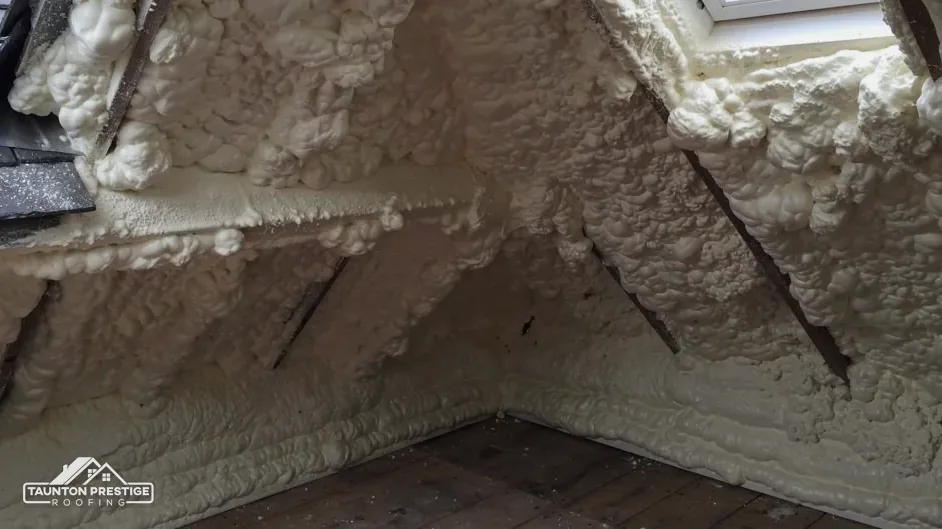
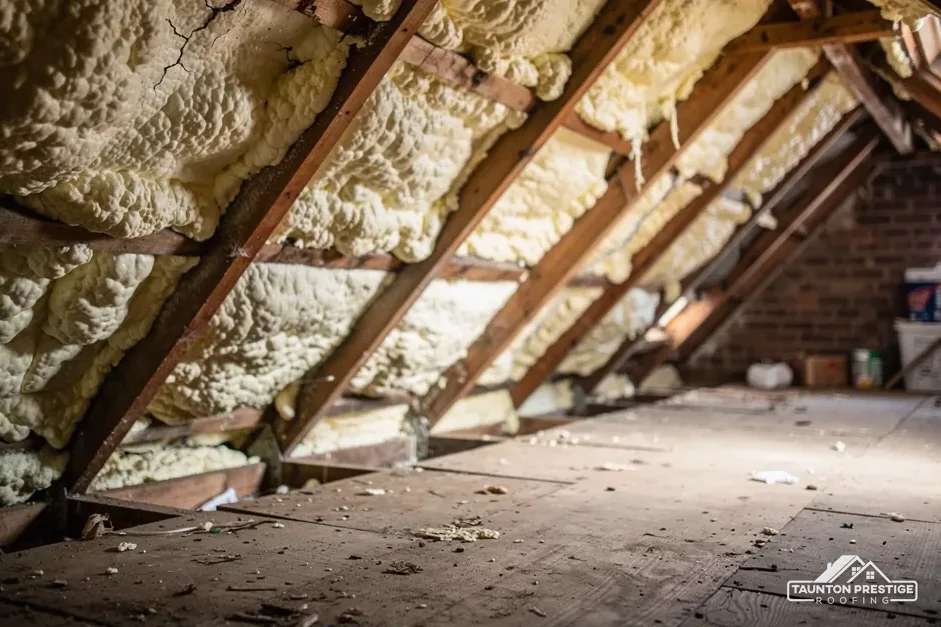
Open-cell foam has a soft, airy structure. It is light for its size, easy to dent with a thumb and tears if you pull it. It tends to be sprayed thickly, because there is not much strength in it, and it often fills the gap between rafters to a good depth. The sponge-like texture is the easiest clue to look for.
What is closed-cell foam?
Closed-cell foam is dense and stiff. Its cells are sealed, so it feels like a hard crust and barely marks if you press it. It is sprayed in a thinner layer than open-cell foam, because it needs less to do the same job, and it bonds strongly to whatever it touches. In a roof, that can be the felt, the batten or the back of the tiles themselves.
Neither type is a bad material in the right place, and plenty of lofts have lived with either for years without complaint. The trouble comes from where they were put and what they are stuck to, and that is why the roof is the place to look first. The RICS consumer guide on spray foam insulation sets out the wider picture for homeowners, and it is worth reading before you decide anything.
Which type of spray foam is in your roof?
You can often work this out from the loft ladder with a torch in hand, without touching anything. A few clues, taken together, usually give a clear answer. If they do not, a roofer can test a small area at survey.
What can I see from the loft hatch?
- Texture: a soft, sponge-like surface suggests open-cell; a hard, glassy or crusty surface suggests closed-cell.
- Depth: foam that fills the full depth of the rafters points towards open-cell; a thin skin of a few centimetres is more often closed-cell.
- Shape: closed-cell foam often sets with a smooth, slightly shiny face, while open-cell looks matt and pitted.
- Gaps: hairline cracks along the edge of a rafter can appear in either type as the foam ages.
Can paperwork tell me?
Often. If you have the installer's invoice, a product name, a data sheet or a guarantee from the firm that sprayed it, the type will usually be listed. The RICS guide advises homeowners to keep the documents an installer provides, including the contract, calculations and any certificates. If a surveyor has written a report, the page that mentions foam will say what they saw.
Do not step into the roof space to prod the foam, since the ceiling below will not take your weight. Stay on the ladder, take photographs of each slope and the eaves from the hatch, and send them with the paperwork. At the survey we test the foam by hand, check what it is attached to, and tell you which type you have. A lender's valuer may ask for the same evidence, so keep a copy for yourself and note the date the photographs were taken.
Why the type changes the removal
The difference between the foams is much more than academic once someone has to take them out. Everything about the job follows from it.
How does open-cell foam come out?
Softness is a help here. Along each rafter, open-cell foam is cut, peeled back and lifted away in sections, and the timber surface is scraped clean afterwards. It is bulky, so there is a lot of bagging and carrying, but it tends to let go of the wood. The job is a long one because of the volume, not because of the grip.
How does closed-cell foam come out?
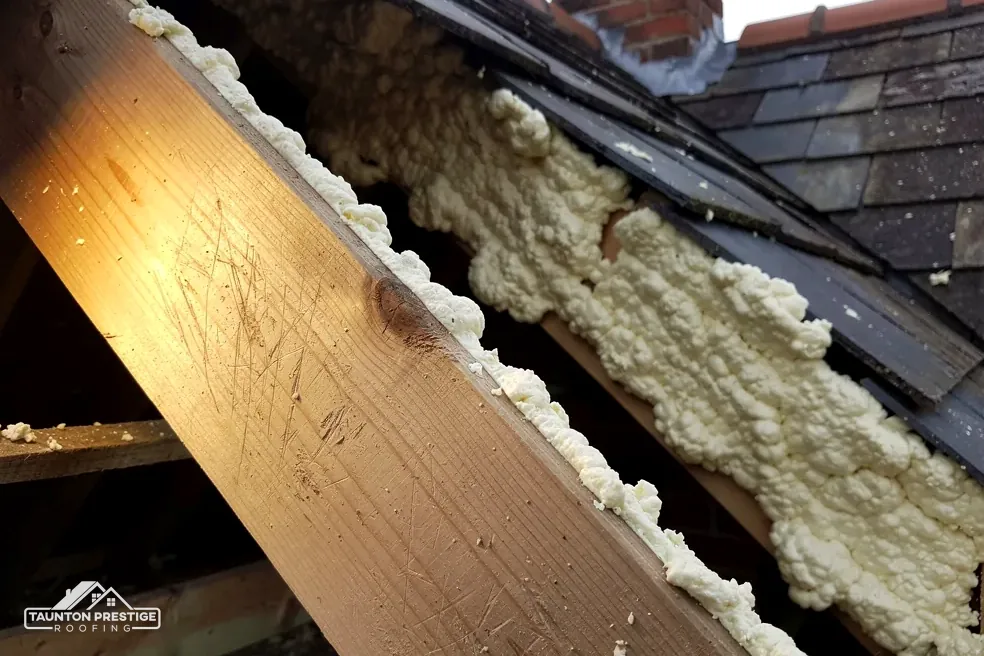
Rigidity is the problem. Closed-cell foam grips hard and cuts in blocks, not strips, and every block has to be worked off the surface it is stuck to. On timber that is slow but possible. On felt it risks tearing the sheet. On tiles it risks cracking them, because the foam can hold the tile more firmly than the tile holds together.
Both types are removed by hand, one section at a time, and the pace differs. Our guide on how spray foam is removed describes the method step by step. What changes is the risk to the roof beneath, and how much patience each block of foam demands.
This is why a flat price for foam removal makes little sense. Two lofts of the same size can need very different amounts of work, depending on the type and on what it is stuck to.
Rigid foam bonded to tiles
One situation deserves its own section, because it changes the whole job. In some roofs, foam was sprayed not just under the roof but into it, onto the backs of the tiles or slates, to hold loose ones in place. This was sometimes done on an old roof that was due for replacement, as a way of putting off the cost.
Why is foam on tiles so difficult?
The foam has become part of the covering. It holds each tile to its neighbours and to the batten, so the tiles can no longer be lifted individually. Take the foam off and you take away whatever was holding the tile, or you crack the tile in trying. Slates, with their thin edges, are more vulnerable than thick concrete tiles.
What are the options?
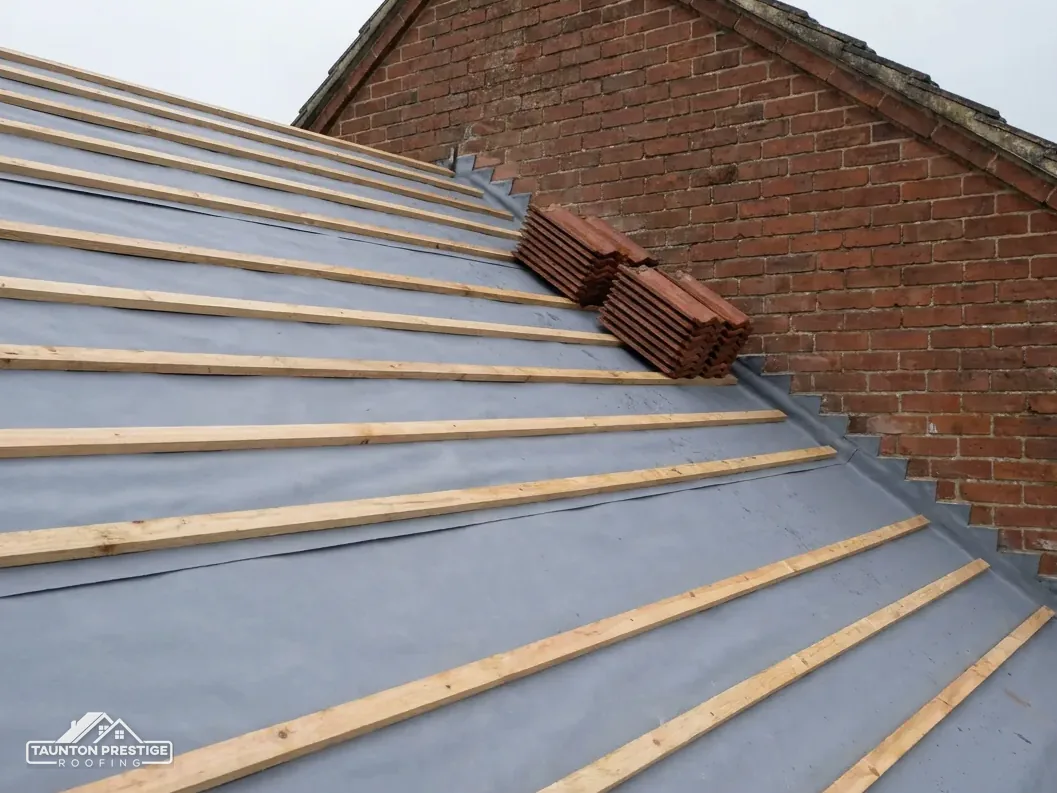
There are broadly three. If the tiles are sound and the foam can be freed from them, the foam is removed carefully and the tiles refixed. If some tiles break, they are replaced with matching ones. And if the covering is old and the foam is holding most of it together, the sensible answer may be to strip the slope and re-roof it, with the original tiles reused where they are sound. Our page on spray foam stuck to roof tiles covers this.
The survey tells you which of the three applies. We show photos of the tile backs and the bond, and explain what is likely before anyone starts cutting. Stripping and re-roofing part of a house brings in the Planning Portal's test, which is less than 25 per cent of the building envelope and less than 50 per cent of the roof.
What each foam hides, and what that means
Sprayed beneath the tiles, foam does one thing that matters to anyone looking after the building: it covers the timbers. Whichever type you have, the rafters and battens cannot be seen, so a problem developing behind it may go unnoticed.
Why does that worry surveyors?
A roof is judged by looking at its structure. If foam covers the timbers, a surveyor cannot see whether they are sound, whether there has been a leak or whether condensation is collecting. The foam may be doing nothing wrong, but nobody can say so without seeing what lies beneath. That is why a valuation report may mention it, and why a lender may ask questions.
What about leaks?
A leak through the covering may soak into the foam or run along it, so a stain can show well away from the source. With open-cell foam that holds water like a sponge, damp can sit against timber for some time. With closed-cell foam bonded to the felt, a repair to the covering above may mean lifting tiles that the foam is holding down. Both are reasons to check the roof when the foam is removed.
What should I do about my lender?
RICS's consumer guide has a single question for your mortgage provider, which is whether spray foam fits its lending policy. Ask before work is booked. A lender's answer will not depend on the foam type alone, but knowing which one you have makes the conversation easier. Where a report has landed on the doormat, our guide on a surveyor flagging spray foam lists the calls to make and their order.
What to tell a roofer before the survey
A few minutes of preparation saves time at the survey and makes the written price more accurate. You do not need technical knowledge, only the information you already have.
What should I gather?
- Photographs from the loft hatch of each slope, the eaves and the ridge end.
- Any invoice, contract, data sheet or certificate from the firm that sprayed the foam.
- The page of any survey or valuation report that mentions spray foam.
- A note of any leaks, stains or slipped tiles you have seen, and when.
- The date any lender or buyer needs the roof sorted by, if there is one.
What happens at the survey?
The loft visit uses a torch and a moisture meter. We press the foam, work out its type and find what it is bonded to, then look for damp at the eaves and under valleys and chimneys, and check the tiles from outside. Afterwards come pictures of the roof itself, with a plain account of what they show.
What decides the price?
The foam type, its depth, what it is stuck to, the access and any scaffold, and what the bare roof shows once the foam is out. A soft, shallow layer on clean, dry timber is a simpler job than rigid foam holding a slope of tiles together.
If you already know which kind of foam you have, say so when you contact us. If you are not sure, send the photos and we will tell you what we can see before we visit.
Foam type questions
Which type of spray foam insulation is in your roof?
Soft, sponge-like foam that fills the rafters is open-cell. Hard, dense foam that barely dents and often bonds to felt or tiles is closed-cell. Photographs from the hatch and any installer paperwork give a good clue, and a survey confirms it by testing a small area by hand.
Is open-cell foam easier to remove than closed-cell?
Usually, because it is soft and tends to release timber when cut and peeled away. The job is bulky but straightforward, and the timber often comes out in good shape. Closed-cell foam grips felt, battens and tiles, so it is cut in blocks and worked off carefully, which takes longer and risks damage.
Does the type of foam affect my mortgage or sale?
The RICS consumer guide points homeowners to their mortgage provider for the lender's policy on spray foam. Nobody can promise a lender's decision. Knowing the type, with photographs and installer paperwork to hand, helps when you speak to your lender or a buyer's surveyor, and saves a second round of questions.
More on this subject: Spray foam insulation removal in Taunton