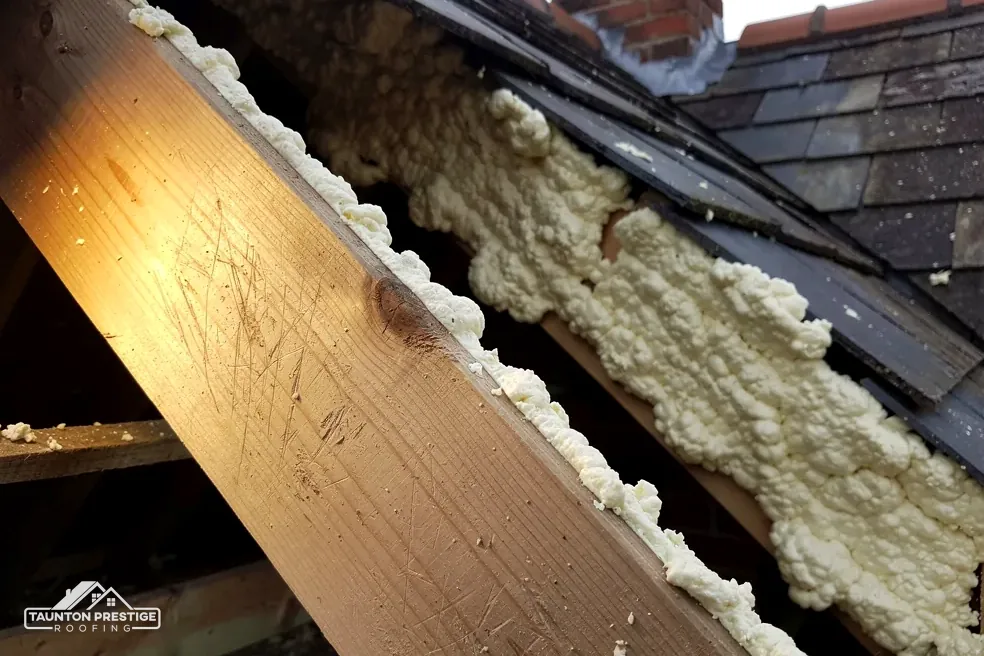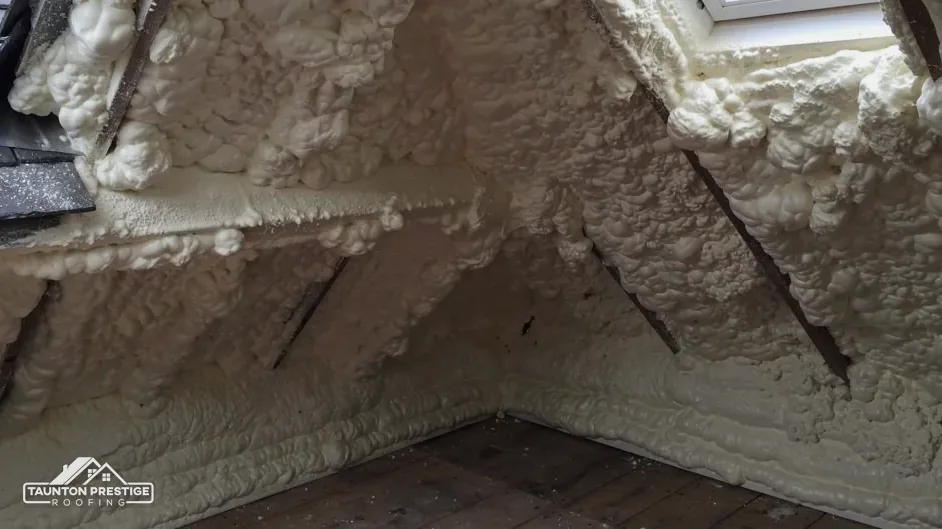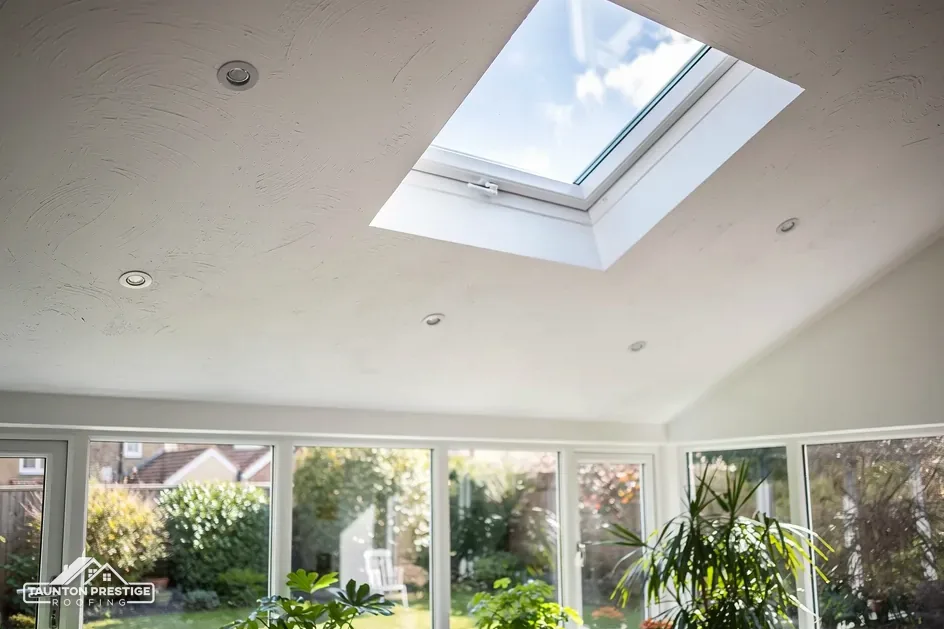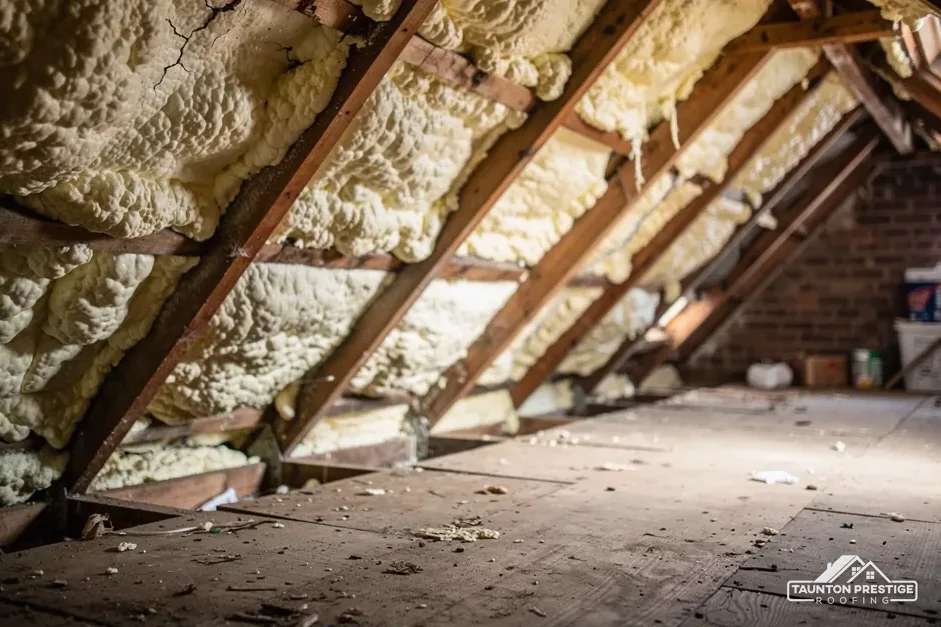
Surveyors write what they see, and when they find foam sprayed onto the underside of a roof they rarely stay silent about it. The wording varies. It may be one line in a report, a recommendation for further investigation, or a flagged item that the buyer's lender wants answered before it will release funds. Whichever it is, the note on its own does not say the foam is faulty or that it has to come out. It says the surveyor could not see the roof structure behind it and wants someone to look.
That is a problem you can act on. This guide explains what a flag usually means, what the RICS consumer guide tells owners and buyers to do, and what a roof assessment looks like when the timbers are hidden. It also covers talking to your mortgage provider, and the choices open once you know the roof's condition. It belongs to our spray foam insulation removal work across Taunton and Somerset, where we start by reading the roof beneath the foam. Nothing here is legal or financial advice: it is a roofer's account of the practical steps.
What the surveyor's note really says
A surveyor inspecting a house looks at the roof from street level and from the loft hatch, without lifting a single tile. The visit is a general check of the whole building, so the roof gets a limited amount of time. When the underside of the roof is covered in foam, the rafters (the sloping beams of the frame), the battens (timber laths fixed across them, which hold the covering up) and the underlay (a membrane lying below the covering) are all out of sight. The surveyor cannot judge their condition, so the report says so.
Is a flag the same as a fault?
No. A flag records a limit on what could be checked. It may carry a recommendation such as asking a roofer or specialist to assess the roof, or checking with the mortgage lender. Some notes simply mention the foam as a feature of the property. Others link it to the risk of hidden damp. Read the exact words in your report, because the next step depends on them. Words such as "recommend" and "further investigation" point to a roofer or specialist, while words such as "lender" or "mortgage" point to a conversation with the bank or building society first.
If the report is vague, ask the surveyor or their firm to say in writing what they want done and why. A short, specific question gets a clearer answer than a general worry, and the reply gives your roofer something to work from.
It is also worth knowing that a flag affects people in different positions differently. A buyer can still negotiate or walk away, while an owner remortgaging or selling has a roof to deal with. The steps below suit both, and they work in the same order whichever side of the sale you are on.
What RICS says owners and buyers should do
RICS, the Royal Institution of Chartered Surveyors, publishes a consumer guide on spray foam insulation. Its advice is cautious and practical. On the question of mortgages, it points owners to the company that holds their mortgage, so they can ask whether its own rules permit foam products in the home. The guide does not tell you the foam must come out. It tells you to find out where you stand with the people lending the money, and to do it before work starts, not after.
Where can you read the guide?
It is on the RICS website, under consumer guides, and it is worth reading in full rather than relying on a summary from anyone, including us. We refer to it by name here because it is the surveying profession's own consumer advice. The page does not carry a publication date in the version we checked in October 2026, so read it as current guidance and check the site for updates. If your surveyor works for a RICS-regulated firm, the guide is also a fair account of what they would expect you to ask.
Ask your lender before you make decisions about the foam. What they will accept is their policy, and no roofer or website can speak for them.
The same subject keeps coming back to moisture, because foam covers the very timbers a surveyor would normally inspect. Our guide on spray foam, condensation and roof timber rot explains how damp can build behind foam, which is the very thing a surveyor cannot see.
Buying a house with foam in the loft
If you are buying, you are in the strongest position before exchange of contracts. The foam is the seller's to explain, and you are entitled to ask questions. Your conveyancing solicitor is the right person to put them formally, and the answers go on file.
What should you ask the seller?
- When the foam was installed and by whom.
- Whether any paperwork came with it, such as an invoice, a guarantee or a data sheet.
- What type of foam it is, if known, and whether it covers the whole roof or only part.
- Whether there have been leaks, damp patches or repairs to the roof since.
- Whether the seller has had it inspected, and what the finding was.
Even a thin pile of paperwork helps, because the lender and the roofer can both read it. It tells the roofer what material they are dealing with and gives the lender something to read. If the seller has nothing, a roof assessment arranged by you, with their agreement, can fill the gap.
Agree the access first, with a day and a time that suits both sides. Sellers are often happy for a roofer to visit when they understand the aim is to give the sale a clear answer. A visit before exchange means the findings can shape your offer, or your decision, rather than arriving after you have committed. A seller in the same position can do the same thing before the house goes on the market, which spares everybody a delay later.
Getting the roof assessed
A roof assessment for foam is a different job from a standard roof check, because the main thing a roofer would normally inspect is covered. Our survey works from three directions.
What happens during the assessment?
First we look at the covering from the ground and, where it is safe, from above: slipped slates and tiles, the state of the ridge, valleys and flashing, and signs of water getting in. Next we go into the loft and look at the foam itself, noting cracks, shrinkage, staining and any place it has pulled away. Where something looks wrong, or where the report needs a firm answer, we can open up a small patch of foam, check and photograph the timber beneath, and then make the opening good.
The photos are of your own roof, with a plain note on what each one shows. Our page on roof inspection for spray foam describes the visit. The result gives the surveyor and the lender evidence, not opinion.
Does a small opening harm the roof?
Done carefully, no. The foam is cut cleanly, the timber is checked, and the area is refilled or sealed so the roof is left as weathertight as before. Where several spots need checking, each one is made good in the same way. It is a modest step compared with the cost of buying or selling blind. Everything depends on the quality of the work, so ask to see the finished repair in a photo before the roofer leaves.
Talking to your mortgage provider
This is the conversation people dread, but it is usually short if you come prepared. Phone or write to the mortgage provider and ask what they need to see about the foam, in writing. Lenders differ, so the only reliable answer is theirs. We cannot tell you what a particular lender will accept, and we do not want to guess.
What should you take to that conversation?
- The surveyor's report, with the foam note marked.
- Any paperwork about the installation.
- The roof assessment, with its photos, once you have it.
- A copy of any written quote for remedial work.
Ask them to explain exactly what would satisfy them. Some people find that a clean roof assessment is enough. Others may be asked for further evidence, or for the foam to be dealt with before the loan completes. Keep every email, and make a note of who you spoke to and when. A phone call that is not followed up in writing is hard to rely on a month later.
Do not agree to remove or keep foam on the strength of a casual remark. A written answer is what protects you if the sale or loan stalls later. Your solicitor or broker can often help with the wording of the request, especially during a purchase when time is tight, and a mortgage adviser may already know which documents the lender prefers. Our guide to spray foam and home insurance covers the other money question, which is whether your policy responds when problems come to light.
Choices once you know the roof's condition
The assessment usually points to one of a few outcomes, and you decide what to do with it. The roofer sets out the findings; the choice stays with you, with your lender and your solicitor in the picture. A good assessment gives you options at the end of it, not a single answer.
What are the options?
If the timber is sound and the foam is well bonded, the answer may be to leave it and keep records, so the next surveyor or buyer sees the evidence, and so the question does not come back at the next sale. If a local fault has let water in, a repair to that part of the covering and the affected timber may be all that is needed. If the foam is damaged, damp or concealing rot in one area, removing foam from that part alone is possible, which suits a fault confined to one slope or one corner of the loft. Where the lender requires it, or the roof is in poor shape under the foam, full removal and repair is the route, covered in the guide on how spray foam is removed.
What decides the price is the roof area involved, the type and thickness of the foam, how firmly it holds to the timber and covering, how the roof is reached and whether any timber has to be renewed. The price arrives as one written total, which means a single figure goes in front of your lender or solicitor. If your report has flagged the foam, send us the page and we will arrange a roof assessment before you decide anything further.
Surveyor and foam questions
Does a surveyor flagging spray foam mean the sale will fall through?
Not by itself. A flag is a request for more information. Many cases move forward once the roof has been assessed and the lender has given its position in writing. Speak to your solicitor and mortgage provider early, and bring the roof assessment with you.
Who pays for the roof assessment when I am buying?
That is for you and the seller to agree, usually through the solicitors. Some buyers commission the roof assessment themselves, with the seller's permission for access. It is often cheaper than losing the purchase, and the photos and findings are yours to use however you decide.
Should I ask the seller to remove the foam before I buy?
Wait for the roof assessment first. If the timber is sound, removal may not be needed at all. If it is not, the findings give you a firm basis to ask for a price reduction or for repairs, and your solicitor can advise on how to put that to the seller.
More on this subject: Spray foam insulation removal in Taunton