Andersfield Farm
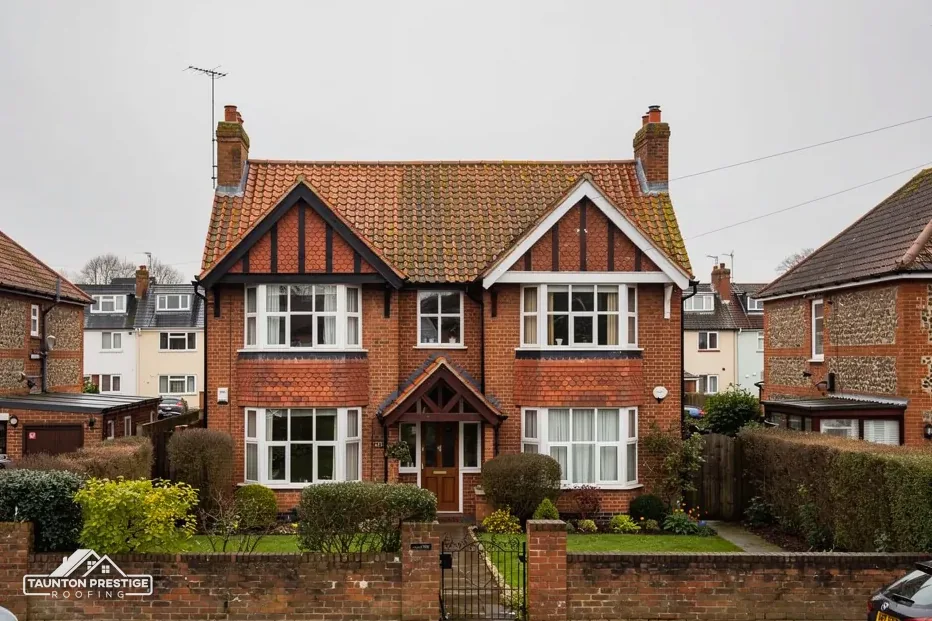
Probably 15th century and altered in the 16th and 17th, so roof work there should begin with careful recording.
A Quantock-edge hamlet of old farms and brick bungalows near Goathurst
Andersfield is a hamlet north-west of Goathurst village, once the namesake of a medieval hundred, with Tirelands Farmhouse listed Grade II*. We survey every roof first.
Probably 15th century and altered in the 16th and 17th, so roof work there should begin with careful recording.
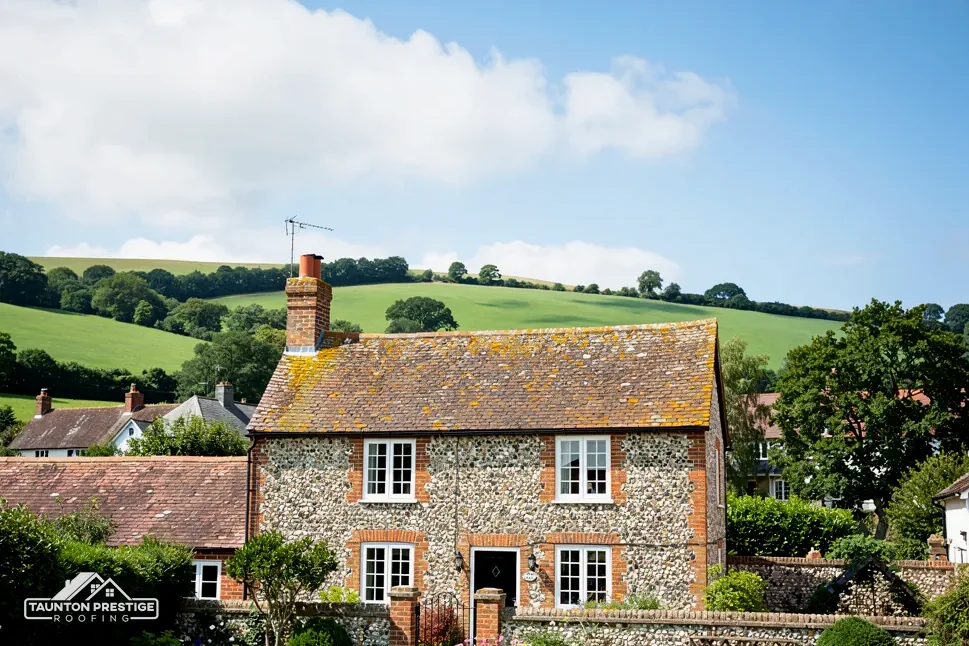
Listed on 9 January 1987, so a change to its roof that affects its character needs listed building consent.
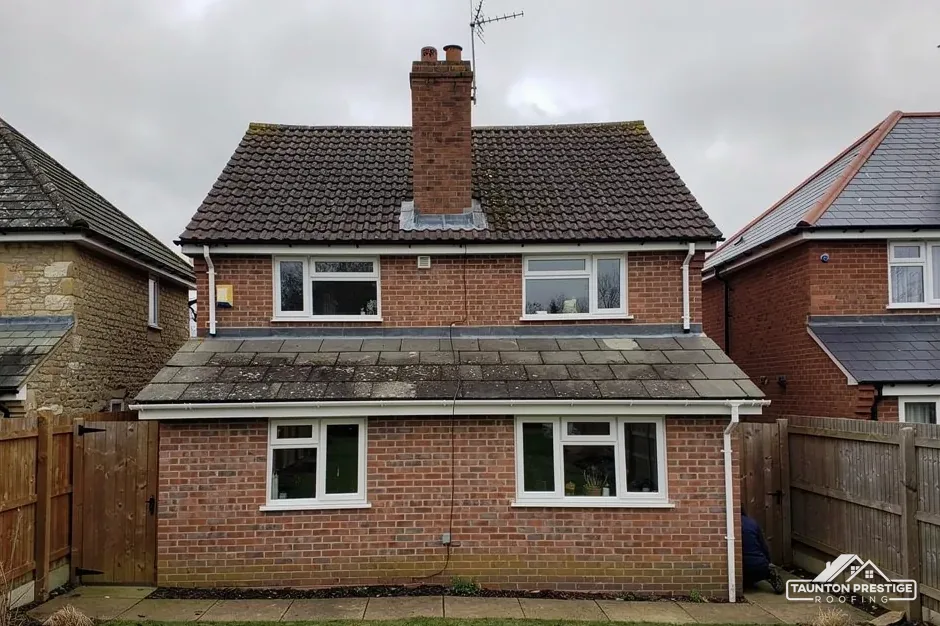
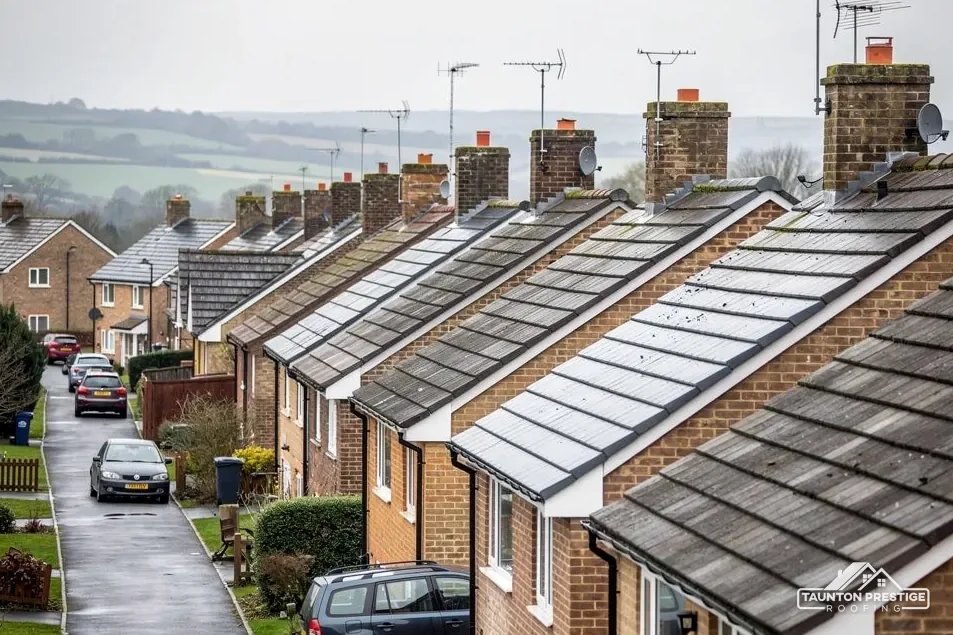
By 1990 a county history described a straggle of brick bungalows, divided from Goathurst village by a single field.
Street map of Andersfield with Goathurst, Spaxton, Rhode, Clavelshay marked around it, and Taunton.
Goathurst lies just east of Andersfield and Rhode further east, while Spaxton sits to the north-west, Merridge and Courtway to the west, and Clavelshay to the south.
About 7 miles north of Taunton, Somerset Council (unitary).
Four checks at the green
Four points that matter on a hamlet roof here, from what is recorded about the old farm to what a report should show.
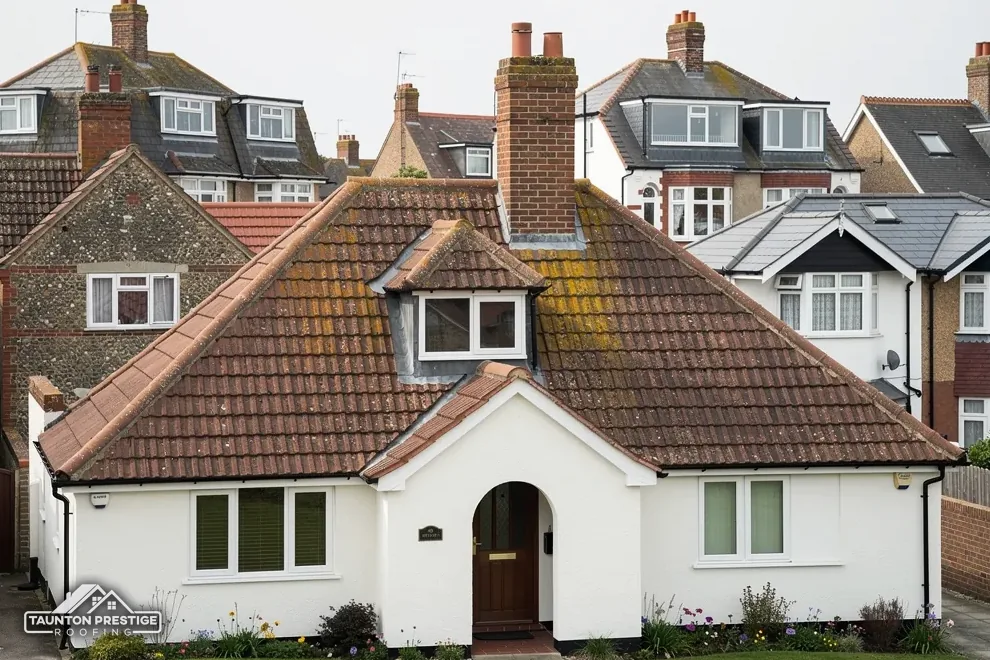
In the 1840s Andersfield was a scatter of cottages and a farm along a lane called Andersfield Green, according to the Victoria County History of Somerset. Andersfield Farm itself probably dates from the 15th century but was altered in the 16th and 17th. The hamlet also gave its name to the medieval hundred, the old unit of local administration, and in 1758 the hundred's courts were said to meet at Andersfield Green or at Enmore. A place with that history has buildings that have been mended many times, and an honest survey starts from that fact. We do not guess what is under the covering of any particular house; we lift a few pieces, look at the timbers, and report what we find.
Look for
Because every change leaves something behind: a patched slope, a different batten size, a ridge re-bedded in newer mortar. The battens are the timber laths that carry the covering, and on an old farm roof they can vary from one slope to the next. We record each slope separately, so that the quote covers what is really there and not what a single average would suggest. Photos of each slope go with the survey, so you can see for yourself where the roof has been altered, and so can anyone who later has to decide whether a repair matches.
Ask before you assume either way. We check the National Heritage List for every address at the survey, and the list entry, if there is one, says what is protected. Two entries lie within 500 metres of the hamlet, and one of them is Tirelands Farmhouse, which the next check covers. If a roof turns out to be listed, the work follows listed building consent, and the covering we choose is the one the building needs.
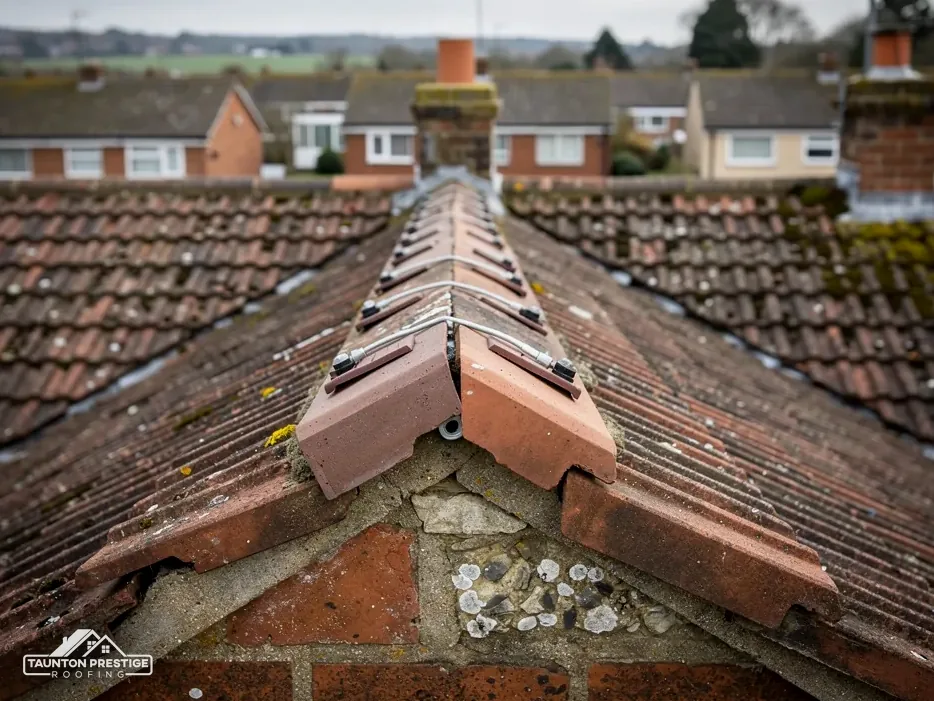
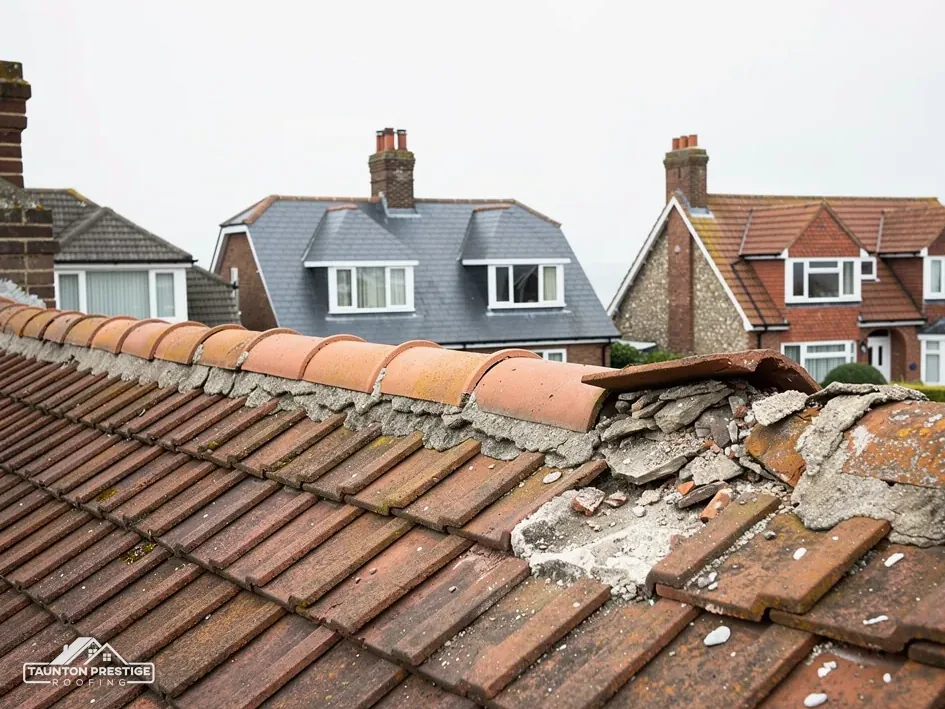
Tirelands Farmhouse carries a Grade II* listing, first listed on 9 January 1987. Anything that would affect a listed building's character needs listed building consent, and an application for a building of that grade is best prepared with care and good photographs. Listing leaves the ordinary permitted development rights in place, but consent is still needed for work that touches character. Repair in matching slate or tile, laid as before, is the safest route, and a farmhouse roof is a large expanse of that character.
What decides the price
That depends on the address. The Quantock Hills National Landscape, which was an AONB until the rename of November 2023, touches the area around Andersfield. The boundary check on the national data shows the place point outside it, with a small share of the surrounding area, about 2 per cent, inside. So a house here may lie just in or just out, and we do not guess. With a boundary running that close, one plot can sit on either side of it, which is why the address matters more than the hamlet's name. Somerset Council can confirm which side of the line a particular address sits on.
Because planning gives protected landscapes their own treatment. Changes that show on the roof, such as a dormer or a roof window, are where the answer can change, and our guide to planning permission for roof work explains the national position. The nearest conservation area in the national data is Spaxton, within about 2.5 km, which is a further reason to ask the council before ordering materials for anything that alters the look of a roof.
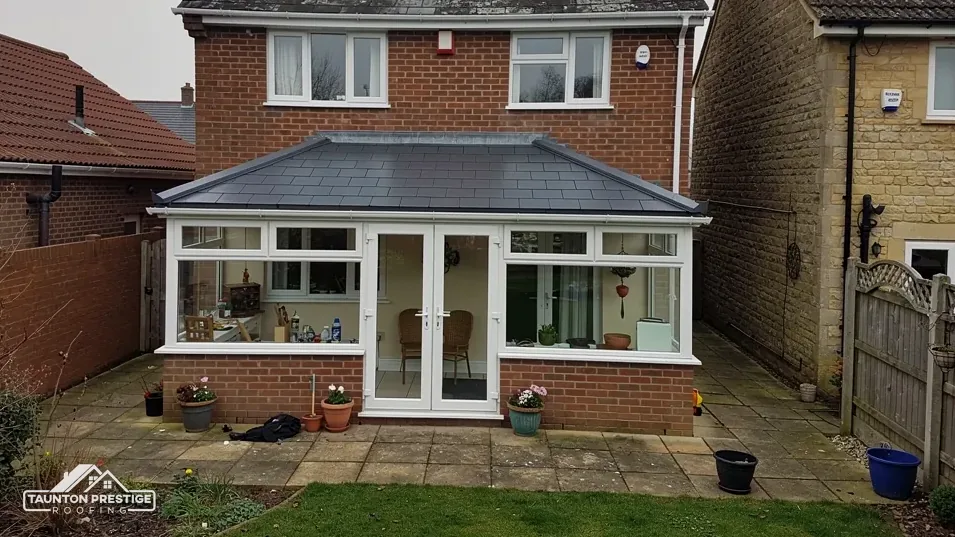
By 1990 the Victoria County History described Andersfield as a straggling settlement of brick bungalows, separated from Goathurst village by a single field. A bungalow's roof is low, which helps. Many repairs can be reached by ladder or tower without scaffold, and the gutters are close enough to inspect from the ground. The same houses often carry a conservatory or a flat-roofed extension at the back, and those roofs wear out faster than the main slopes.
On a bungalow the extension roof tends to fail before the main slope, so look at that first.
HomeBuilding gives a typical life of 10 years for a polycarbonate conservatory roof, and The Eco Experts say about 10 to 15 years for glass or polycarbonate. MyJobQuote's typical UK range for replacing one is £3,200 to £6,000 (Oct 2026), while The Eco Experts give £2,300 to £6,000. A replacement tiled roof is heavier than polycarbonate, so the frame may need strengthening. Our conservatory roofs page describes the options.
The Planning Portal says a new conservatory roof has to meet the Building Regulations on structure, energy use and ventilation. That reaches the glazing, the insulation and the frame beneath it, so the roof is never just a lid dropped onto old walls. If a bungalow was built or refurbished before 2000, we also remember that its garage or porch roof may be asbestos cement, and the HSE says to assume asbestos in such a building until it is checked.
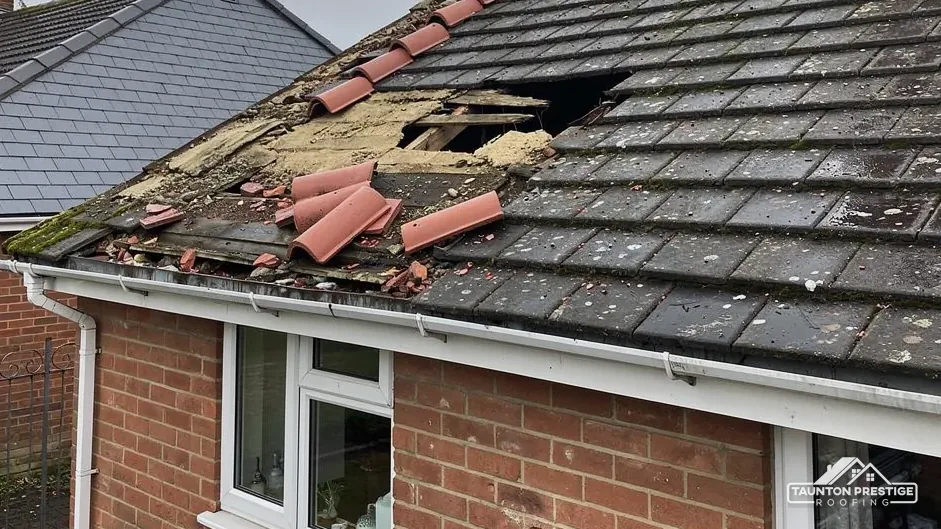
For the main bungalow roof, the usual job is simple: refix slipped tiles, renew a ridge, replace a worn flashing. The survey tells us whether the roof as a whole has years left in it, or whether repeated patching adds up to more than a new covering. We say which, and show the photos that led us there, including the ones of the roof space.
The Environment Agency's flood data puts Flood Zone 3 within about 250 metres of the centre point of Andersfield. That is a map of land, not of roofs, and it says nothing about whether any one house floods. GOV.UK has a flood-risk checker that takes your postcode. Where the ground is wet, the practical response on the roof is to make sure rain leaves it quickly, which means sound gutters, clear downpipes and ground that falls away from the walls.
A good one names each slope, says what covers it and in what condition, and shows each fault in a photo with a plain note on what to do about it. It also records the gutters and outlets, the chimney if there is one, and any extension roof, so nothing sits outside the report. MyJobQuote gives an average of around £300 for a roof survey, and £200 to £350 for a drone survey (Oct 2026), as typical UK figures. Our roof inspections page explains how ours work. A report like this is also worth having if you are buying or selling, because it gives a buyer something firmer than an opinion.
A temporary cover. A leaking roof is made safe first, and the proper repair follows once the survey shows what failed. If the leak is storm-related, tell your insurer, keep your photos and receipts, and ask us for our notes, since they record the state of the roof when we arrived. We never promise how an insurer will respond.
After the survey you get pictures of each slope and a single written price. Send us your Andersfield address, and say whether the worry is the farm roof, a bungalow or an extension, and we will plan the visit around it.
What decides the price
Walked the roof?
When you have read the checks, we walk the roof and show you the photos.
It could be either. The place point for Andersfield lies outside the National Landscape, but about 2 per cent of the surrounding 1.5 km area is inside it. The only reliable answer is for your own address, which Somerset Council can confirm, and the answer matters if you plan a dormer or roof window.
No. A listing belongs to the building named in it, not to its neighbours. Two entries on the National Heritage List lie within 500 metres of the hamlet, so most houses here have no listing of their own. We still check each address at the survey, so that the right consent route is clear before work starts.
Often it can, but a tiled roof weighs more, so the frame and base may need strengthening, and the Building Regulations apply to a new conservatory roof. The Planning Portal sets the test as structure, energy use and ventilation. We check the frame at the survey before recommending any covering at all.
Usually, because a roof defect can cost more than the survey fee by a wide margin. MyJobQuote gives an average of around £300 for a roof survey (Oct 2026), a typical UK figure. Ours records each slope, the gutters and any extension roof, with photos, so you can weigh repairs against the asking price.
Send your Andersfield address, say whether it is a farm roof or a bungalow, and we will arrange the visit.