All Saints church
Listed Grade II* since 29 March 1963, with pierced quatrefoil parapets and a painted nave roof.
A Grade II* church, colourwashed stone houses and five parish hamlets
Ashcott has an All Saints church listed Grade II*, 7 listed buildings near its centre and five hamlets in the parish. We look at every roof before we price it.
Listed Grade II* since 29 March 1963, with pierced quatrefoil parapets and a painted nave roof.
Ashcott House, the Ashcott Inn and Ashcott Villa are each listed Grade II, so roof repairs ask for care.
Pedwell, Nythe, Buscott, Berhill and Ashcott Heath sit in the parish, where peat workers settled in the 19th century.
Street map of Ashcott with Walton, Street, Meare, High Ham marked around it, and Taunton.
Walton lies just east of Ashcott, with Street further east and Glastonbury beyond. Meare is to the north, High Ham to the south and Compton Dundon to the south-east.
About 15 miles north-east of Taunton, Somerset Council (unitary).
Ashcott roofs, from tower to hamlet
The church, the listed stone houses, the garage and shed roofs, and the licence for scaffold: what each means for the work and the price.
All Saints was rebuilt in the Perpendicular style, the late medieval manner of tall windows and panelled stonework. The Victoria County History (volume 8, 2004) describes its nave with parapets of pierced quatrefoils, which are four-lobed openings cut through the stone, and a painted roof with pierced panels above the beams. The building is Grade II* (entry 1058957, first listed 29 March 1963). For a roofer, a church like this is a reminder of how much old craftsmanship sits above a ceiling. We photograph the parapet and gutters from the ground with a long lens before anyone climbs, which records them without disturbing anything.
If the Church of England still uses it, the faculty system governs the work, and the parish applies. Listed building consent from the council is the route for other denominations' buildings that are not exempt, for closed churches and for converted chapels. Scheduled monuments are different again and take their own consent. The work then follows the specification that was approved, and we price only once the approval route is known. Approval has to come before the scaffold, not after it, so we ask for it in writing before we fix any dates.
A parapet is a low wall at the edge of the roof, and behind it a gutter often runs hidden. When that gutter fails, water soaks the stone from the inside, and the signs show on the wall below rather than on the roof. Lead is the traditional lining. MyJobQuote describes lead as something that "can last for over 80 years" (Sep 2026), so a lining that fails early usually points to a joint or a fixing.
Nobody should plan church scaffold or roof access without the parish first. Tell us the date of any quinquennial inspection and we will line up our survey beside it.
Look for
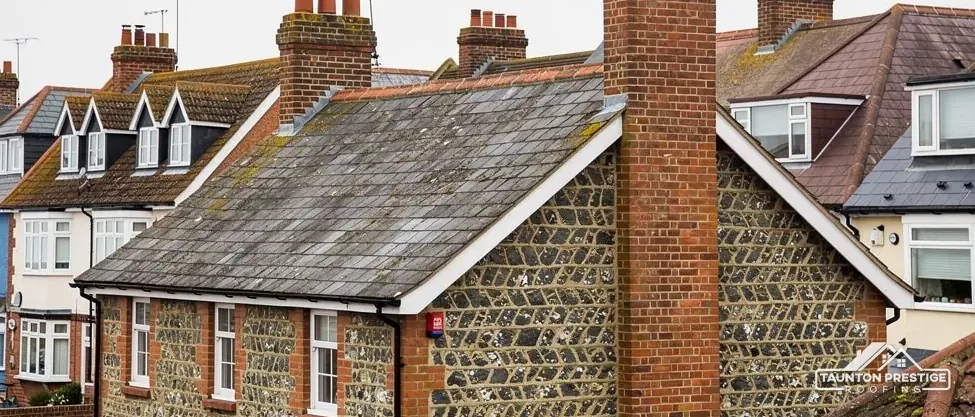
In 2004 the Victoria County History called Ashcott a large village whose older houses are of stone, many of them colourwashed, with at least one house of medieval origin and another from the 16th century. Ashcott House (entry 1344970, first listed 29 March 1963), the Ashcott Inn and Ashcott Villa are all Grade II. Seven listed buildings stand within 500 metres of the centre. The nearest conservation area in the national mapping is Shapwick, within about 2.5 km, and Somerset Council's planning team can confirm the position for any one address.
What decides the price
You can ask, but the answer is not automatic. A new material changes the look of the roof from the lane, and on a listed house that needs listed building consent. For an unlisted house outside a designation the rules are lighter, and our guide to planning permission for roof work lays them out. Somerset Council's planning team can settle your case.
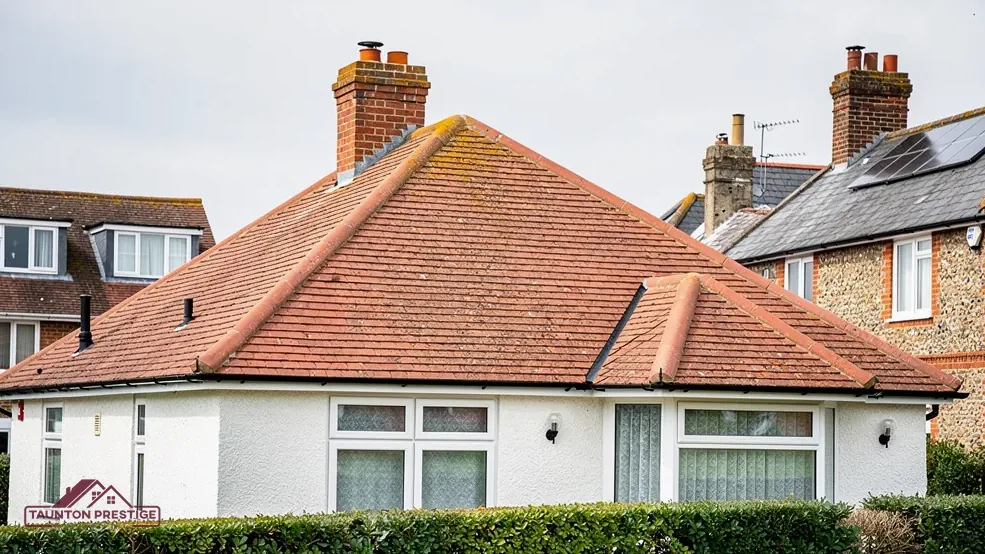
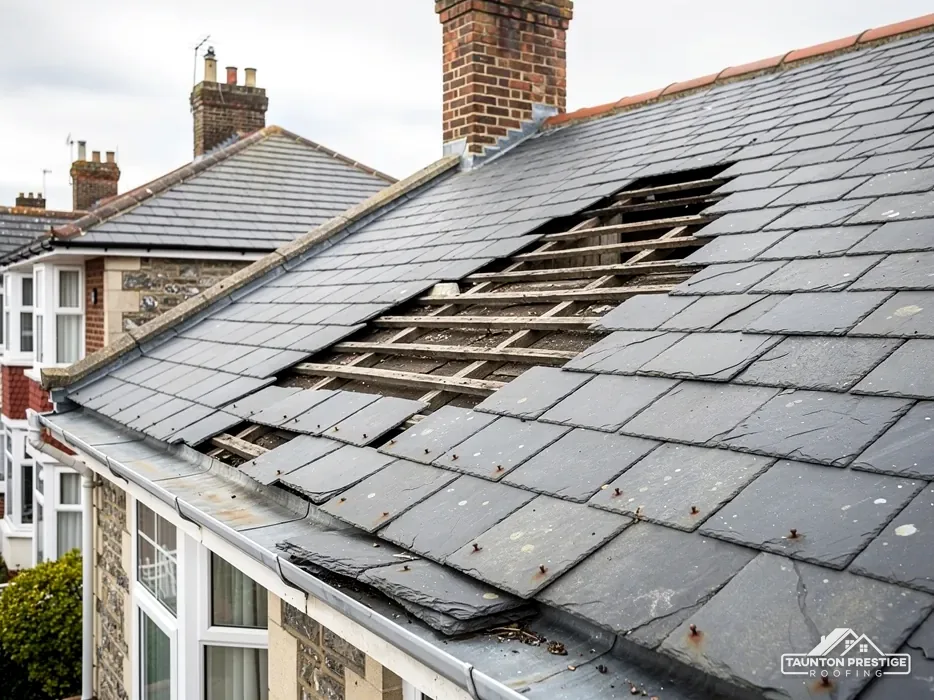
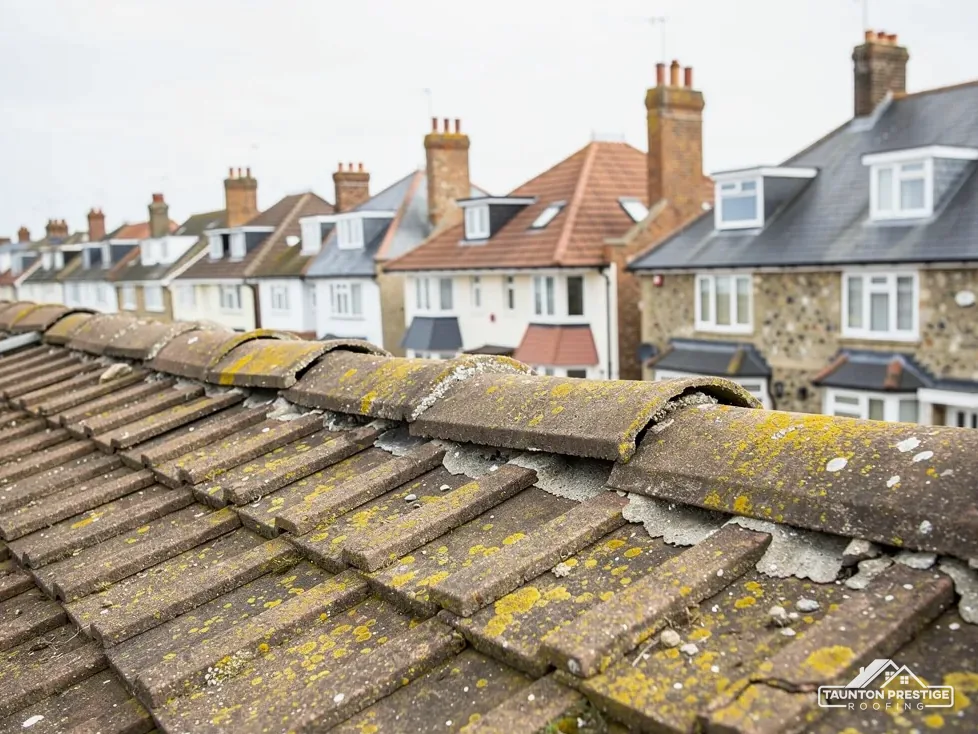
The same evidence as any other roof, gathered carefully: covering, ridge, chimney stacks, valleys and flashings, each photographed where the owner can see it. Ask for pictures of the ridge and verge as well as the main slope, because the edges tell you most about a roof's age. We note which parts are sound, which need work now and which can wait, then write one price for the job. Where a slate has lifted at its lower edge, a clip or a matching replacement may be enough. Our pitched roofing page explains when a whole slope is the better buy.
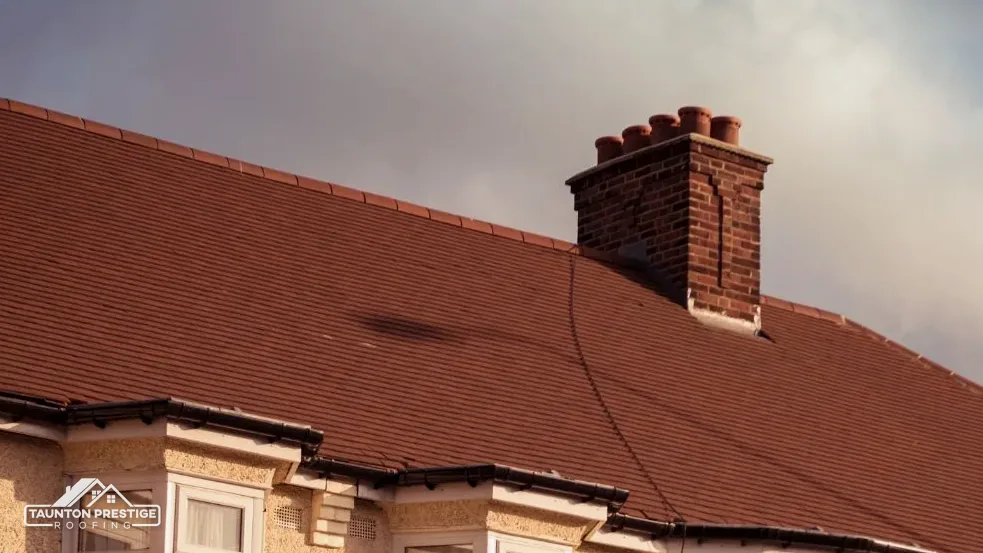
Stacks on old stone houses often show weathering first. The pointing, which is the mortar between the stones, wears back, the flaunching round the pots cracks, and the lead flashing lifts. We check all three from the roof and photograph them. MyJobQuote gives a typical UK range of £450 to £1,200 for chimney repointing (Oct 2026), and our chimney repairs page explains the repair order.
The parish takes in Pedwell, Nythe, Buscott, Berhill and Ashcott Heath. At Ashcott Heath a settlement of peat workers grew up after the moors were inclosed in 1798, commercial peat cutting had begun by 1851, and a peat factory near the railway station was producing fuel by the 1920s. Garages, workshops and sheds are part of any such place, and their roofs get less attention than the house.
A shed roof is the one nobody climbs until the stored boxes get wet.
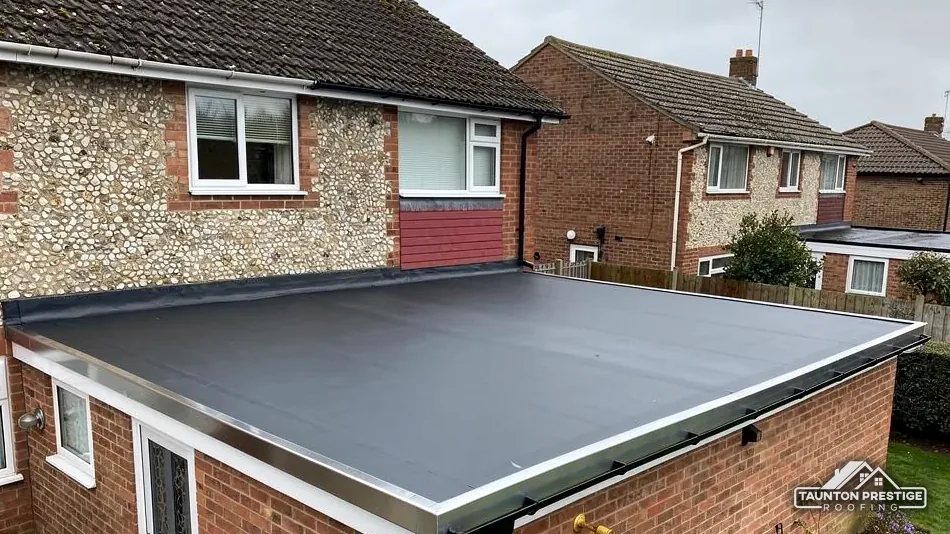
It depends on the covering. Less puts torch-on felt at 10 to 20 years, GRP at 25 to 40, and GreenSpec puts EPDM at 20 to 30. MyJobQuote gives a typical UK range of £750 to £3,500 for a garage roof, averaging £1,500 (Oct 2026). Those are guides, not our price. Size, the deck beneath and access decide yours. See garage and asbestos roofs for the options.
Check the date first. HSE advises treating a building built or refurbished before 2000 as if asbestos is present, and asbestos cement roofs are fragile, so never climb on one. The surveys we do identify the material before quoting. HSE sorts the two cases: whole sheets lifted with care are non-licensed work, and broken sheets fall into the notifiable class. MyJobQuote gives an average of around £2,750 for removing an asbestos roof and about £325 for a survey (Sep 2026). The waste goes on a consignment note. Torch-on felt, a bitumen membrane melted onto the deck with a flame, is easy to patch but shorter-lived than the alternatives, which is why Less puts it at 10 to 20 years.
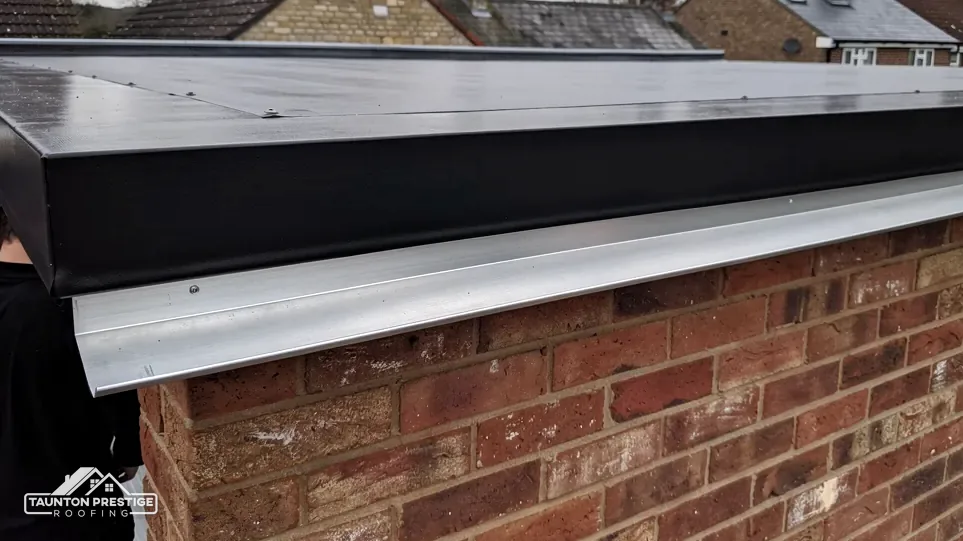
Sheds and garages often sit hard against a boundary wall. Where the roof meets that wall, a flashing or an upstand seals the joint, and a failed one soaks the wall rather than the shed. We check that line first, from the ground where we can and from the roof where we must.
Section 169 of the Highways Act 1980 means anyone putting scaffold on the highway needs a licence from the highway authority. For Ashcott that is Somerset Council. Permits there go to accredited contractors alone, and the application is theirs to complete. The fee is £124.60 for each 28-day period (April 2026), with at least 10 working days' notice and extensions if a job overruns. Because the fee runs per period, a scaffold that stands for two weeks costs the same as one that stands for four. A lane, a verge or a footpath can all count as highway.
What decides the price
Often not. A short repair can be reached from a ladder or a tower, and we say at the survey which access your roof needs. Scaffold on your own drive is private ground. If a roof is open to the weather before the scaffold can stand, we make it safe first and plan the full job afterwards. That difference matters for cost, because the weeks it stands and the licence behind it are real parts of the price.
Perhaps. A new covering that is 15 per cent or more heavier needs Building Regulations approval and a structural check. Otherwise the Planning Portal's test asks whether under 25 per cent of the building envelope and under 50 per cent of the roof is affected. Somerset Building Control, on 0300 303 7790, covers Ashcott.
Section 1 of the Wildlife and Countryside Act 1981 makes it an offence to intentionally destroy a wild bird's nest in use, so we check the eaves before a start date is fixed. You then receive survey photographs and one written total, and the site is cleared as we go. Tell us your Ashcott address and the problem, and the survey will be booked.
Walked the roof?
When you have read the checks, we walk the roof and show you the photos.
If the Church of England still uses it, the faculty system applies and the parish applies for it. The council's listed building consent covers other cases, such as a closed church. All Saints is listed Grade II*. We price only once the approval route is clear, and the work follows what was approved.
If the cottage is not listed and sits outside any designation, a like-for-like re-cover on a house does not normally need planning permission. A different material changes how the roof looks, and listed building consent is needed for a listed house. Ask Somerset Council's planning team before ordering anything, and keep the reply.
In HSE's terms, lifting whole sheets with care is non-licensed work, and breaking them up moves the job into the notifiable class. Nobody should walk on an asbestos cement roof, because HSE calls them always fragile. The waste is double-wrapped, labelled and moves on a consignment note. MyJobQuote's average removal cost is around £2,750 (Sep 2026), a typical UK figure.
MyJobQuote describes lead as something that "can last for over 80 years" (Sep 2026), which is a lower bound and not a promise. Parapet gutters fail at joints, laps and fixings long before the sheet is worn out. Our survey traces the stain to its source, and our lead work page explains the repair.
Tell us which building at Ashcott needs a look, and we will find a day for the visit.