St Michael's Grade II church
Grade II since 19 October 1984, and a working Church of England church, so its roof repairs follow a faculty.
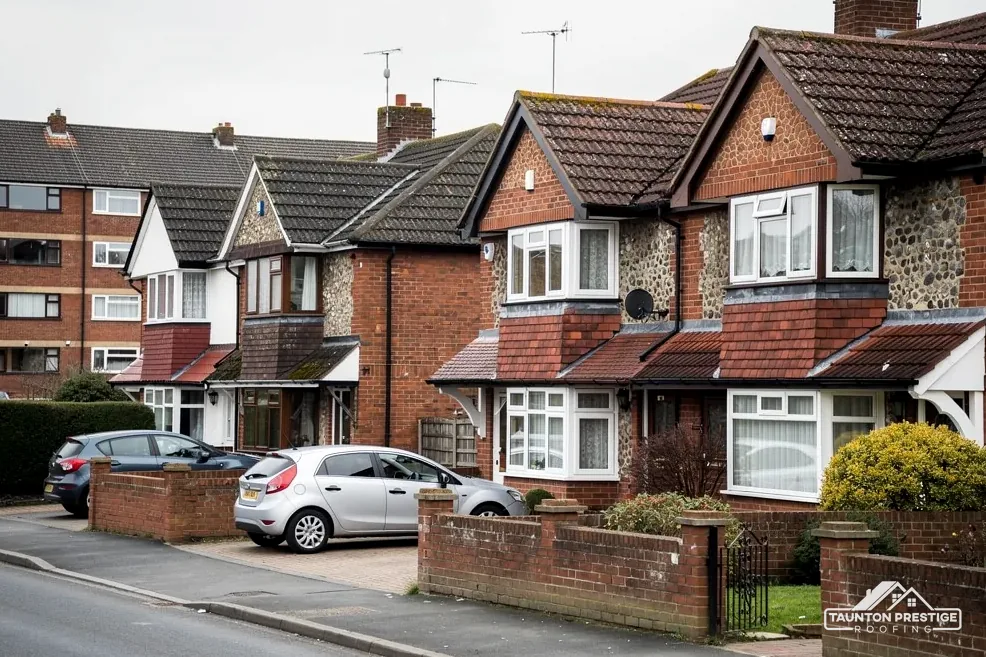
Almshouses, a Grade II church and the edge of a National Landscape
Beer has 1,280 residents, a Grade II church, a conservation area and part of the East Devon National Landscape close by. We survey each roof before any price.
Grade II since 19 October 1984, and a working Church of England church, so its roof repairs follow a faculty.
Listed since 8 May 1967, which makes listed building consent the first question before any roof change there.
Its boundary reaches within about 0.75 km of Beer's centre, so check an address before changing a covering.
Street map of Beer with Seaton, Colyford, Colyton, Kilmington marked around it, and Taunton.
Seaton lies just east of Beer, with Colyford to the north-east and Colyton to the north, while Sidmouth sits further west and Axminster to the north-east.
About 22 miles south of Taunton, East Devon District Council and Devon County Council.
Four checks beside the almshouses
What to look at on a house near St Michael's or inside the conservation area, and how each finding shapes the job and its price.
Beer packs a lot of protected building into a small village. St Michael's church has been listed Grade II since 19 October 1984, the almshouses since 8 May 1967, and the conservation area reaches to within about 0.75 km of the centre. We start every Beer survey by asking which of those labels apply to your house. That one answer tells you who must give permission, and it limits what we can lay back on the roof.
An ordinary house outside every designation is the easy case. Inside the conservation area, or when the house itself is listed, other people have a say. Listing does not strip a house of its permitted development rights, but work that changes what makes the building special also needs listed building consent. Small things count: a ridge (the capping along the very top of the roof) laid in a new style, or a roof window cut into a slope that faces the road. Our guide to planning permission for roof work covers when an application is required, which saves repeating it here.
Part of the ground within about 750 metres of the village centre falls inside the East Devon National Landscape, though the centre itself is outside it. National Landscape is simply the new name for an area of outstanding natural beauty. Because the change of name is not statutory, the planning rules keep the older wording. The planning authority for Beer is East Devon District Council, whose planning team can say whether your address is inside, and we write the answer into the survey notes so that any application starts from facts.
St Michael's itself is a working Church of England church. Its roof is a matter for the parish and the faculty system, and the roofer follows whatever specification is approved.
Look for
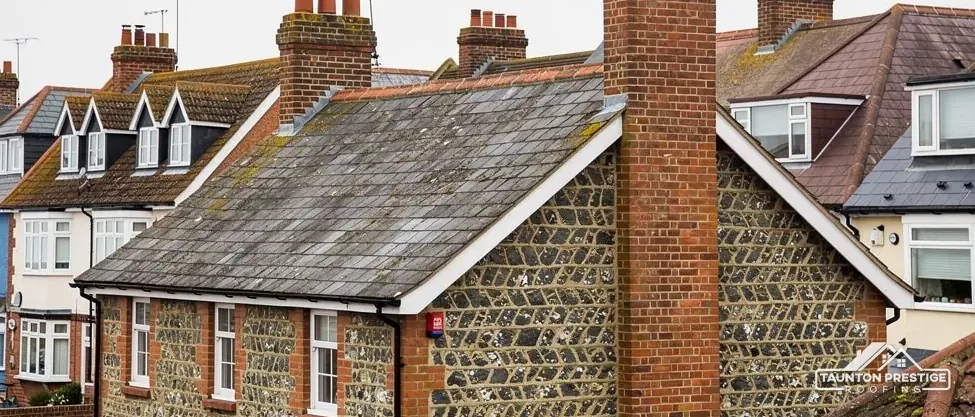
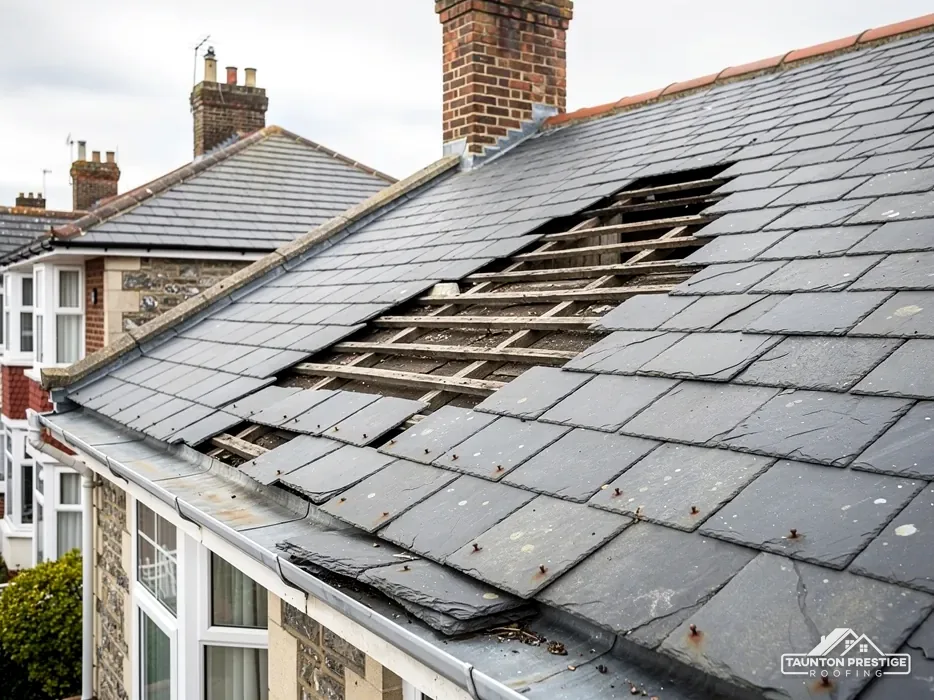
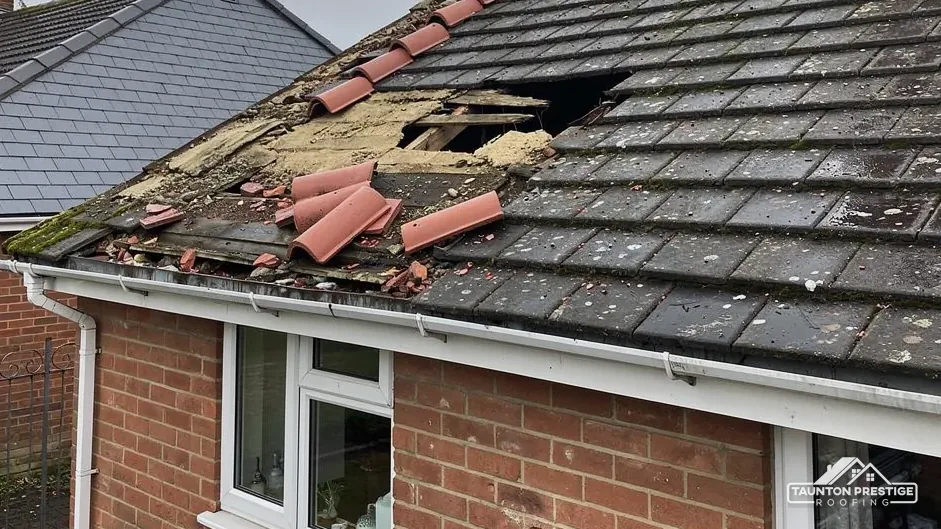
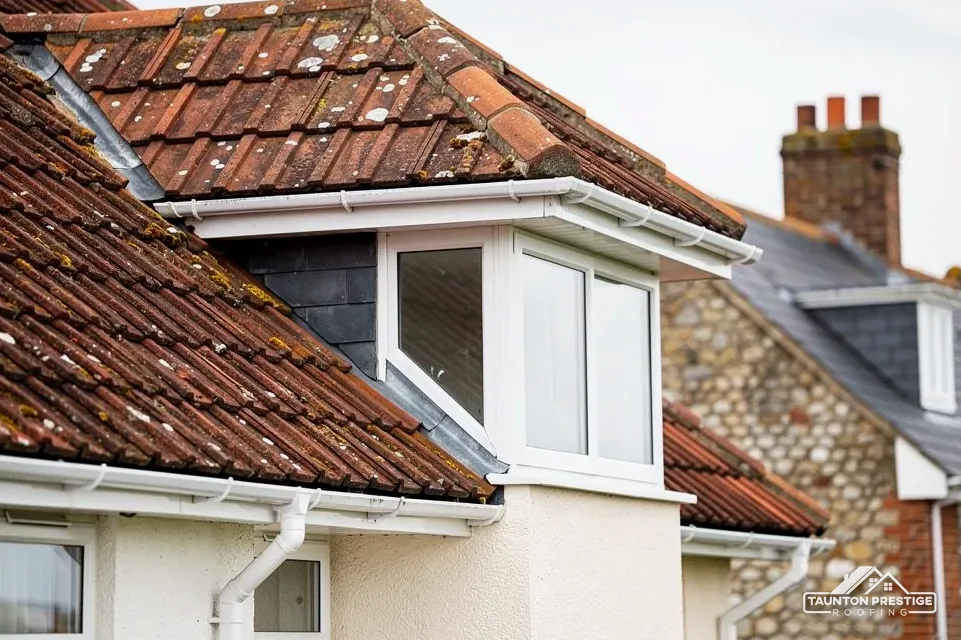
Older cottages seldom fail dramatically. You notice a slate sitting lower than the rest, a chipped piece lying in the border below the eaves, or a dark patch on a bedroom ceiling after a week of rain. Underneath, the covering is carried on battens, which are the thin timber strips nailed across the rafters, and every slate or tile is held to them by a nail or a hook. Once a fixing lets go, the piece drops, and the underlay, the membrane stretched beneath the battens, is left facing weather it was never meant to meet head on.
What decides the price
If one slate has slipped on an otherwise tight slope, we can slide it back and clip it, or fit a matching piece, and leave everything else alone. Three or four slipped in a line tell another story: the nails along that course have rusted through and more will follow. Chasing those with repeat visits adds up faster than relaying the slope on new battens would, so at the survey we show you the photographs and tell you which camp your roof belongs in. Sometimes the answer is a repair now and a plan for the whole slope later, and that is a perfectly good outcome.
For a listed house, or one inside the conservation area, yes, in practice. A replacement should sit alongside the old one in size, colour and grain, and where a reclaimed slate or tile does the job better than a new one, you hear that from us at the survey. Elsewhere in the village matching is a choice, though a patchwork roof ages unevenly and shows from the lane, and a buyer's surveyor will notice it too. Our slate roofing page explains how we weigh repair against relaying.
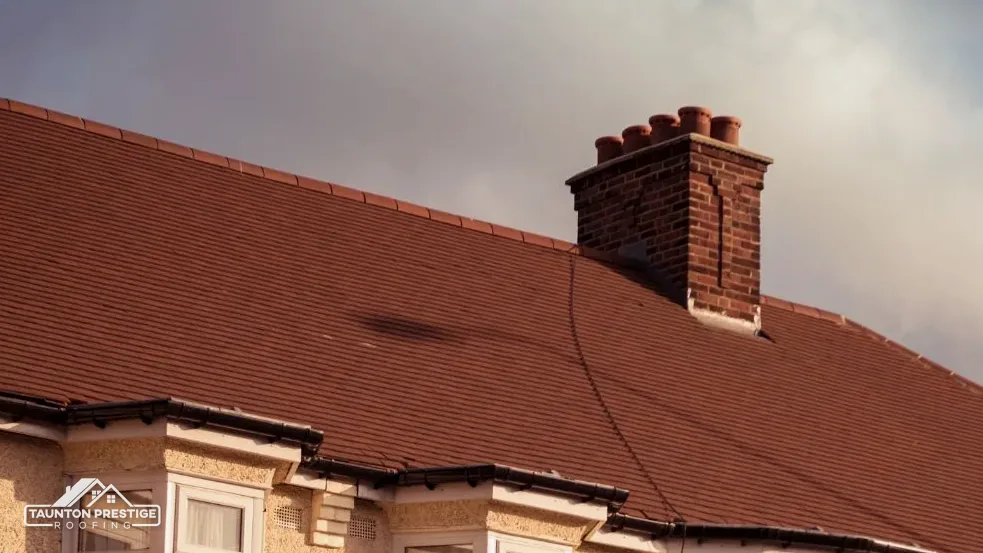
A chimney stack is a small building standing on the roof, and it takes more weather than any other part of the house. Water gets in at three places: the flaunching, the mortar collar that holds the pots in place; the joints between the bricks or stones; and the flashing, the lead strip dressed in where the brickwork joins the roof. Lead flashing can last for over 80 years, so when a stack leaks the fault is often in the mortar and not the metal.
A stack that has leaned once will not lean back, however much fresh mortar goes on it.
A cracked collar can be cut out and made again, and open joints can be raked out and repointed in a mortar that suits the old masonry. Once a stack leans, or the masonry has gone soft and crumbly, repointing only hides the problem, and taking the stack down to rebuild it is the sounder job. On a listed building, altering a stack may touch its character, so we raise listed building consent at the survey and not halfway through the work. Removing a chimney breast, the part inside the house, is another matter. The Planning Portal says Building Regulations approval will always apply, since the breast forms part of the building's structure.
Often, yes. A pair of binoculars in the garden shows tilted pots and missing mortar, and a brown stain spreading across the chimney breast after rain says water is coming down the flue or round the flashing. Our chimney repairs page sets out the repair options. Whatever the cause, we photograph the stack from the roof so you can see what we see before anything is decided. Pots are worth a look as well: a loose one can come down in a gale, and the fix is quick if it is caught early.
Ladders and a tower reach many small repairs. Bigger jobs need scaffold, and once it must stand on the road or pavement, section 169 of the Highways Act 1980 calls for a licence from the highway authority. For Beer that authority is Devon County Council, and its application route runs through the scaffolding firm, acting for the customer. Allow 10 working days; the council charges £158 per licence and sets 12 weeks as the longest period. Scaffold wholly inside your boundary, on a drive or in a back garden, stays off the highway, and none of this applies to it.
What decides the price
It fixes the earliest day the scaffold can go up, so we build the notice period into the date we give you. A job that overruns its licensed dates needs an extension, which costs a further £100. That is one reason we plan the order of work before the first slate comes off.
Under Planning Portal guidance, nobody normally has to apply to building control when less than 25 per cent of the building envelope and less than 50 per cent of the roof is affected. A covering that is 15 per cent or more heavier needs Building Regulations approval, and a structural check comes first. For an East Devon address, ask the district council's building control team or a registered building control approver. Bats and their roosts are fully protected by law, and roof work can disturb them, so we note any droppings under the ridge during the survey.
Afterwards you hold photographs of your own Beer roof and a single written total. Send us the address along with a line on where the trouble shows, near the church, by the almshouses or further out, and we will book the visit.
Walked the roof?
When you have read the checks, we walk the roof and show you the photos.
No. The faculty system covers the church building itself, which belongs to the Church of England and is in use. A neighbouring house is judged on its own status: ordinary, inside the conservation area, or listed. We check which at the survey, and the consent route goes in your notes before the price is written.
The village centre sits outside it, but part of the ground within about 750 metres of the centre lies inside. Whether your address does is a question for East Devon District Council's planning team. We record what covers the roof and send photographs, so an application is written from what is really there.
Your building control body, meaning the East Devon district council team, or a registered building control approver. On the Planning Portal's test, nobody normally applies when less than 25 per cent of the building envelope and less than 50 per cent of the roof is affected. A heavier covering changes that.
Removing chimneys from a party wall is notifiable work under the Party Wall etc. Act 1996, with notice given two months or more ahead of the start. GOV.UK adds that silence does not mean agreement. Repointing or new flaunching is a different job. Questions go to a party wall surveyor, not to building control.
Name the roof near the church or the almshouses that is bothering you, and a survey visit follows.