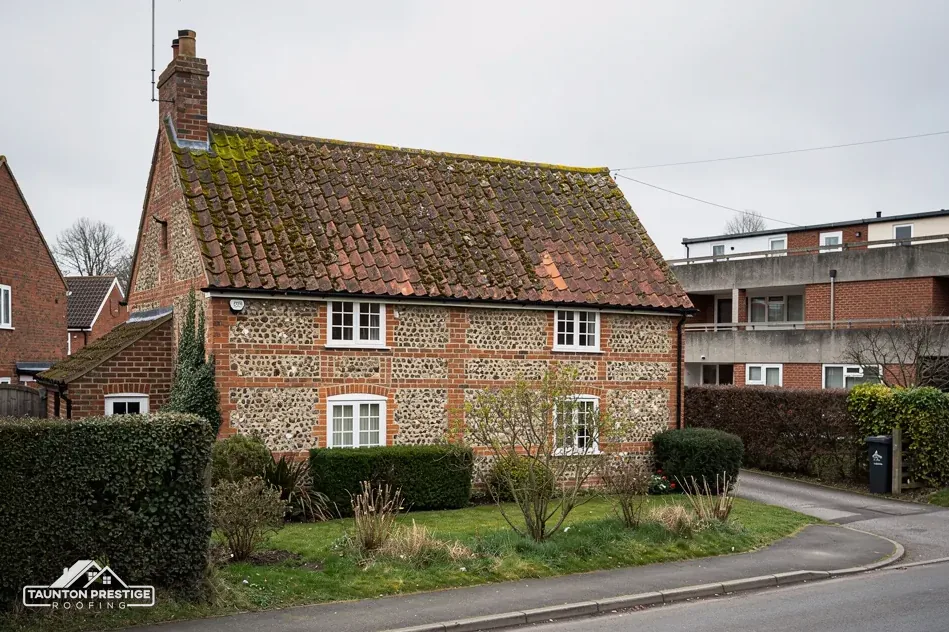
St Gregory's, Grade I
Listed on 2 October 1951 and a working Anglican church, which sends roof work down the faculty route.
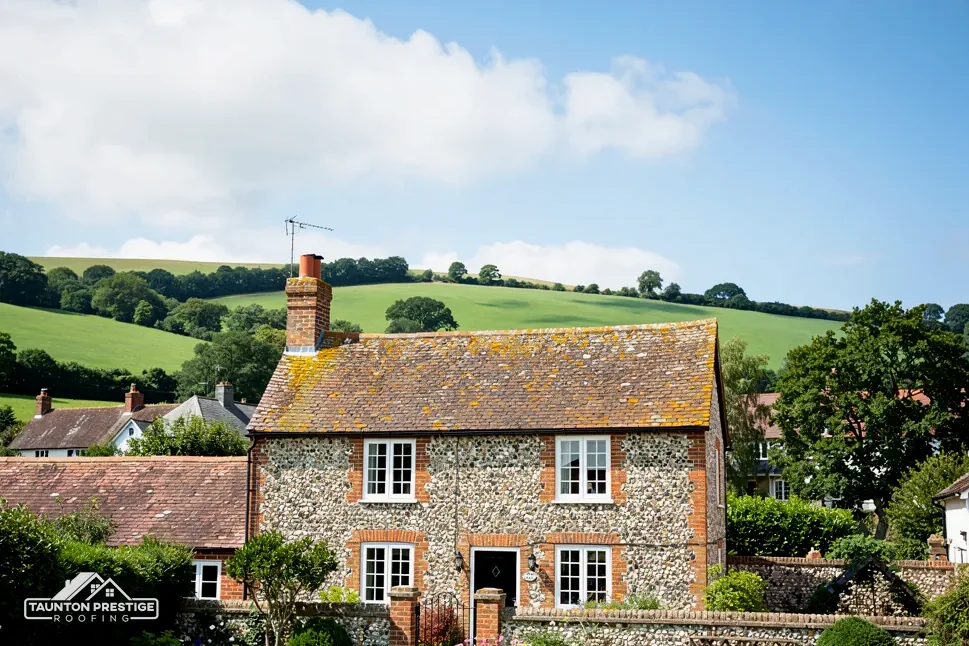
A Grade I church, listed Fore Street buildings and a former hotel
Seaton's landmarks include St Gregory's, a Grade I church, and a conservation area, with listed buildings on Fore Street. Each roof is read first, then priced once, in writing.
Listed on 2 October 1951 and a working Anglican church, which sends roof work down the faculty route.
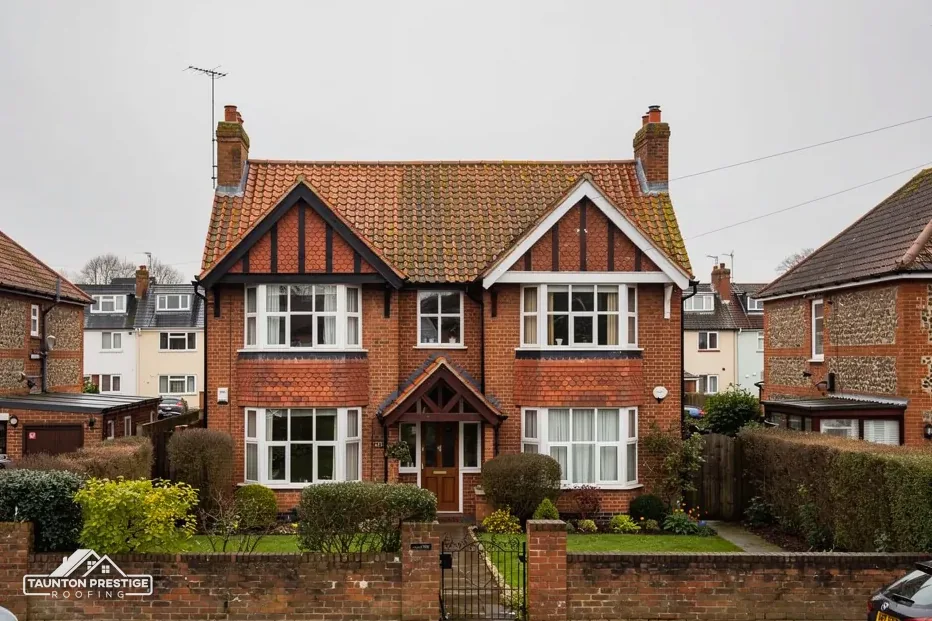
1-10 Delapole Court, the former Pole Arms Hotel, was listed Grade II on 2 October 1951.
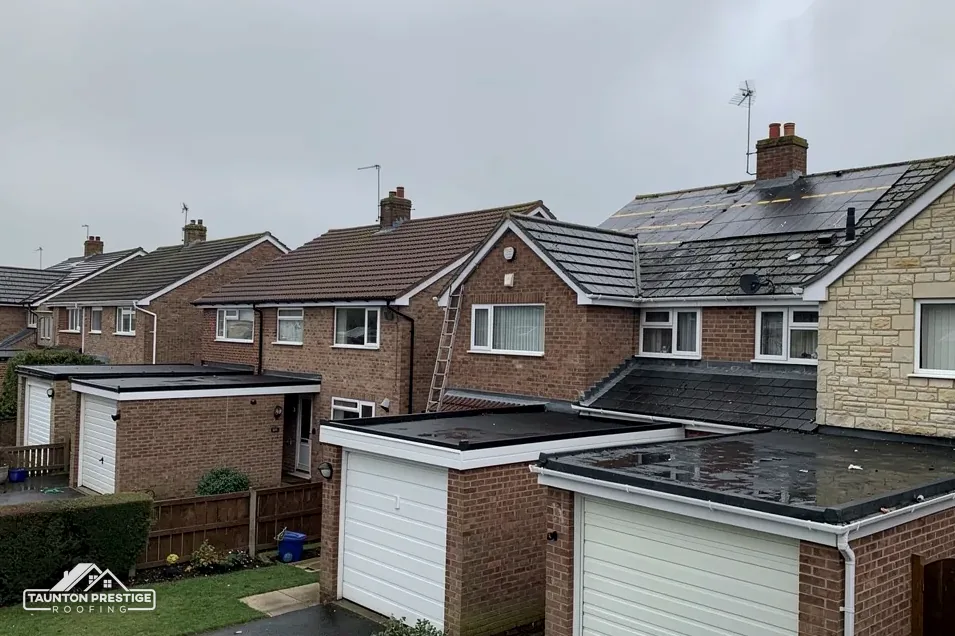
Numbers 6 and 33 Fore Street are both Grade II, so any roof work there needs a listing check first.
Street map of Seaton with Beer, Colyford, Colyton, Kilmington marked around it, and Taunton.
Beer lies to the west of Seaton, Colyford and Colyton to the north and Lyme Regis to the east, with Uplyme and Kilmington further out.
About 21 miles south of Taunton, East Devon District Council and Devon County Council.
Four checks from Fore Street outward
Four things to check on a Seaton house or shop, because each answer moves the consent, the method and the price.
Seaton's centre carries several listings that a roofer needs to know about before pricing. The Church of St Gregory is Grade I, first listed on 2 October 1951. The former Pole Arms Hotel, 1-10 Delapole Court, was listed Grade II on the same date, and 6 and 33 Fore Street are Grade II as well. The planning data also shows a conservation area, simply named Seaton, within about 0.75 km of the centre. Any of these can shape what is allowed on a roof, and none shows from the pavement, so the register comes first. Where a chimney stands on a party wall, the Party Wall etc. Act 1996 may apply, and the neighbour is owed notice two months or more before work starts. For that, speak to a party wall surveyor; building control is the wrong desk.
Not always. Our planning guide explains how the national rules treat flats and houses differently. If your roof covers flats, or a shop with flats above it, ask East Devon District Council what consent applies before a covering is changed. It is a quick question, and it saves a wasted survey.
East Devon District Council, which is the planning authority here, grants listed building consent for any work touching a building's special interest. A repair in matching material is a routine job; a different covering, a rebuilt chimney or a new roof window is not. St Gregory's, as an Anglican church in use, takes the faculty route through its parish instead. Our page on listed building roof consent goes into the detail, and our notes record what covers each slope, so the planners see the existing roof.
Look for
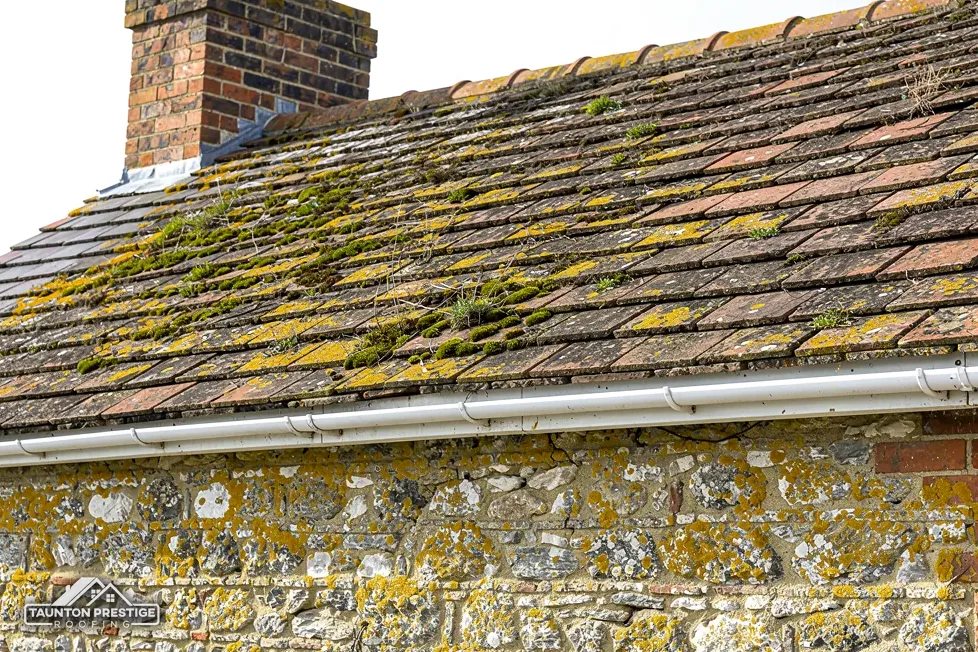
Moss soaks up water and sits against the covering, blocks gutters when it drops, and makes a street look neglected. Reaching for a pressure washer feels like the quick answer, yet Marley, a tile maker, does not recommend high-pressure jetting: the blast can strip the surface off slate or tile and cut years from the covering. Any cleaning method has to suit the covering, and the covering needs to be in fit state to survive it. On an old, brittle roof a gentler approach may be the only sensible one. Once the moss is off, we look again from the ladder and the loft, because cleaning can uncover slipped slates and cracked tiles that the growth was hiding.
The quickest clean is not always the kindest to the covering.
What decides the price
HSE draws a line: some biocides are sold for professional users only, and the public should keep away from them. Using, storing or selling an unapproved product is itself an offence under the biocides rules, and each product has to be used as its approval states. In practice, read the label, and leave professional-only treatments to a professional. We check which product suits your covering before anything is sprayed.
Nationally, MyJobQuote (Sep 2026) reports an average of about £475 for pressure-washing the roof of a typical semi, although Marley's advice that high-pressure jetting is not recommended on tiles and slates still stands. Because the figure covers washing alone, it says nothing about repairs that cleaning exposes, which is why the second look matters. That shows what owners expect across the UK, never what we charge. The method, the access and the covering decide our price, and the survey comes first. Our roof cleaning and moss removal page explains the gentler options, and cleaning often goes together with a gutter clear-out.
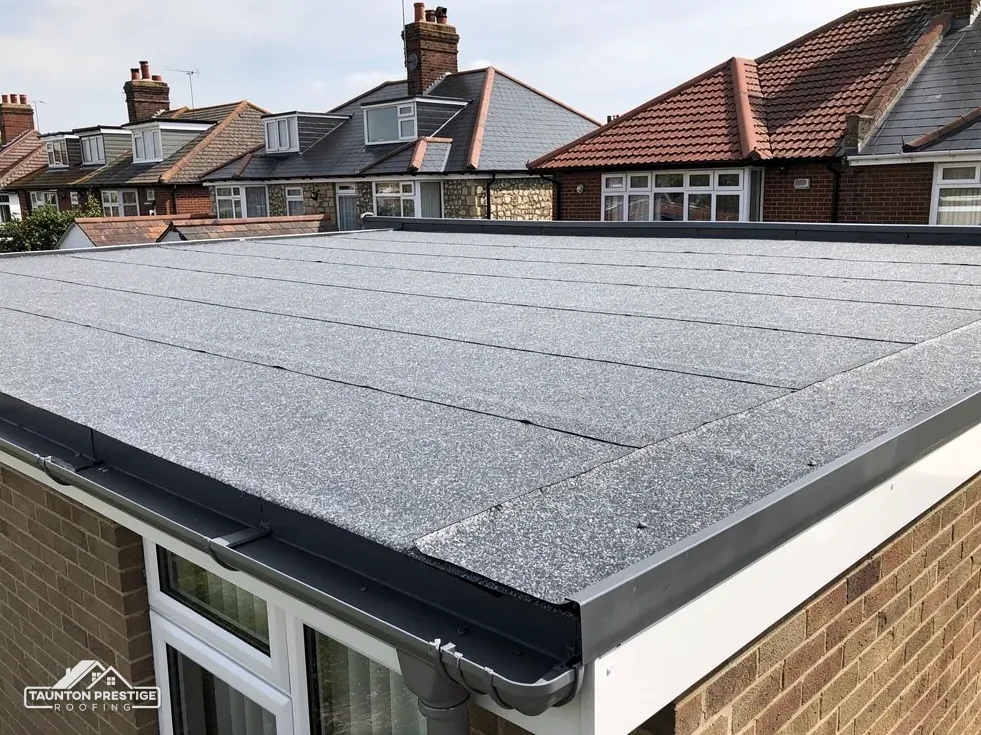
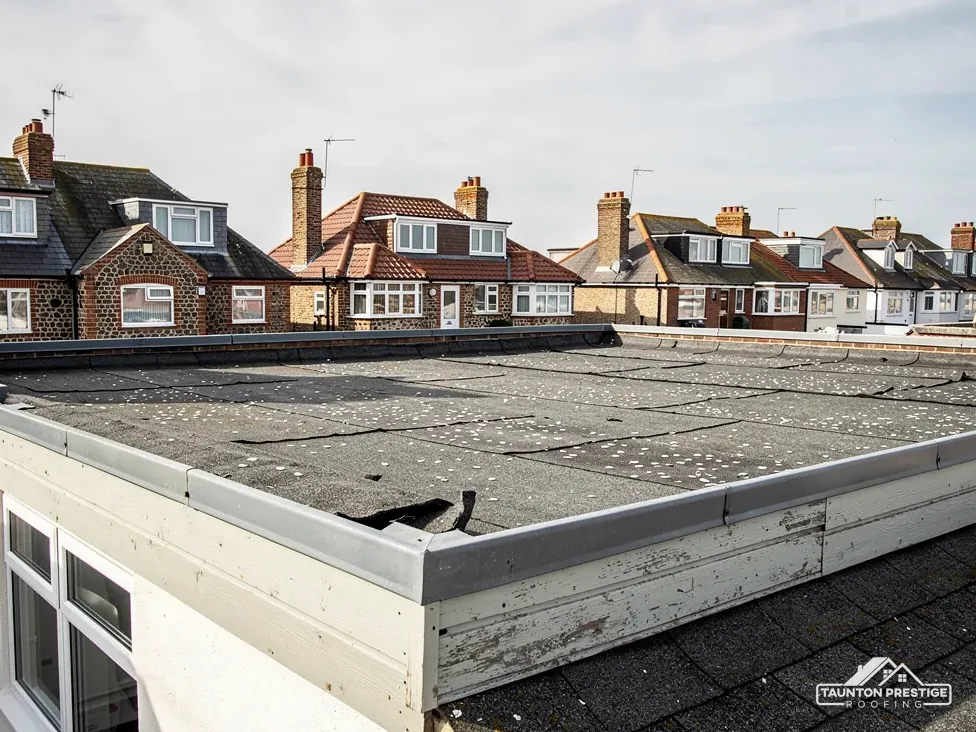
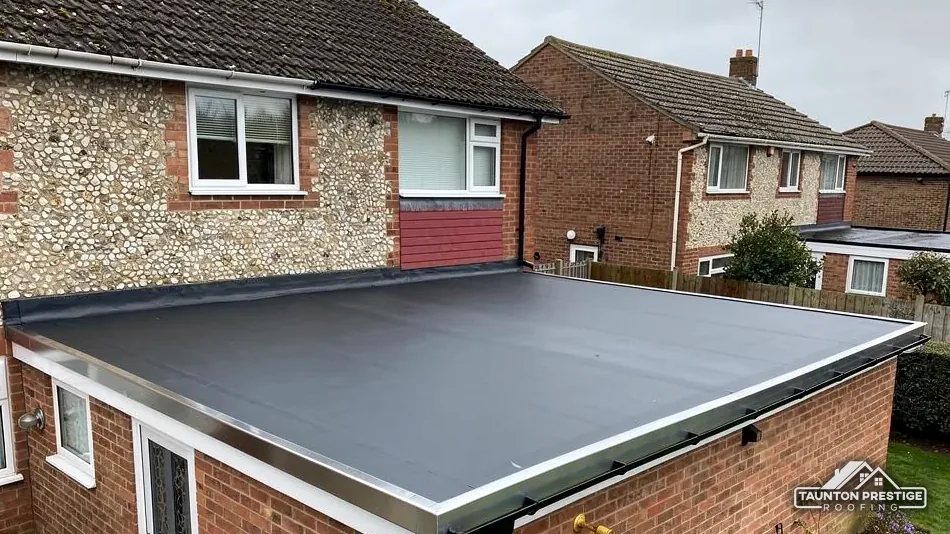
The Environment Agency's Flood Map for Planning puts Seaton within about 250 metres of Flood Zone 3. A map of land says little about a garage roof; the question for a roof is the speed at which rain leaves it, and a single address can be looked up in GOV.UK's long-term flood service. A garage or extension roof with the wrong fall holds a puddle for days, and a puddle works at every seam. The outlets at the edge of a flat roof need clearing in autumn, because leaves bank up quickly in a garage run.
The finished fall BS 6229:2025 asks for is 1:80 at the least, so a roof should be designed steeper, and IKO suggests 1:40. If water hangs about for days, either the deck has sunk, an outlet has clogged or the fall was short to begin with. A leak that shows only in strong wind is often a lapped seam or a lifted edge trim, not the middle of the roof, so we trace the stain nearest the wall and work uphill along the wet timber from inside the loft before we look outside. Laying new covering on a dipped deck simply recreates the puddle, so the deck is corrected first, before any membrane goes down.
MyJobQuote's October 2026 pages give a typical UK range of £750 to £3,500 for a garage roof, averaging £1,500, and £1,500 to £6,000 for replacing a flat roof, averaging £2,400. The same guide puts EPDM, a synthetic rubber sheet, near £60 per square metre. A sound deck with one split seam suits a patch; widespread blistering or open laps point to replacement. Our flat roofing page sets out where each covering fits.
When poles must stand on the pavement or road, Devon County Council, the highway authority for Seaton, licenses them, and the application comes from the scaffolding firm on behalf of the customer. The licence fee is £158, covering the works dates for up to 12 weeks. An extension or amendment is £100, and 10 working days' notice is the minimum; asking at shorter notice raises the fee to £238. Short-notice licences cost more than planned ones, so an early date for the survey saves money on the scaffold.
What decides the price
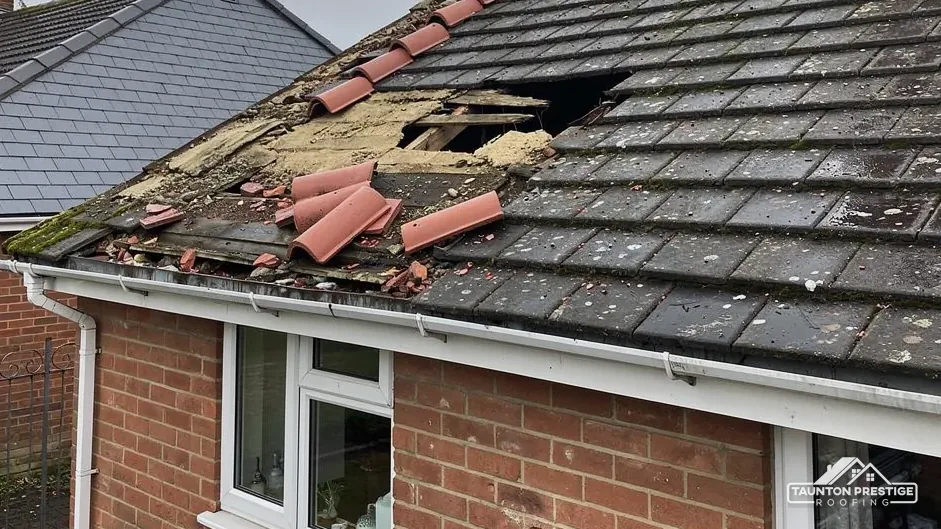
In the Ombudsman's view a storm means violent winds that usually come with rain, hail or snow, which separates it from ordinary wear. A dated record of the damage also helps your insurer see what happened. Ring the insurer first. Stop further harm with a temporary repair, and hold on to photographs and receipts throughout. Making a leaking roof safe is the first task, and dated pictures are taken for you. A tarpaulin or temporary patch is only a stopgap, holding the weather off until the lasting repair has been agreed. If a complaint follows, the Financial Ombudsman Service takes it up once the insurer's final response arrives or eight weeks pass.
For East Devon addresses, ask the district council's building control team or a registered approver. Building control normally wants no application where the work touches less than 25 per cent of the building envelope and less than 50 per cent of the roof (Planning Portal). Heavier coverings change that. When the visit ends you hold a set of dated pictures and one written total. Give us your Seaton address with a note about the leak or the moss, and we will book it.
Walked the roof?
When you have read the checks, we walk the roof and show you the photos.
Marley does not recommend high-pressure jetting, because it can wear the surface from slate or tile and cut years from the covering. The public should also avoid biocides sold for professional use only, and any product must be used as approved. We look at the covering first, then agree a method with you.
St Gregory's is a Grade I church used for Anglican services; roof work there needs a faculty, which the parish requests, and the council's consent does not come into it. Listed building consent applies instead to a listed house or shop, such as the Grade II buildings on Fore Street. A dated record of the roof helps either route.
Devon County Council charges £158 for a licence covering the works dates for up to 12 weeks, and £100 for an extension or amendment. Devon County Council asks for at least 10 working days' notice, and it expects the scaffolding firm to apply on the customer's behalf. Poles kept inside your own boundary are not on the highway and need no such licence.
The Financial Ombudsman Service treats a storm as violent winds that usually come with rain, hail or snow, so ordinary wear is a different matter. Contact the insurer before anything else, secure the roof, and file your photos and receipts. Ours is not an insurer's role: we record the damage and repair the roof, and the outcome of any claim is for the insurer.
Give us your Seaton address and a note about the leak or the moss, and we will book the survey.