Royal Glen Hotel
Listed Grade I on 12 October 1951, one of the town's 170 listed entries within 900 metres of the centre.
Four conservation areas and a Grade I hotel in the Sid Vale
Sidmouth has four conservation areas near its centre and 170 listed entries within 900 metres of it. Each roof is read slope by slope before a price is set.
Listed Grade I on 12 October 1951, one of the town's 170 listed entries within 900 metres of the centre.
Grade II*, first listed on 12 October 1951; the consent route depends on who uses it today.
Town Centre, Sid Vale, Bickwell Valley and Elysian Fields all lie within reach of the centre.
Street map of Sidmouth with Ottery St Mary, West Hill, Beer, Gittisham marked around it, and Taunton.
Ottery St Mary and Gittisham lie to the north of Sidmouth, West Hill to the north-west, and Beer and Seaton to the east.
About 24 miles south of Taunton, East Devon District Council and Devon County Council.
Four checks across the Sid Vale
Designations, valleys, loft air and storm damage: what we look at on a Sidmouth roof, and why each point moves the price.
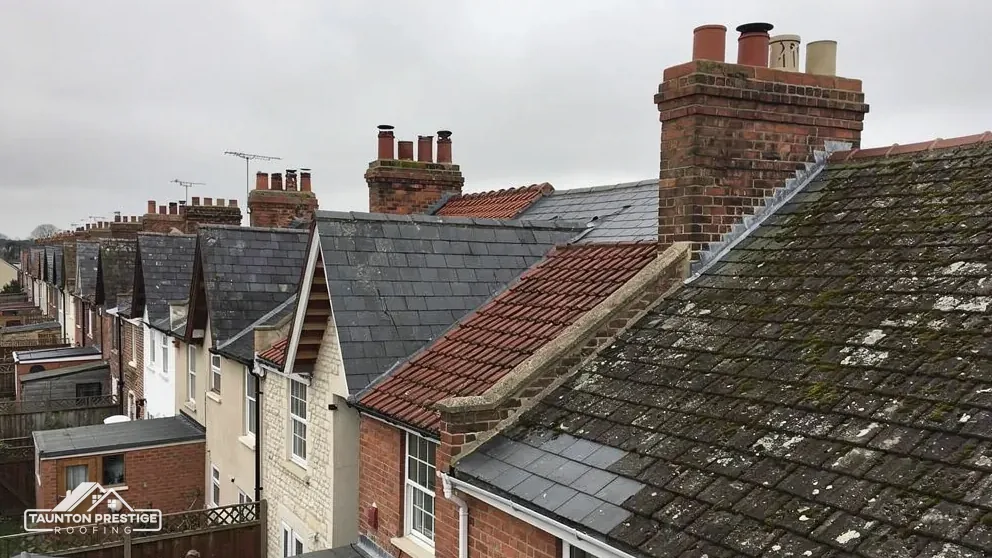
Four conservation areas lie close to Sidmouth's centre: Town Centre, Sid Vale, Bickwell Valley and Elysian Fields. The national planning dataset places the Bickwell Valley area within about 0.75 km of the centre and shows the other three touching the same search. East Devon District Council decides planning applications here, and its boundary maps settle whether your road is inside one. A small slice of the search area also touches the East Devon National Landscape, so a house on the outer edge deserves a question to the council.
The Royal Glen Hotel and The Old Chancel are both Grade I, and Audley and the Church of St Giles with St Nicholas are Grade II*. The Royal Glen Hotel and the church were first listed on 12 October 1951. With 170 listed entries within 900 metres of the centre, a plain-looking house can still be listed, or sit next to a listing, so we check the address before we quote.
No, but it asks for more care. A roof that keeps its material, slate size and ridge line looks as it always did, which makes it the easy case. Switching the covering, fitting a roof window to the road elevation or raising a chimney deserves a word with the planning team before money is spent.
For a repair confined to one slope, the question is small: does the replacement match? For a re-roof the question is bigger, and the council's view of the finished look carries weight. We would rather you heard that before the quote than after the scaffold goes up.
Our survey photographs each slope and records the covering, so you hold a clear picture of today's roof if the council ever asks what is being replaced.
Look for
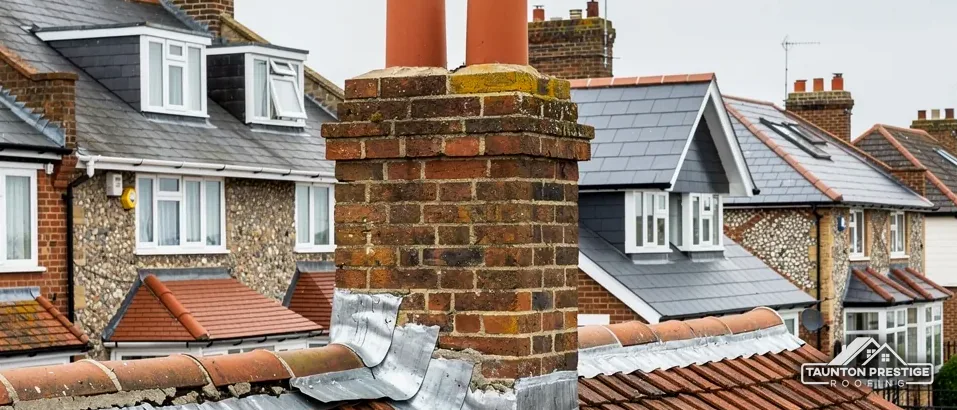
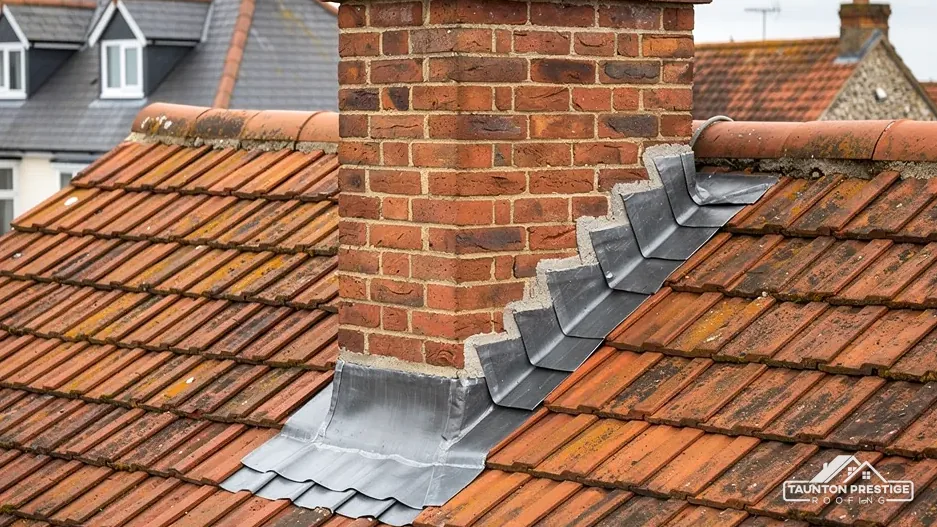
Think of a valley as the channel formed where two slopes run into each other: every drop from both ends up in it. Water arrives there fast, so the lining of a valley, whether lead or tile, is worth checking whenever a ceiling stains. Soakers are the small lead pieces slipped beneath the slates or tiles at the point where the roof runs up against a wall or chimney, stopping water from creeping behind the covering.
What decides the price
Lead is sold in numbered codes, each a thickness grade. Royston's cast lead brochure lists code 3 (1.32 mm) for soakers alone, code 4 (1.80 mm) for soakers, flashings and dormers as well as pitched valley gutters, and code 5 (2.24 mm) for flashings, dormers and valley gutters, plus parapet and box gutters. Thicker costs more and is not automatically better, because the code has to fit the detail.
According to MyJobQuote, lead flashing can last over 80 years; treat that as a minimum, not a promise. Poor fixing and trapped debris shorten it. Most full roof valley replacements cost around £540 (MyJobQuote, Sep 2026), and the quote depends on the length of valley and the access to it.
A split in one spot can sometimes be patched, but patching old lead rarely lasts when the metal has fatigued along the whole run. We lift a few courses beside the valley at the survey, photograph the lining and show you which case you are in. That is the only way to know whether the lining is sound, because the surface of a lead valley can look tidy while the sheet beneath has cracked at the fold. At the point where a valley finishes against masonry, the lead must be shaped to fit both surfaces, and that junction gets the closest look. Our lead work page sets out the options.
Damp in a loft does not always mean a leak. Warm, moist air rises from the rooms below, and if the roof space cannot shed it, water condenses on cold timber and on the underlay. BS 5250:2021 is the British Standard on managing moisture in buildings. It is current, though under review.
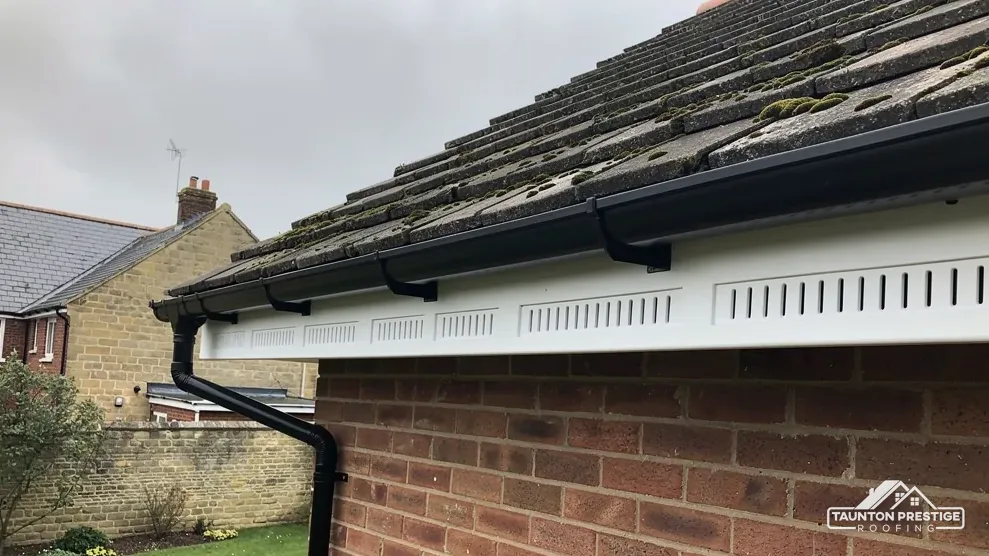
The underlay is the sheet stretched over the rafters, under the battens. An HR underlay is non-breathable, and in a cold roof, where the insulation sits at ceiling level and the loft above stays cold, Marley sets eaves ventilation at 25mm for pitches of 15 degrees or less and 10mm for steeper ones, measured along the eaves. Over a well-sealed ceiling, Marley says a breather (LR) underlay can lean on the 3mm of air that ordinary eaves construction already gives, once third-party certification is in place.
A roof that keeps rain out but traps damp air has only done half its job.
Usually because the ventilation path was blocked or reduced, for example by insulation pushed hard into the eaves. Our guide on loft condensation after a new roof explains the causes. We check the eaves, the underlay type and the ceiling seal during the survey, and our roof inspections page shows what we photograph.
The answer depends on the construction. A warm roof has insulation above or between the rafters and handles moisture differently from a cold roof, and BS 5250 sets out the principles for each. What matters in practice is that whoever lays the new covering knows which type of roof they are working on and leaves the air path as designed. We write the type into the survey notes so there is no doubt.
A ventilation fault is easy to create when new insulation is laid thickly across the loft floor. If it reaches the eaves it can block the air path, which is why we check the gap at the eaves before and after any insulation work.
The aim is a roof that keeps rain out and lets damp air go, with the right route in place before the covering goes back.
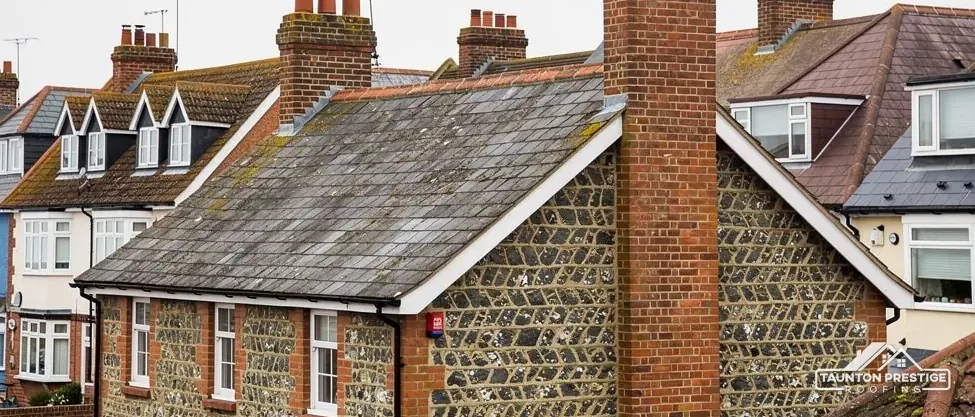
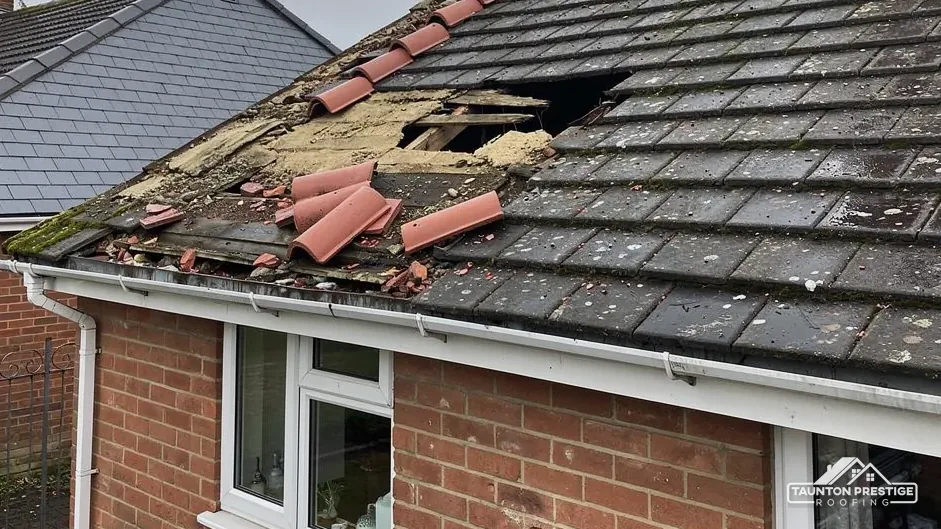
When a gale lifts slates or takes a ridge, the first moves are practical. Make the house safe and tell the insurer first. A temporary repair that stops water entering is sensible, and making a leaking roof safe is our first job. Keep every receipt and photograph the damage thoroughly; IStructE calls photographs vital for an insurance claim.
Water through a ceiling needs a bucket and a clear floor before anyone climbs a ladder. Then ring the insurer, take photographs from the ground and keep clear of the roof. The permanent repair is planned from the survey, once the roof is safe.
The Financial Ombudsman Service explains that a storm usually means violent wind, with rain, hail or snow. If an insurer does not send a final response letter within eight weeks, you can bring the complaint to the Ombudsman, and you have 6 months from the date on a final response to do so. Its service is free.
It can. At Devon County Council the scaffolding company applies for the licence on its customer's behalf. The licence costs £158, at least 10 working days' notice is asked for, and an emergency application costs £238. When the pavement is not involved, a tower or ladders may reach the damage.
Insurers differ in what they ask for, and policy wording matters. Read the storm section before the roofer arrives, note any excess, and ask whether the insurer wants to see the damage before a permanent repair starts. We can hold the permanent work for a short time while you ask, provided the roof has been made safe.
We cannot promise what an insurer will pay, and the decision is theirs. You leave the survey with a photo record of the roof and one written price covering the repair. Give us your Sidmouth address and tell us what the storm took, and we will set up a visit.
What decides the price
Walked the roof?
When you have read the checks, we walk the roof and show you the photos.
Possibly, and it depends on the slope it faces and on any restrictions that apply to your road. A window on the street side gets a closer look than one at the back. Ask East Devon District Council's planning team before ordering, and bring the photos from our survey so the roof is clear.
Stains on the ceiling below the line of the valley, daylight at the junction, or lead that is split, curled or buckled. Water arriving from two slopes at once shows up quickly. We lift the covering beside the valley to look at the lining and photograph it, so you can see what the metal looks like.
Not always. The Planning Portal's test excuses a re-roof from a building control application when under 25 per cent of the building envelope and under 50 per cent of the roof is involved. If the new covering is 15 per cent or more heavier, approval is needed, so check with your building control body if in doubt.
Take wide shots from the ground showing the whole elevation, close shots of missing slates or tiles, damage inside such as stains and drips, and anything that has fallen into the garden. Keep receipts for any temporary repair. Our survey adds a second set from the roof itself, and between them the insurer can see the whole picture.
Say what you can spot from the ground, and our survey will look at the rest.