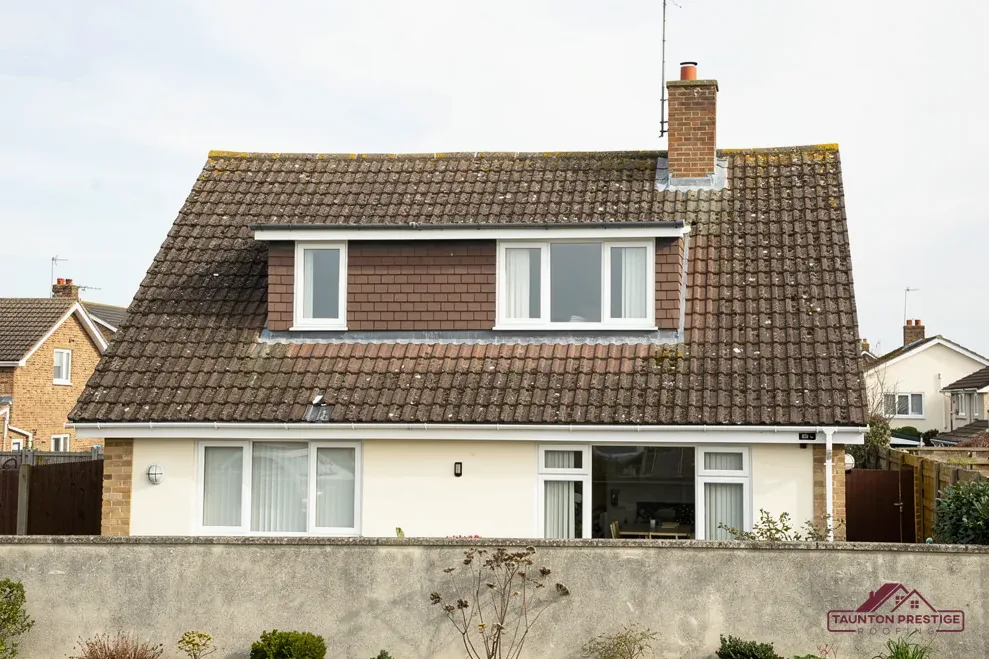
Church of St Andrew
Listed Grade I on 8 May 1967, with Church of England services continuing, so roof work needs a faculty.
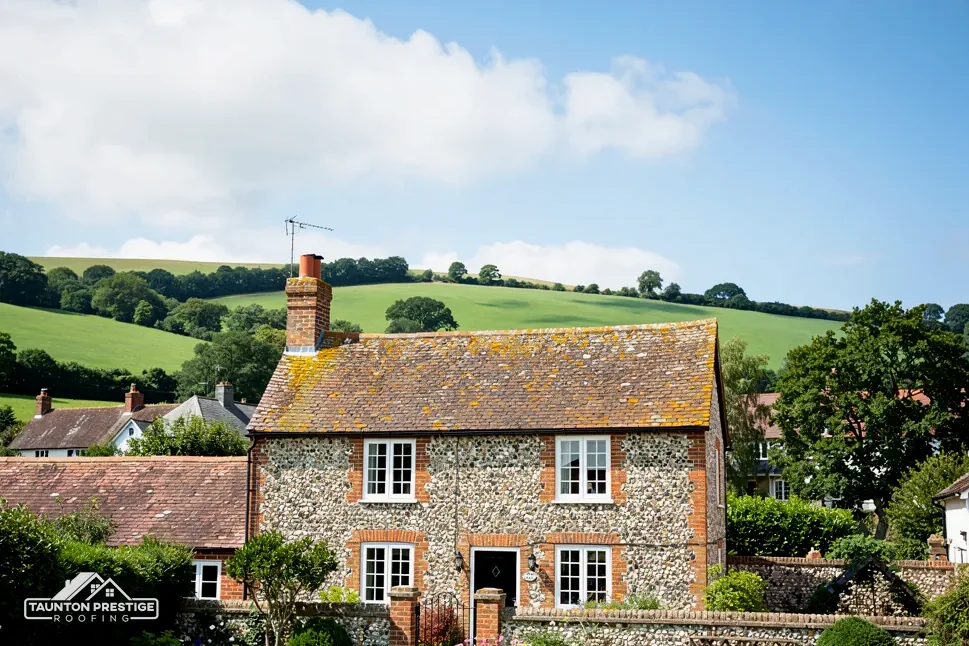
A Grade I church, Great House and a National Landscape edge
Colyton's parish church is Grade I and Great House Grade II*; the town has a conservation area, and the East Devon National Landscape reaches its edge.
Listed Grade I on 8 May 1967, with Church of England services continuing, so roof work needs a faculty.
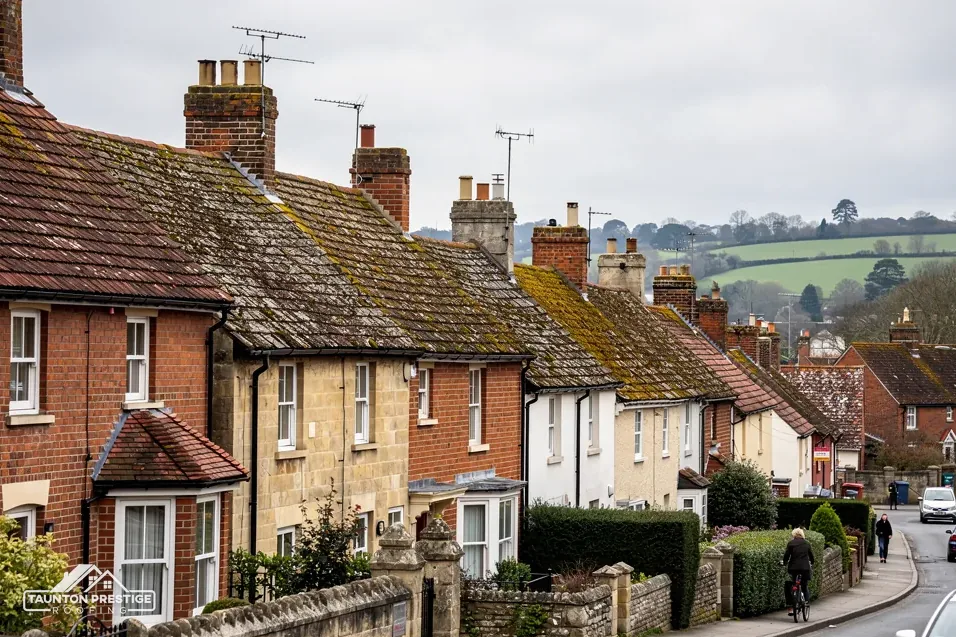
Listed Grade II* on 8 May 1967, so any change to its roof is a matter for listed building consent.
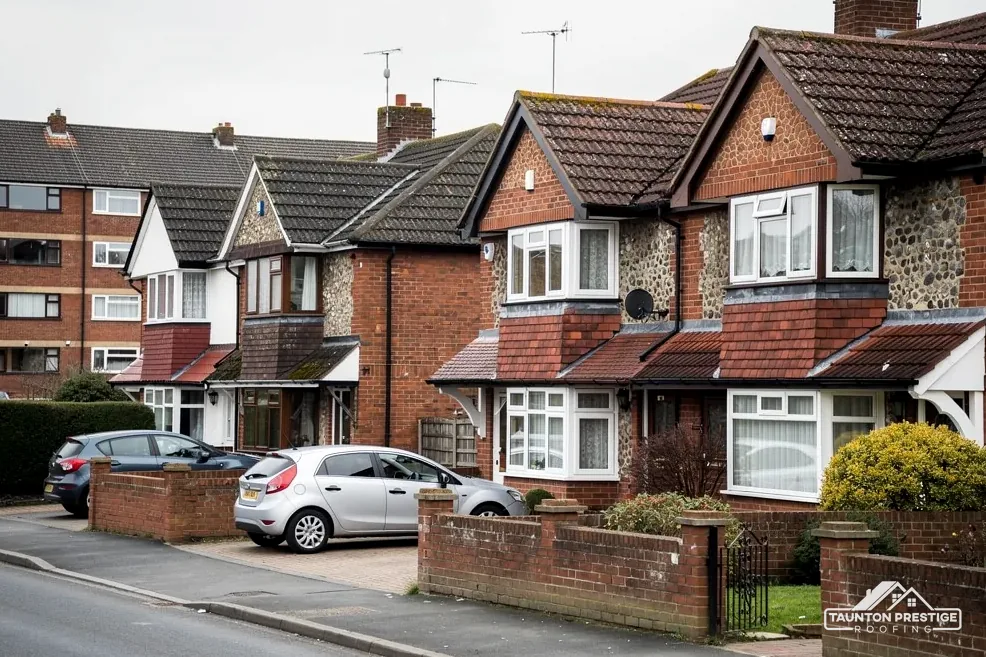
35 Queen Street and 6 Vicarage Street are listed Grade II, among 68 listings within 900 metres.
Street map of Colyton with Colyford, Seaton, Kilmington, Beer marked around it, and Taunton.
Colyford lies just south of Colyton and Seaton south, with Beer further south. Kilmington is north-east, Axminster north-east beyond it, and Uplyme and Lyme Regis lie east.
About 19 miles south of Taunton, East Devon District Council and Devon County Council.
Four checks in an East Devon town
Who decides on a listed roof, how a chimney stack leaks, why gutters near the flood map matter, and how a Devon scaffold licence and a storm claim run.
Colyton is a town of 3,278 residents by the 2021 Census, and 68 list entries stand within 900 metres of its centre. Great House is Grade II*. St Andrew's church carries Grade I, and its listing date, 8 May 1967, is shared with Great House. 35 Queen Street and 6 Vicarage Street are Grade II. The conservation area reaches to within about 0.75 km of the centre. With a list that long, the first thing we do at a survey is ask whether your house is on it, and the planning team can tell you whether the conservation area covers your street.
The East Devon National Landscape, formerly an AONB, edges the town. The place point itself lies outside, but about 44 per cent of a 1.5 km square around it falls inside, so some addresses are in and some are out. That matters because article 2(3) land, the planning term for such places, carries tighter permitted development rules. East Devon District Council is the planning authority and can say which side of the line you are on. Our guide to planning permission for roof work explains the routes.
St Andrew's is in Church of England use, which means a faculty and not council consent. Great House is no church, so alterations that touch its character need listed building consent from East Devon District Council. Keep contractors off both until the right approval is in hand. Where a listed house needs new tiles or slates, reclaimed pieces from a similar roof often match in size, colour and texture best, and the council may ask to see them. Our photographs of each slope, ridge and chimney travel with any application, so the officer reads the roof as it stands.
Look for
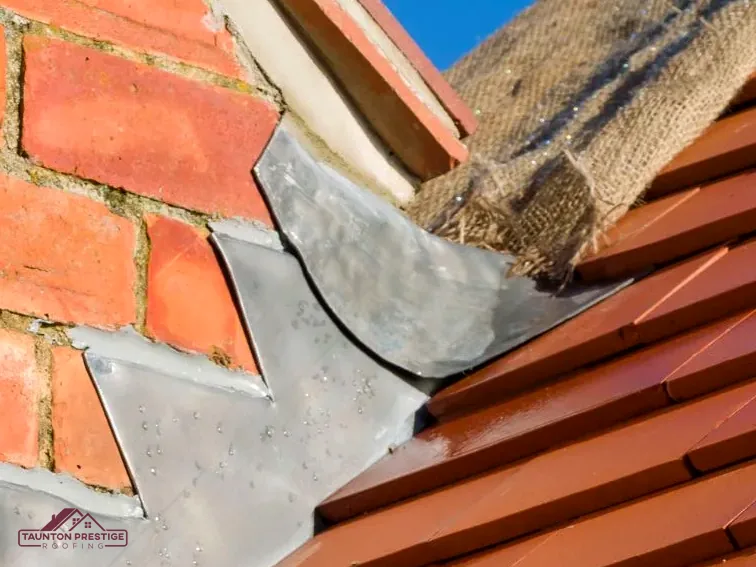
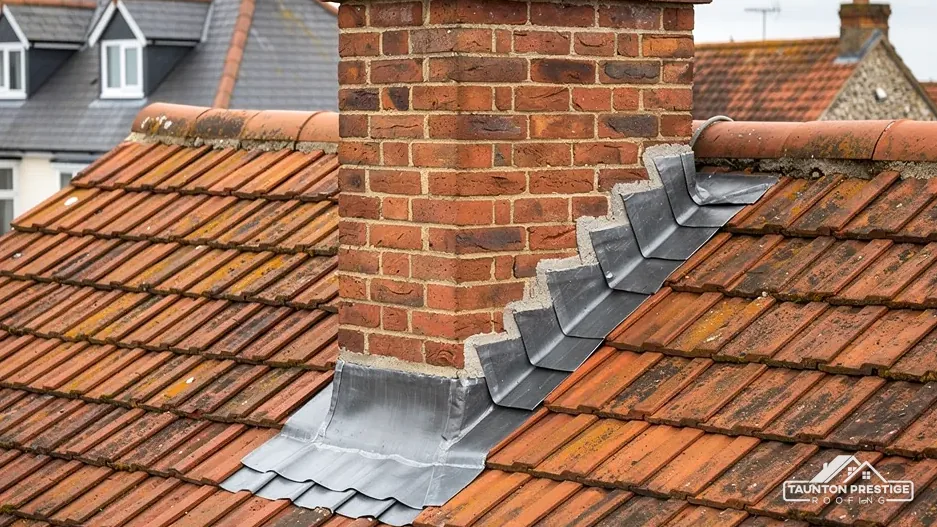
A stack stands in the weather on every side, so the joints on it work harder than any on the roof slopes. Four parts keep water out: the flaunching, a sloping mortar crown that holds the pots, the pointing between brick or stone, the lead flashing that seals stack to roof, and the pots and cowls. A tall stack adds the problem of reaching it, and the scaffold needed to do so sets the price as much as the repair does.
Sound or needs work
What decides the price
MyJobQuote's typical UK range is £450 to £1,200 for repointing a chimney (Oct 2026). For chimney leadwork it gives £150 to £250 for a patch and £350 to £920 for a full job, depending on scaffold (Sep 2026). The pots and cowls, the caps that keep rain out of each pot, are cheap to replace while the scaffold is up. Taking out a chimney breast is a separate job at £1,200 to £3,500 (Aug 2026), and Building Regulations approval always applies to it as part of the structure.
If the stack stands on a party wall, the Party Wall etc. Act 1996 lists cutting away a projecting chimney breast among works needing a party structure notice, served at least two months ahead. GOV.UK says silence is not consent. Questions about party walls go to a party wall surveyor, not to building control. Royston's brochure shows code 3 lead for soakers only, code 4 and code 5 for flashings, and heavier codes where lead forms a gutter or parapet. MyJobQuote credits lead flashing with over 80 years of life (Sep 2026), so an early failure deserves a question about the fixing. Our chimney repairs page and lead work page cover the repairs themselves.
The Environment Agency's Flood Map for Planning puts Colyton within about 250 metres of Flood Zone 3. The map concerns the ground, and GOV.UK's Check for flooding service tells you about your own address. A roof does better when its gutters carry water straight to the drains, and the fascia board is where that begins. Brackets fix to the fascia, and if the board is soft they pull away and the run sags.
Water marks outside and water marks inside need different cures, and photographs tell them apart.
A retailer, which has an interest, puts uPVC fascia at between 20 and 40 years, so treat the figure with care. Timber behaves differently: it holds up as long as it stays dry and painted, and fails first where overflow keeps it wet. Capping an old fascia with a new board and soffit has a MyJobQuote average of around £800 (Sep 2026), and the work is quicker when the timber behind is sound. We press the wood with a tool before we promise that capping will do. Repainting a sound timber fascia in dry weather keeps it going, while a soft one has to be replaced, and no coat of paint will hold a bracket in rotten wood.
A brown mark on the wall below the eaves points to gutter overflow. A mark inside, on the ceiling, can come from a leaking joint, from the roof or from condensation, and the loft tells which. Take photographs from the ground after rain and send them with your address, because water marks read well in pictures. Older buildings may carry concrete gutters set into the eaves, and MyJobQuote's average for replacing such gutters is £2,400 (Jan 2026). Older soffits need care before anyone drills them. HSE says asbestos insulating board turns up in external soffits and is hard to tell from non-asbestos equivalents, so a sample or a survey comes first where the building dates from before 2000. See gutters, soffits and fascias for the repairs.
Scaffold over a pavement or road is covered by a highway authority licence, and for Colyton the authority is Devon County Council. Devon County Council takes the application from the scaffolding company, acting for the customer, and charges £158 for the licence. It asks for a minimum of 10 working days' notice and adds £103.95 if a site visit takes place. The longest a licence runs is 12 weeks. Scaffold on your own land needs none, and that is worth asking us about before you plan a start date.
What decides the price
Storm damage runs in a set order: your insurer hears first, a temporary repair holds the weather off, and photographs and receipts get saved. Which? reports that only 32% of storm-related claims made in 2024 resulted in a payout, so no roofer should promise one. The Financial Ombudsman Service takes a complaint when no final response arrives in eight weeks, and a final response starts a 6-month clock for bringing one.
Look for whether each total covers VAT and scaffolding, and which covering it specifies. East Devon District Council acts as planning authority here, and your building control body can say whether the job is notifiable. No national grant exists for a new roof. ECO4 runs until 31 December 2026, and the Warm Homes: Local Grant, which is for insulation, usually asks for household income of £36,000 a year or less. Our own quote is a single written total after the survey, backed by photographs of your roof. Agree the job at home after that survey and the law treats it as off-premises, giving you 14 days to cancel; a visit you asked for to do urgent repairs falls outside that. Send your Colyton address with a note on the trouble, and a visit will be arranged.
Walked the roof?
When you have read the checks, we walk the roof and show you the photos.
The listing is for the building it names, so check the heritage list entry for your own address. A listed house needs listed building consent whenever a job would alter its character, while repeating the existing covering is the milder case. East Devon District Council decides, and our photographs of each slope support the conversation.
Great House is listed Grade II* and is no church in use, so alterations touching its character need listed building consent from East Devon District Council. Owners should ask the planning team before any contractor is booked, and have photographs of every slope and chimney ready for the officer to read.
It can. The Landscape was an AONB until the rename, and article 2(3) land has tighter permitted development rules. About 44 per cent of the 1.5 km square around the town point lies inside it, so ask East Devon District Council whether your address does, and bring photographs of the roof's current state.
St Andrew's carries a Grade I listing and still holds Church of England services, so work goes through the faculty system, not listed building consent from the council. The parish applies, and any roofer works to the approved specification. Scaffold and orders for slate or tile should wait until the approval has been issued.
Name the Colyton street and the trouble, then choose a day for the survey.