St Michael's church, Grade I
Grade I listed and still used for worship, so roof work goes by faculty.
A Grade I church and listed farmhouses below the hill
Brent Knoll gathers around an isolated hill rising from the levels, with a Grade I church and 1,253 residents. Each roof here is read before a price is named.
Grade I listed and still used for worship, so roof work goes by faculty.
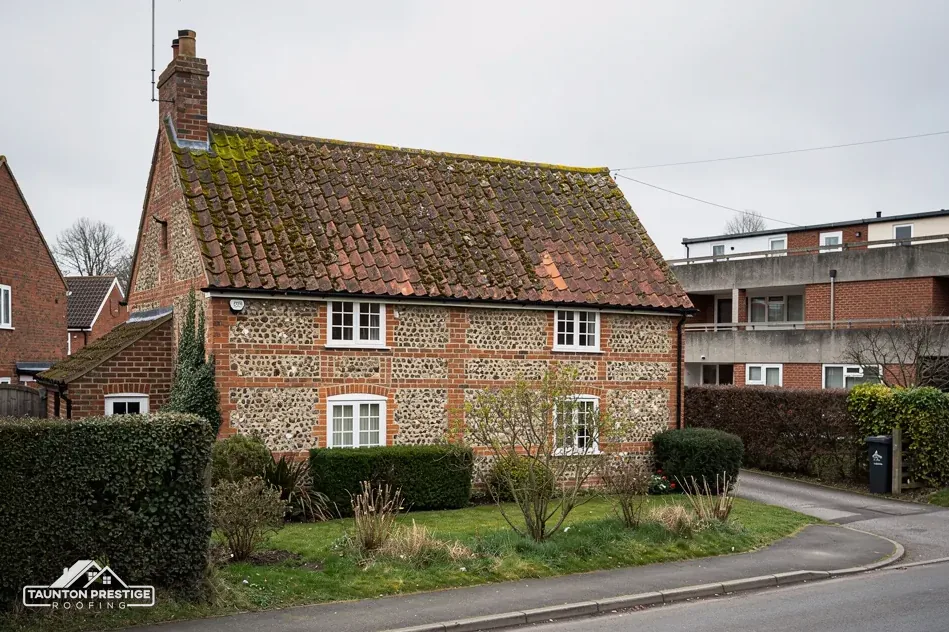
Listed Grade II, as is Ivyclad Hall, so repairs to either roof have to respect their character.
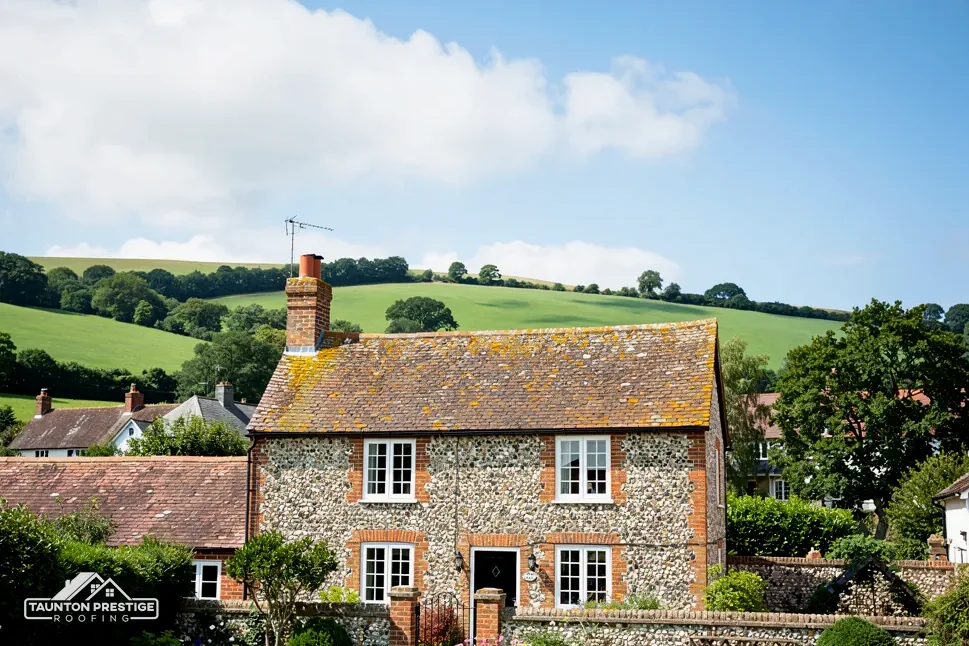
Brent Knoll War Memorial was listed Grade II on 31 August 2016, a reminder that listing reaches beyond houses.
Street map of Brent Knoll with East Brent, Burnham-on-Sea, Lympsham, Highbridge marked around it, and Taunton.
East Brent lies north-east of Brent Knoll and Lympsham to the north, with Burnham-on-Sea to the south-west, Highbridge to the south and Mark to the south-east.
About 18 miles north of Taunton, Somerset Council (unitary).
Under the hill, four checks
Four checks for roofs in a village below an Iron Age hillfort, covering listed farmhouses, the church, a re-roof and the paperwork.
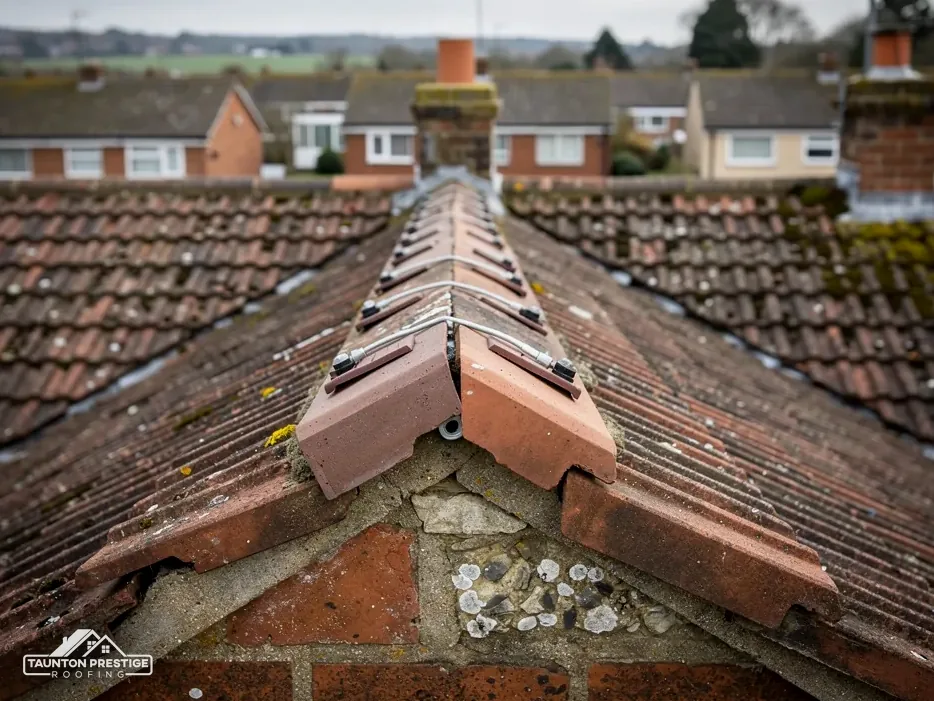
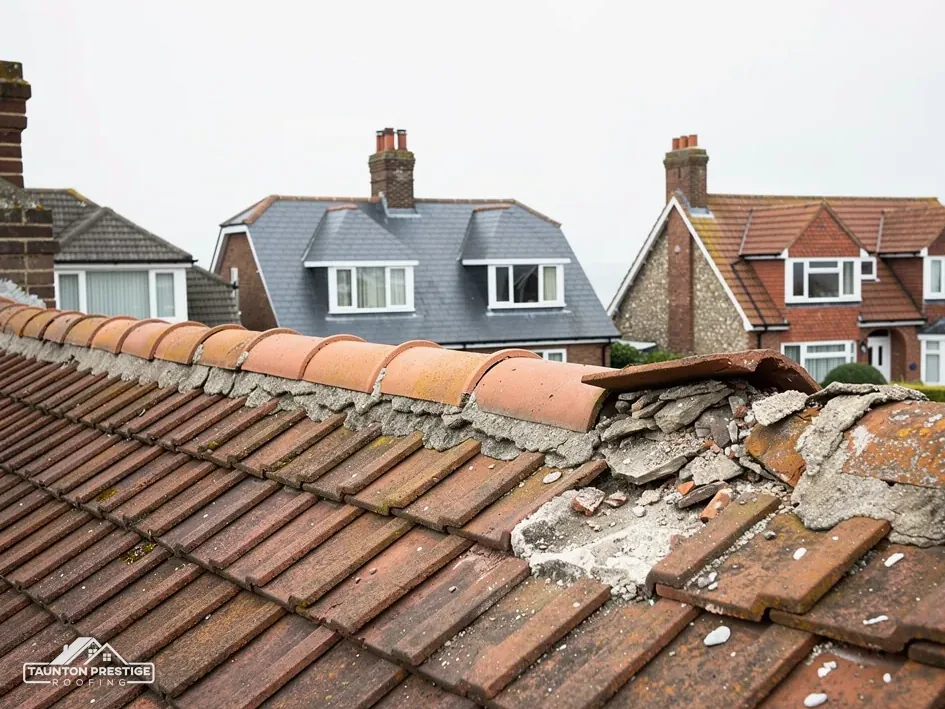
Eight listed entries lie within 500 metres of Brent Knoll's centre. Nightingale Farmhouse and Ivyclad Hall are both Grade II, and farmhouses carry big roofs: long slopes, tall stacks and verges that have weathered for generations. A roof of that size has many places for a fault to start, and a listed one adds rules about what can be put back.
What decides the price
Clay holds its colour and its strength well, and the BRE puts a minimum life of 60 years on clay tiles, a figure that Marley applies to clay only. For old peg tile the same figure is, in the words of one conservation article, not a reliable guide. So we judge the roof tile by tile. A fine hairline crack, a laminating surface that flakes in layers, or tiles that ring dull when tapped are the signs of an end of life. Isolated chips are not.
Only with care. Listed building consent is the route for work that alters how a protected house reads, and the new tiles should match the old in size, shade and texture. Salvaged tiles from the same roof can be reused on the visible slope, with new ones set where they cannot be seen, which keeps the street view as it was. Our pitched roofing page explains how repair, partial re-cover and full replacement compare, and the planning side of it is set out in our planning permission for roof work guide.
Somerset Council is the planning authority for the village, and its planning team is the place to ask whether a conservation area boundary takes in your address. Photographs of each slope go to you before any decision is made, so a partial repair and a full re-cover are compared on the same evidence.
St Michael's carries the top listing grade, Grade I, and as a Church of England church still in use it takes its roof work through the faculty route, not through listed building consent from Somerset Council. The parish arranges the faculty. For a roofer that makes a different kind of job from a house: a written specification, a recorded method and a clear account of every material, agreed before anything is lifted.
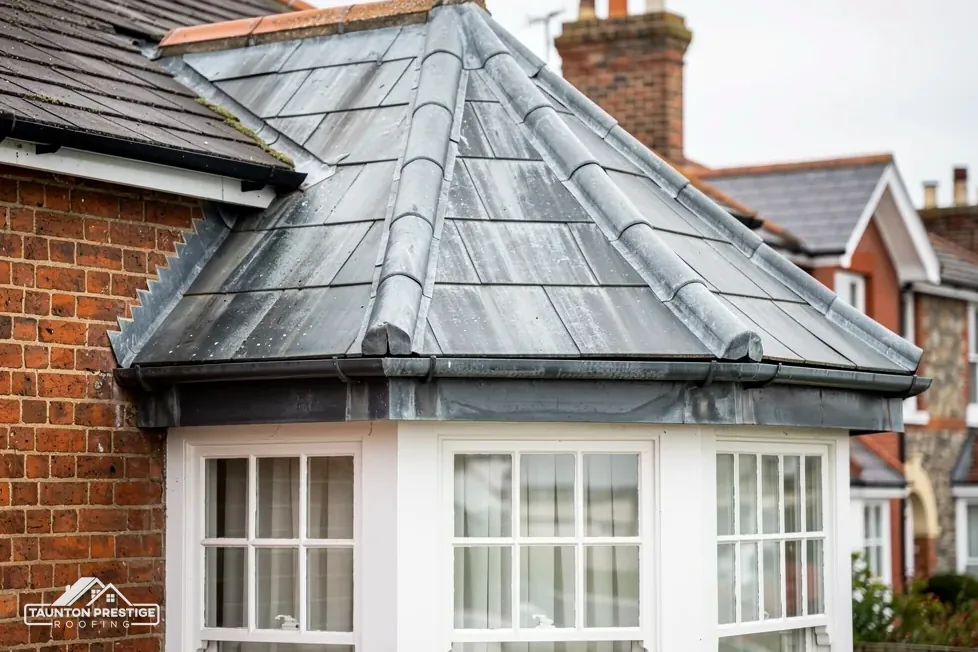
Height, first of all. Towers and naves are reached by scaffold, and the frame has to be planned with the parish so that services, funerals and weddings can carry on, with a safe, dry way in kept clear throughout. Then access to the lead: valleys, parapet gutters and flashings between roof and wall are where water gets in behind masonry. Royston Lead's brochure lists codes 5 to 8 for parapet and box gutters and codes 4 to 6 for flashings, so the code on the specification is something to check.
Any roof space can. The law protects bats and their roosts, and GOV.UK names roof repair among the jobs that can disturb them. If droppings or a roost turn up at the survey, we pause and suggest a word with a bat specialist before anything is lifted. That is the law, and it keeps a good relationship with the parish. Birds are the other consideration: nests in use are protected against intentional damage, so the timing of work near the eaves and the tower is planned with that in mind.
We photograph the slopes, the valleys and the lead so that the parish can show its advisers the roof as it stands today. Church gutters and downpipes often discharge onto old stone footings, so we trace where they run to as well, and note anything that would send water towards a wall.
Look for
When a roof has gone beyond patching, the covering comes off in sections and what lies beneath decides the job. Battens are the laths nailed across the rafters, and every tile or slate hangs from them. Old battens split at the nail holes and rot where the roof has leaked for years, and a batten that crumbles under a finger cannot hold a tile for another generation. Under them lies the underlay, a sheet that sheds water running under the covering. Old felt underlay is often brittle, torn or missing, and a modern one makes the whole roof tighter.
What is under the tiles decides a re-roof far more than the tiles do.
It can. Concrete tile is heavier than slate. A covering 15 per cent or more above the old in weight triggers Building Regulations approval along with a structural check, and the Planning Portal advises a word with an engineer or surveyor first. Somerset Building Control, on 0300 303 7790, is the contact for Brent Knoll. For smaller jobs, the Planning Portal says building control is not normally needed where less than 25 per cent of the envelope and less than 50 per cent of the roof is affected.
Strip the old covering, check and replace the battens and underlay, fit the new covering with the right fixings, renew the lead and ridge, and clear the site. Fixings count. Under BS 5534, Marley explains, mortar is no longer enough alone for ridge and hip caps, so a re-bedded ridge is clipped or screwed as well. Our roof replacement page covers the order of work.
You see what each stage found in photographs, before the next layer goes on. If the rafters under the battens are sound, they stay; if an end has rotted at the eaves, we show you the timber and say what a repair involves.
Environment Agency data, read through the planning.data.gov.uk service, places Brent Knoll within about 250 metres of Flood Zone 3. That is a mapped planning zone for the land. It says nothing about any one house or roof, and it is no forecast. To check a specific address, use GOV.UK's long term flood risk service. What a roof can do is carry rain away to a working drain, so gutters, downpipes and gullies get a proper look at the survey. A downpipe that ends in a blocked gully on low, level ground leaves water standing against a wall, and that is an easy thing to put right once it has been spotted.
What decides the price
Only where it stands on the highway. Then section 169 of the Highways Act 1980 applies, and Somerset Council, as highway authority, deals with accredited scaffold contractors only, so the firm on your job makes the application. Notice of 10 working days or more is asked for, at £124.60 for each 28-day period (April 2026). A frame in your own garden needs no licence at all, and a modest repair can get by with a ladder or a tower, which we confirm at the survey so you do not pay for scaffold the job does not need.
One total for the whole job, drawn up after the survey. What drives it is roof area, covering, access and what the survey turns up. Check whether any quote you receive includes VAT and scaffolding. The standard VAT rate is 20% on repairs and re-roofing to existing homes (GOV.UK).
Waste leaves the site with us, and the finished roof is photographed from the same angles as the survey, so you can compare before and after. Send us your Brent Knoll address and say which roof, house, farm building or church, and we will fix the survey.
Walked the roof?
When you have read the checks, we walk the roof and show you the photos.
Not directly. A listing protects the listed structure, and Brent Knoll War Memorial has no roof of its own. Roof work near it is judged under the normal rules for the property you own. What matters for your own roof is whether your house is listed, which we check on the heritage list at the survey.
No. Moss holds moisture and can block gutters, but sound tiles under it can be cleaned. Marley does not recommend jet washing, because high pressure can damage the surface of a tile. Biocides sold for professionals only are not for homeowners, and HSE says so. Cleaning is a job for a roofer, and we judge the tiles beneath first.
According to MyJobQuote, lead flashing can last for over 80 years, a lower bound rather than a promise. Lead sheet comes in numbered codes: Royston Lead lists codes 4 to 6 for flashings and heavier codes up to 8 for parapet and box gutters. What usually fails first is the fixing or the joint, not the metal, so we inspect the whole run.
It depends on the house. A listed farmhouse needs listed building consent where work touches its special character, and a roof window on a visible slope can do that. For an unlisted house, check Somerset Council's planning guidance. A roof window takes the window U-value of 1.4 or Window Energy Rating Band B, not the 2.2 figure that applies to rooflights.
Send your Brent Knoll address and say whether it is house, farm building or church.