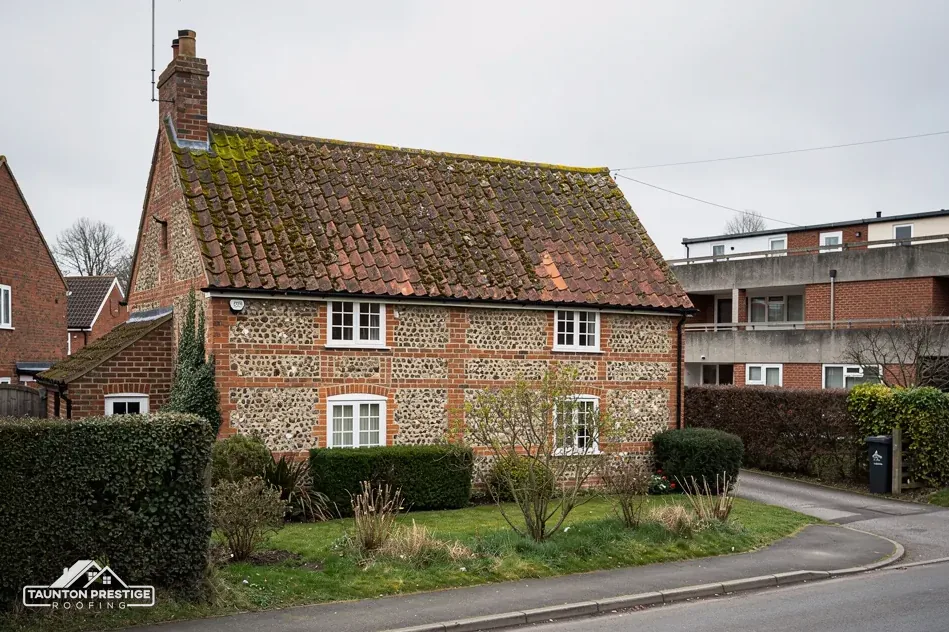
Coker Court
Listed Grade I in April 1961, so its roof cannot be altered in character without listed building consent.
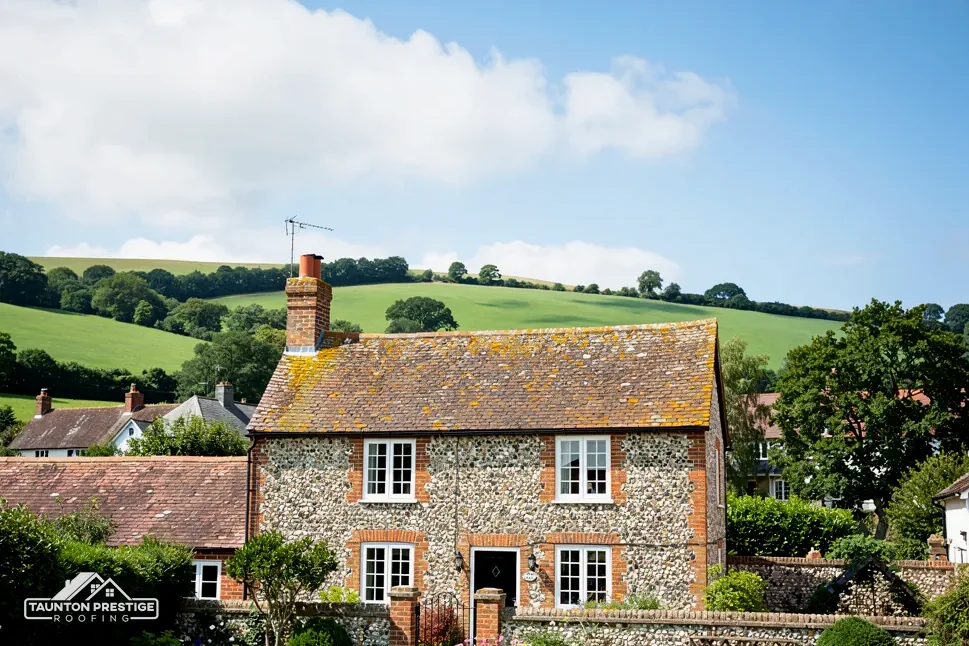
A conservation area, Coker Court and 39 listed entries near the centre
The East Coker and North Coker conservation areas both come within about 0.75 km of the centre, and Coker Court is listed Grade I. We survey first and price second.
Listed Grade I in April 1961, so its roof cannot be altered in character without listed building consent.
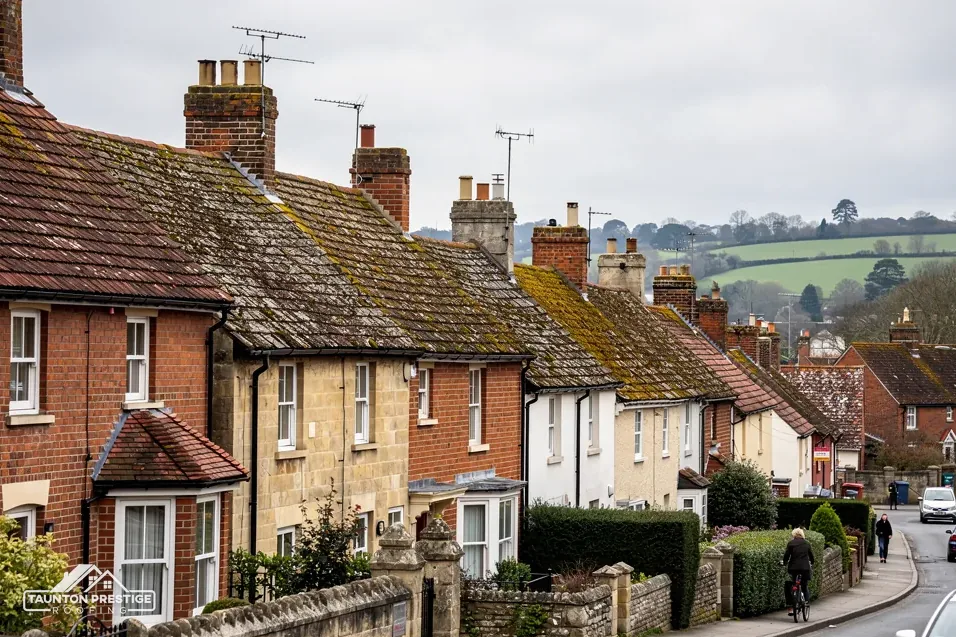
A Grade II* church in active parish use, so the faculty system, not the council, covers its roof.
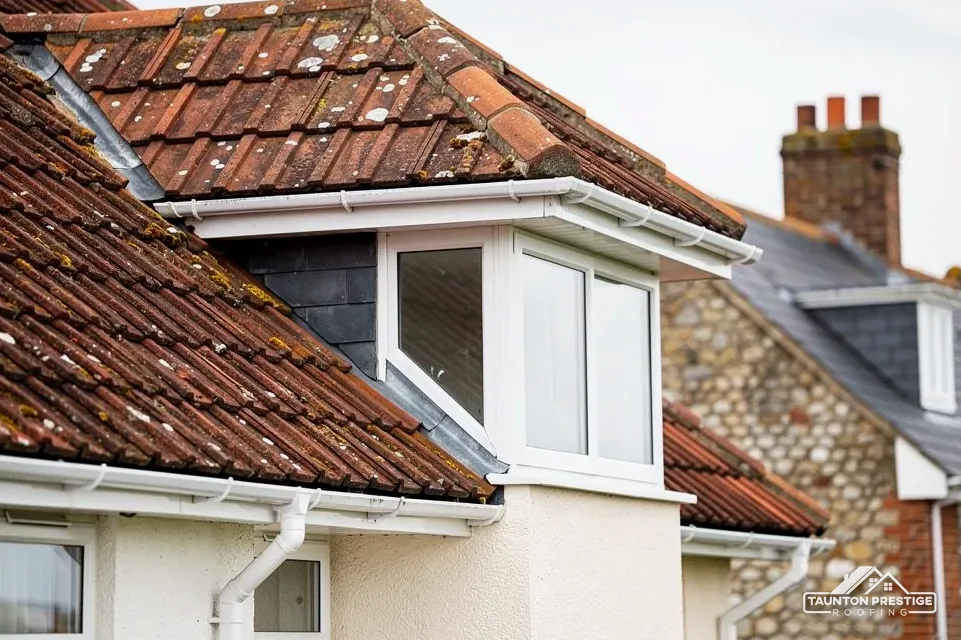
Both are listed Grade II, so check the listing before altering their slates, tiles or chimneys.
Street map of East Coker with West Coker, Yeovil, Odcombe, Haselbury Plucknett marked around it, and Taunton.
West Coker lies north-west of East Coker and Yeovil north-east. Odcombe is north-west, Haselbury Plucknett west, and Norton-sub-Hamdon further north-west.
About 21 miles east of Taunton, Somerset Council (unitary).
From manor to scaffold, four checks
Four checks for an East Coker home, from listing and local tile to site safety and the final price.
The East Coker conservation area lies within about 0.75 km of the centre, and the North Coker one reaches into that same radius. The National Heritage List holds 39 entries within 500 metres of East Coker's centre, a lot for a village of 1,718 residents at the 2021 Census. With so much protected, we establish which consents are in play before we think about slates, tiles or price, and we note which neighbours are listed, because shared boundaries and scaffold positions can raise questions of their own.
Coker Court is Grade I, first listed on 19 April 1961, the date the Church of Saint Michael, Grade II*, was listed too. Bay Cottage and Bubspool House are Grade II. A cottage can carry the same listing weight as a manor for the purposes of consent, because the test is whether the work affects the character of a building of special interest, not how large the building is.
Saint Michael's is in use as a place of worship for the Church of England, which is an exempt denomination: its roof work is cleared by a faculty that the parish applies for, rather than by listed building consent from Somerset Council. The roofer's part is to inspect, describe what is up there and then work to whatever the faculty permits.
A matching repair is the straightforward case. A different material, a restyled ridge or new roof windows on a visible slope need a conversation with Somerset Council's planning team first, and our page on planning permission for roof work maps the routes. Photographs from the survey give that conversation something solid to work from. Even a repair in matching materials is easier when the existing roof has been photographed first, so we record each slope, valley and chimney, and the images stay with you for any later application.
Look for
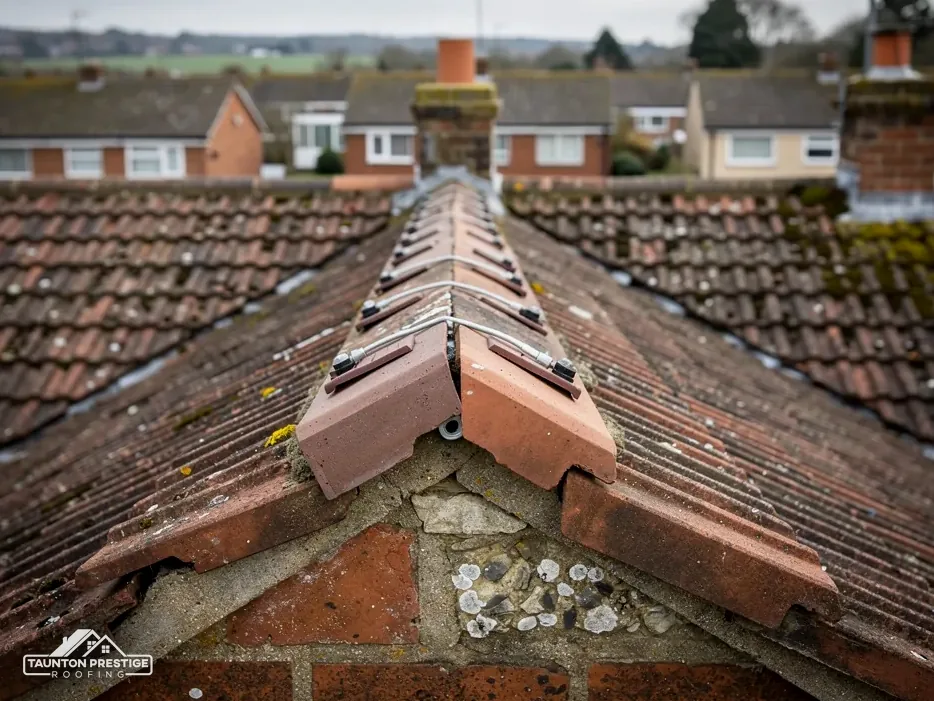
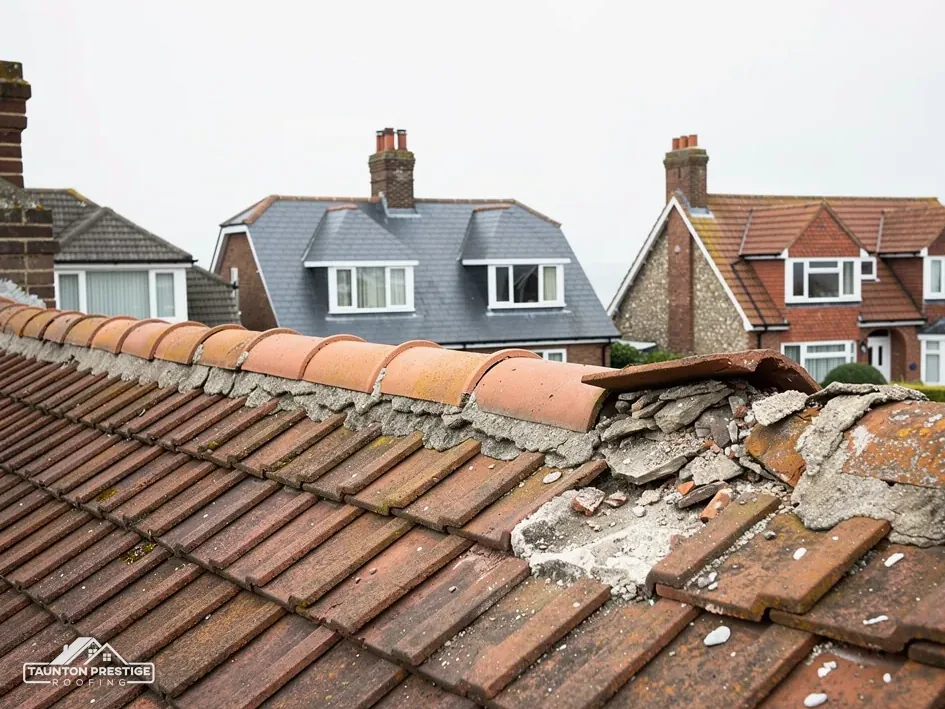
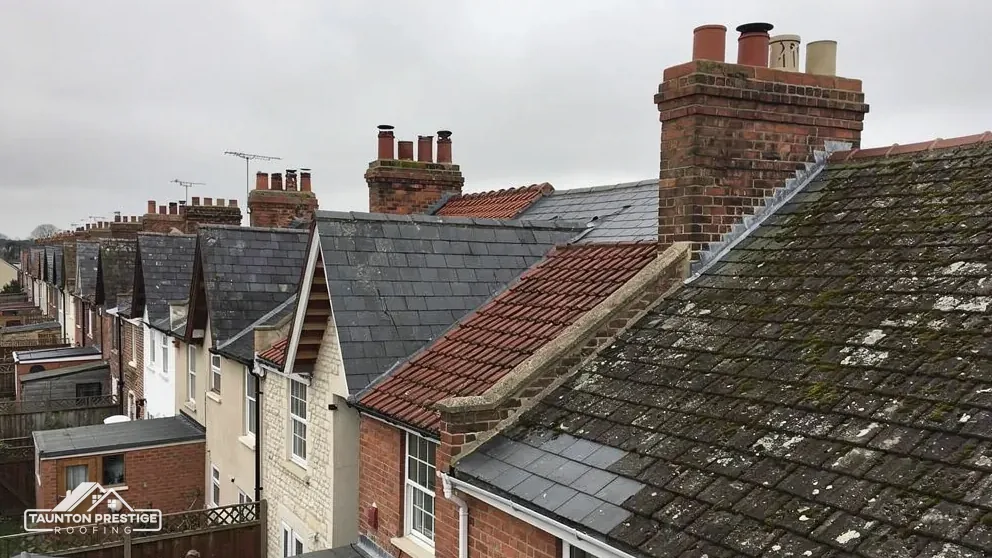
Somerset has a clay-tile story that national roofing sites skip. According to South West Heritage Trust, brick and tile making in Bridgwater, where yards also made terracotta plaques, gave many Somerset towns their look, and the museum's kiln was last fired in 1965. A local heritage leaflet from Bridgwater lists plain tiles, ridge tiles (then called crease tiles) and pan tiles among the products added to brick-making, with the popular Double Roman following later. We cannot say which of those a given East Coker roof carries until we see it.
What decides the price
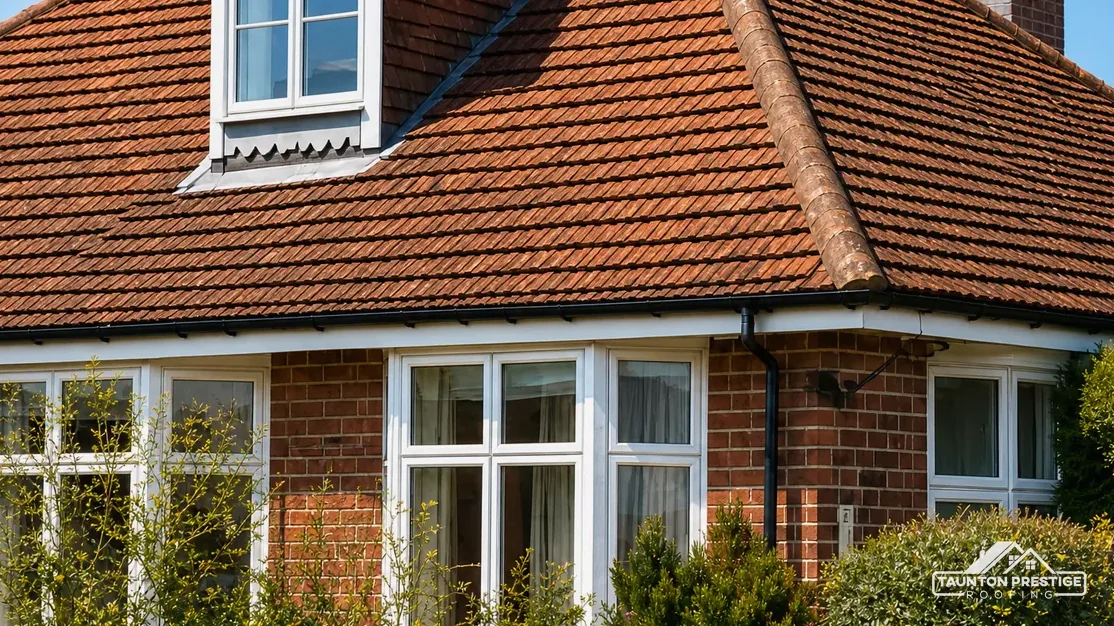
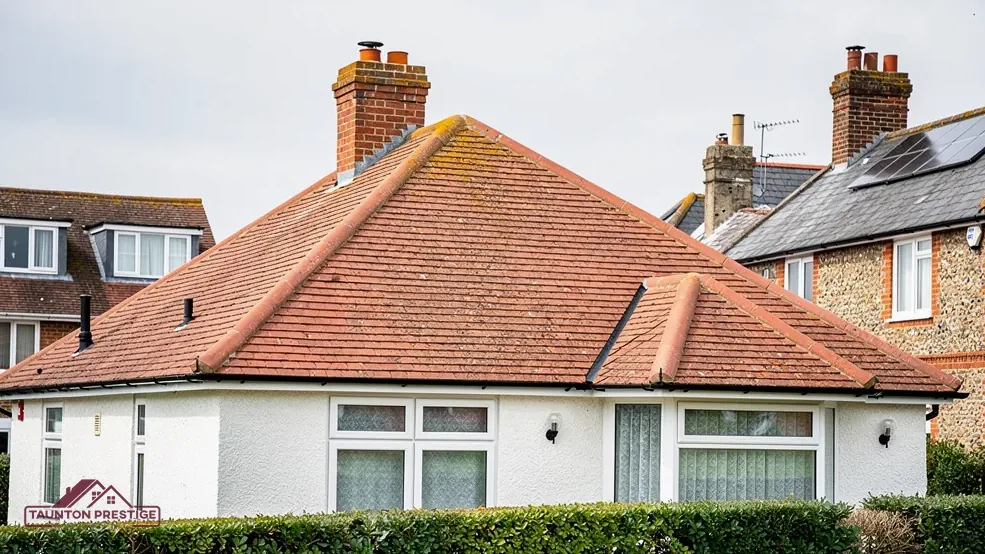
Pantiles are clay tiles curved in an S section, while Double Roman tiles are wide, interlocking and rolled twice across their width. Each of those three kinds laps in its own way, so the way a roof is set out tells us which kind we are dealing with. Matching means matching the shape as well as the colour, because a wrong profile breaks the pattern of shadow across the slope. Hand-made clay varies from tile to tile, so new batches are mixed across a slope instead of laid in blocks. Ridge tiles for these profiles are specific shapes too, and a plain ridge on a pantile roof looks out of place. Sound reclaimed tiles are often the best match for a patch. Old clay gathers a patina of weathering and lichen that new tiles lack, so in a conservation area the aim is to blend new into old, and the written price states which tiles go where.
Yes. By Marley's figures the Lincoln pantile can go down to 15 degrees, while the smooth concrete Double Roman needs 22.5, so a flatter slope such as an extension roof can rule a tile out. The product data sheet has the last word. Our roof replacement page explains how a re-cover is planned, and pitched roofing covers repairs.
When you have roof work done on your home, HSE calls you a domestic client: an individual who has construction work carried out on their home that is not part of a business. Most of the client duties in the Construction (Design and Management) Regulations 2015 pass to the contractor when there is only one, or to the principal contractor when there are several. In plain terms, someone has to plan the work safely, and on our jobs that is us. Roofs are high, the weather changes and passers-by walk below, so the plan matters more than its paper weight suggests.
Someone must plan a roof job safely, and that plan belongs on paper before work starts.
What decides the price
You should. Regulation 15(5) says that if only one contractor is working on a project, the contractor must draw up a construction phase plan. The extra duties for larger jobs turn on whether more than one contractor is involved, not on notification to anyone. A sensible plan for a roof covers access, edge protection, the position of the scaffold or tower, the route waste takes off site, and who is on the roof each day. We talk it through before work begins, so nothing about the week is a surprise, and we write the plan in plain words and leave a copy with you.
Regulation 5(1) asks the client to set down two named roles in writing, principal designer and principal contractor, whenever more than one contractor is, or could foreseeably be, on the project. Regulation 7 hands a domestic client's duties to the contractor when there is only one. Somerset Building Control also asks for a client, principal designer and principal contractor on Building Regulations applications, and warns that a client with no principal designer or agent takes on that role by default.
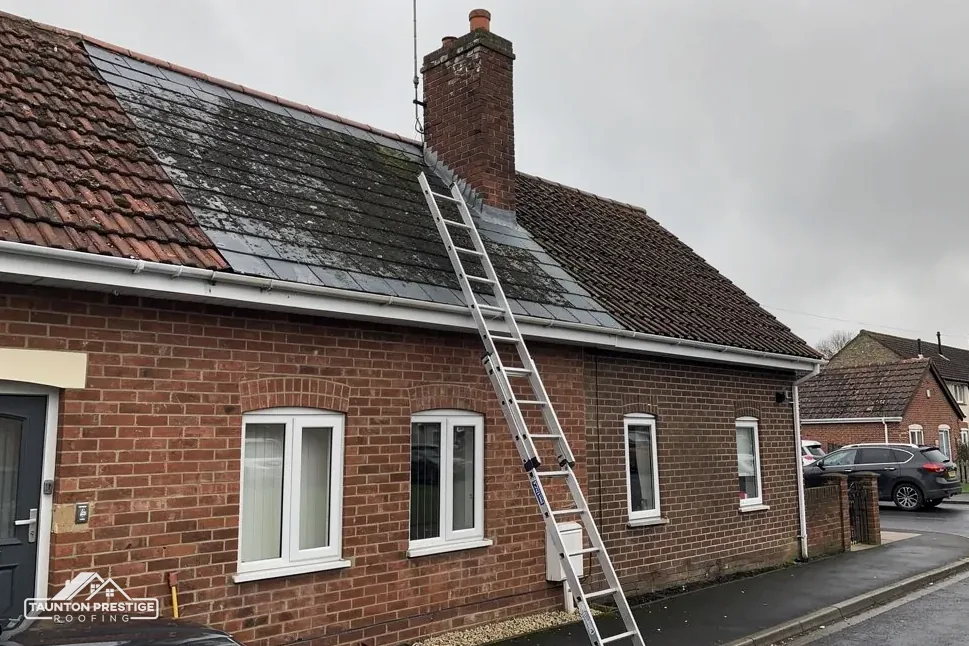
Section 169 of the Highways Act 1980 covers scaffold that stands on the highway. Somerset Council is the authority for East Coker, and it grants scaffold permits solely to accredited contractors; the contractor appointed for the job fills in the form. The fee is £124.60 for each 28-day period (April 2026), non-refundable, and the council asks for at least 10 working days' notice. If a job overruns, a permit extension has to be applied for and paid for.
What decides the price
Somerset Council charges a further £40 for an extra site visit where a scaffold is non-compliant. That is why we fix the access plan, the working days and the scaffolder before any application goes in. Scaffold is hired by the week, so we aim to have materials ready, weather windows noted and the strip, repair and re-cover run as one block. If rain stops play, you hear what has changed and what the new sequence is. Our first visit also sets out which jobs are urgent, such as a lifted ridge or a failed valley, and which can wait for another season, with the reasons in plain words. Scaffold within your own boundary is off the highway, and for a small repair a tower or ladders may be all that is needed.
The Planning Portal puts the test at less than 25 per cent of the building envelope and less than 50 per cent of the roof affected, and a covering 15 per cent or more heavier needs Building Regulations approval. Somerset Building Control, on 0300 303 7790, covers East Coker, which sat in the former South Somerset district.
The survey leaves you with photographs of the slopes, valleys, chimney and gutters and one written price for everything. Give us the East Coker address and say what is wrong up there, and a survey can be booked.
Walked the roof?
When you have read the checks, we walk the roof and show you the photos.
Both are listed Grade II. Putting back the same slates or tiles is normally a repair, yet listed building consent comes into play where the work would change what makes a building special, as a new covering or ridge might. Somerset Council's planning team can confirm what applies to a particular roof, and survey photographs help its officers see the roof.
As a Grade II* church where Church of England worship goes on, Saint Michael's has its repairs run through a faculty, not listed building consent from the council. The parish makes the application, and whoever does the roofing works to the terms the faculty sets. A survey with photographs of the existing covering helps the parish describe the roof accurately.
Yes. Where one contractor is working, regulation 15(5) of the 2015 CDM Regulations says the contractor must draw up a construction phase plan, and the domestic client's duties pass to that contractor. Ask to see it. It should cover access, edge protection, waste and who is on the roof each day. A good plan is short, clear and specific to your house.
Only if the pitch allows it. Marley gives 22.5 degrees as the minimum for its smooth concrete Double Roman tile, so a shallow extension slope may need a flatter-pitch covering instead. Pantiles such as the Lincoln go down to 15 degrees. The maker's data sheet settles each case, and we check it at survey.
Tell us about the tiles, ridge or chimney that worry you and we will find a date to visit.