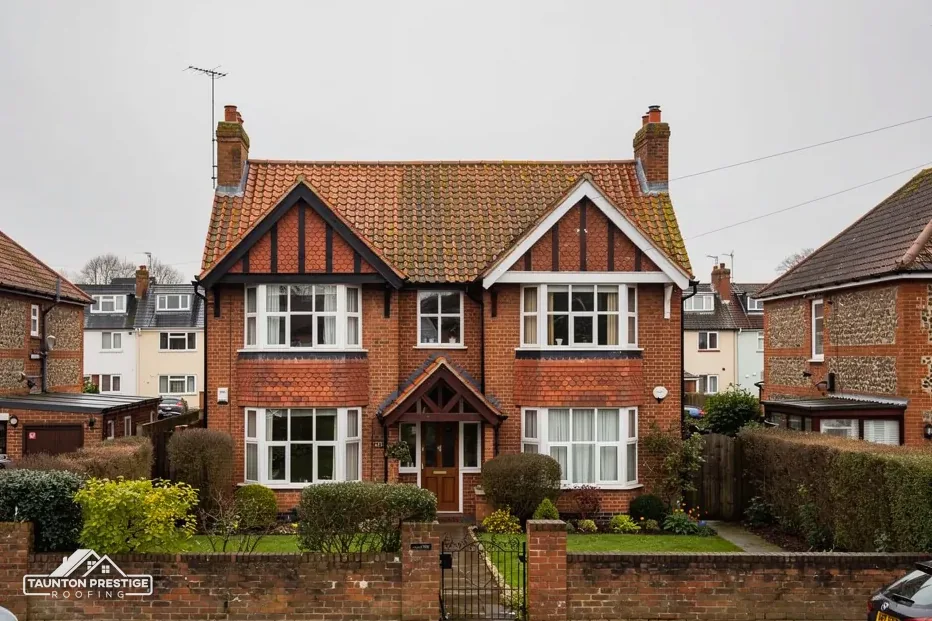
The Old Post Office row
Numbers 1 to 4, together with their front boundary walling, are listed Grade II, first listed on 19 April 1961.
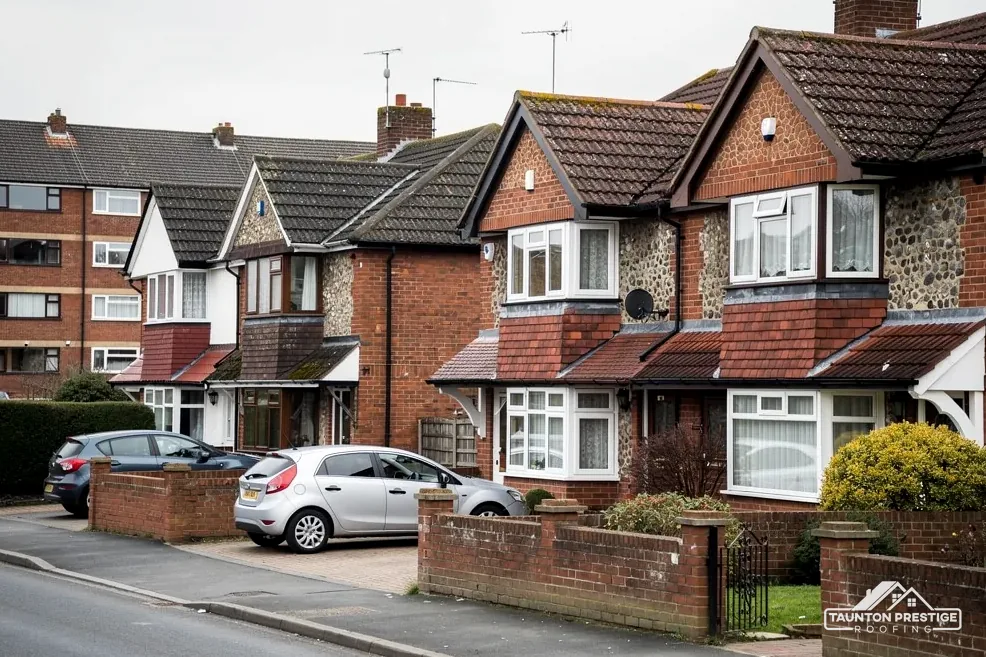
Lower Odcombe cottages, a rebuilt church and a conservation area
Odcombe has a conservation area around its centre, 25 listed buildings within 500 metres and a Grade II* church. A survey comes before any price is named.
Numbers 1 to 4, together with their front boundary walling, are listed Grade II, first listed on 19 April 1961.
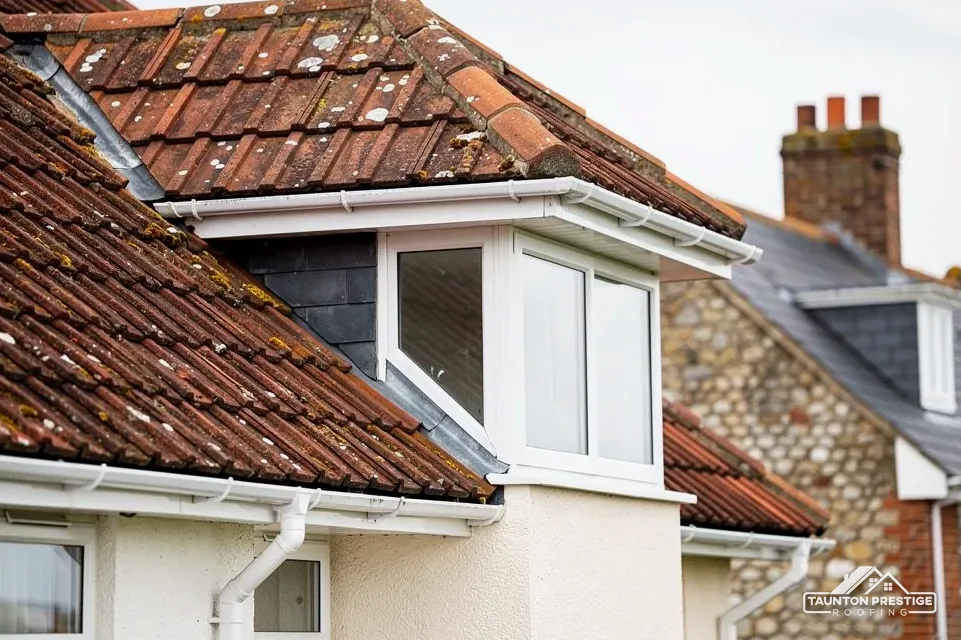
Number 19 and numbers 20, 22, 24 and 26 each carry a Grade II listing, so consent comes first.
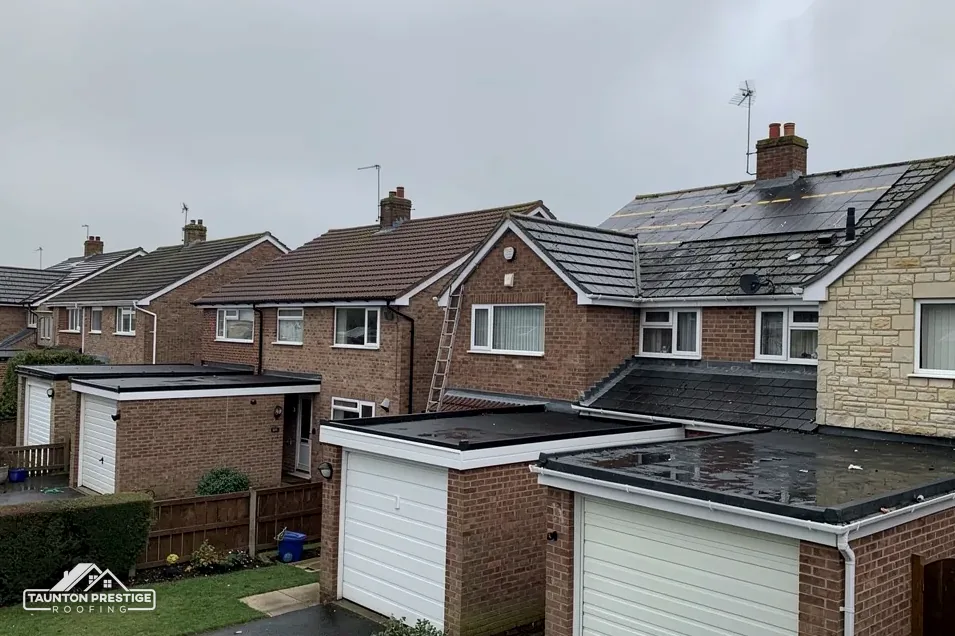
Listed Grade II* with a tower base from the 13th century, though most of the church was rebuilt in 1874.
Street map of Odcombe with West Coker, Norton-sub-Hamdon, Stoke-sub-Hamdon, Tintinhull marked around it, and Taunton.
West Coker lies south-east of Odcombe, with East Coker beyond it, and Yeovil is east. Norton-sub-Hamdon is west, Stoke-sub-Hamdon north-west and Tintinhull north.
About 18 miles east of Taunton, Somerset Council (unitary).
Four checks for a village roof
Where the conservation area and the listings bite, what a chimney and its lead need, why a loft can sweat, and how a storm repair and a quote should run.
Odcombe's conservation area reaches to within about 0.75 km of the village centre, and 25 listed buildings stand within 500 metres of that point. Among them are the Old Post Office row (numbers 1 to 4), number 19 Lower Odcombe and numbers 20, 22, 24 and 26 beside it, all at Grade II. Before a price is written, we work out two things for your address: whether it falls inside the conservation area boundary, and whether the house itself carries a listing. They determine who gets a say, and they shape what the new covering may be.
The boundary is drawn by Somerset Council and published on its conservation area maps, and a dataset check places an edge within about 0.75 km of the centre. A street-by-street answer needs the council's own map, so ask its planning team, or send us your address and we will raise it at the survey. Inside the area, a change of covering, new roof windows on a street slope or a dormer move from a quiet repair into a question for the council. Hard cement pointing on an old stone stack is worth recording too, so we note the pointing as well as the covering. Our guide to planning permission for roof work sets out each route.
St Peter and St Paul, the Odcombe parish church, is Grade II* and still hosts Church of England services, so its roof repairs run through a faculty rather than a council application. Its central tower has a base from the 13th century, while most of the building was rebuilt in 1874. The parish applies, and the work follows the approved terms.
Look for
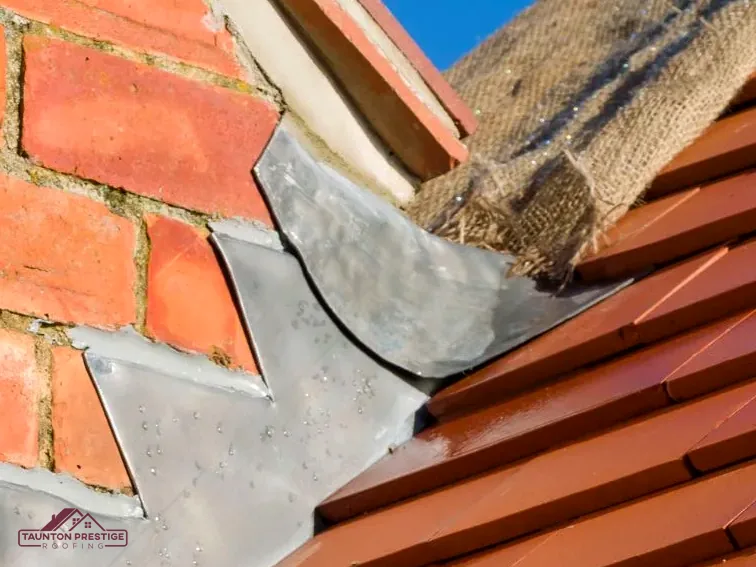
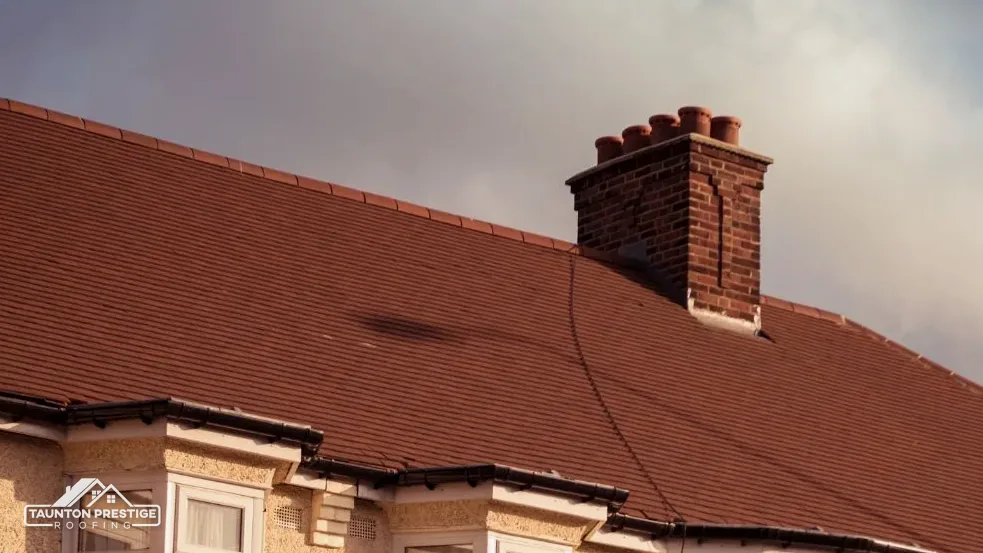
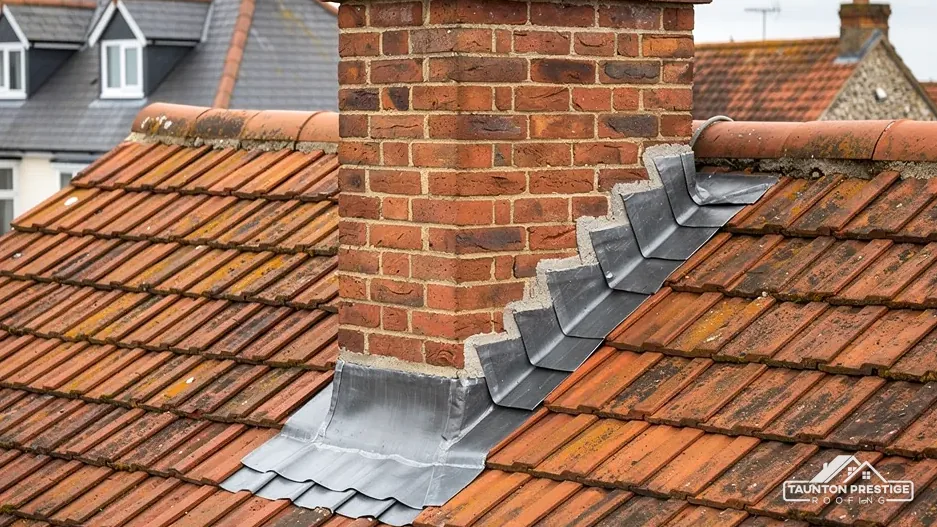
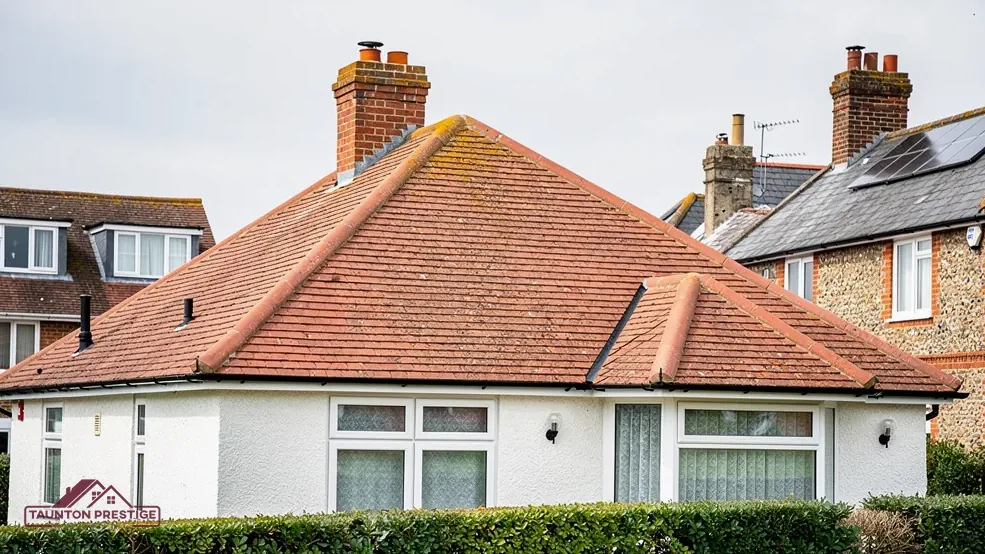
On a cottage with a tall brick or stone stack, the chimney is where a leak most often starts. Four parts are in play: the pots, the flaunching (the sloping mortar crown at the top of the stack), the pointing between the stones or bricks, and the lead flashing, a strip tucked into the stack and dressed down over the roof covering to shed water. When any of them gives way, rain follows the stack down into the ceiling. A stain on a bedroom wall beside the chimney breast is usually the first sign you will see.
Sound or needs work
What decides the price
MyJobQuote gives a typical UK range of £450 to £1,200 for chimney repointing (Oct 2026). For leadwork it gives £150 to £250 for a patch and £350 to £920 for a full job, which depends heavily on scaffold (Sep 2026). These are national guides, and a tall stack on a lane with little room can raise the access side of your own price.
Yes, where it is sound. Per MyJobQuote, lead flashing has a life of over 80 years, so one that has failed young deserves a question about how it was fixed, and a patch is a fair repair only where the rest is healthy. A cracked pot or a missing cowl, the cap that keeps rain out of the pot, is a cheaper fix while the stack is open. A disused chimney can also hold a nest. Under section 1 of the Wildlife and Countryside Act 1981, someone who intentionally damages or destroys an occupied nest commits an offence, so the work waits for the birds. Under the Party Wall etc. Act 1996, a chimney on a shared wall needs a notice at least two months before cutting away a chimney breast, and a party wall surveyor handles disputes, not building control. Our chimney repairs page and lead work page go through the choices.
Old cottages and later re-roofs often meet in the loft. A new underlay under old timbers can trap moisture, and the first you know is droplets forming under the roof covering or a musty smell by the eaves. A bathroom extractor fan that discharges into the loft is a classic source of moisture, and it should vent outside. Gaps round the loft hatch and light fittings let warm damp air rise into the cold space as well. That is condensation more often than a leak, and it calls for a different cure. Marley explains that a cold roof with an HR (non-breathable) underlay needs eaves ventilation of 25mm along the length for pitches of 15° or less, and 10mm for steeper roofs. BS 5250 is the standard for managing moisture in buildings.
Dripping in the loft can be condensation as easily as a leak, and the cures differ.
A leak shows up after rain and follows a line. Condensation shows after cold nights, wets the whole underside and runs along rafters. Photographs taken in the loft on both kinds of day settle the question quickly, and we ask for them when you first write. If gutters overflow onto the wall below, check them as well, since a soaked eaves board can look like a roof fault. Our gutters, soffits and fascias page covers that side.
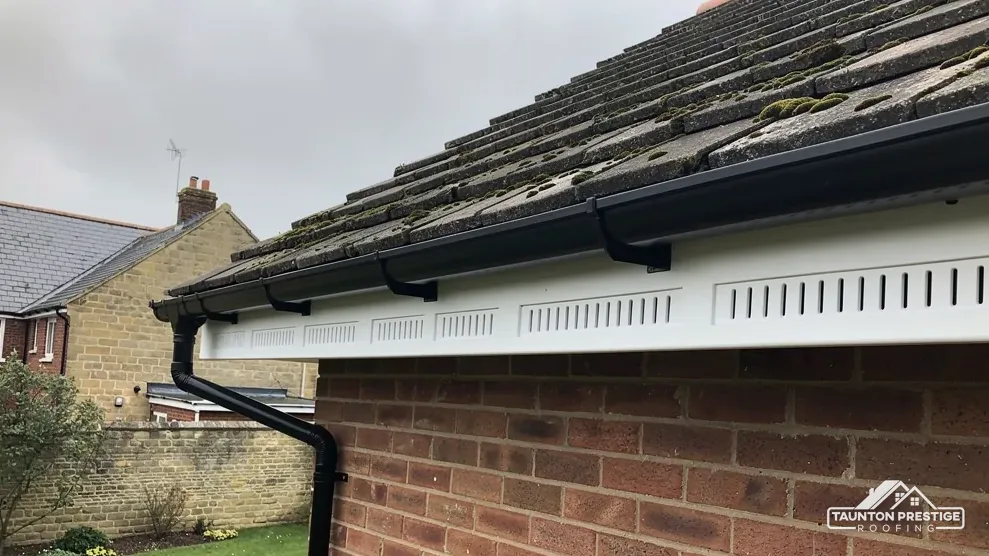
Eaves vents and over-fascia ventilators let air move at the low edge of the roof, and the survey finds out whether the insulation has been stuffed tight to the eaves. Pulling that insulation back from the eaves can free the airflow, and the survey tells us whether that is all it needs. Where a roof needs recovering, we show you the eaves in photographs before anything is closed up. Where breathable (LR) underlay sits above a sealed ceiling, ventilation from ordinary eaves construction can suffice, but only with third-party certification, so the product's paperwork matters.
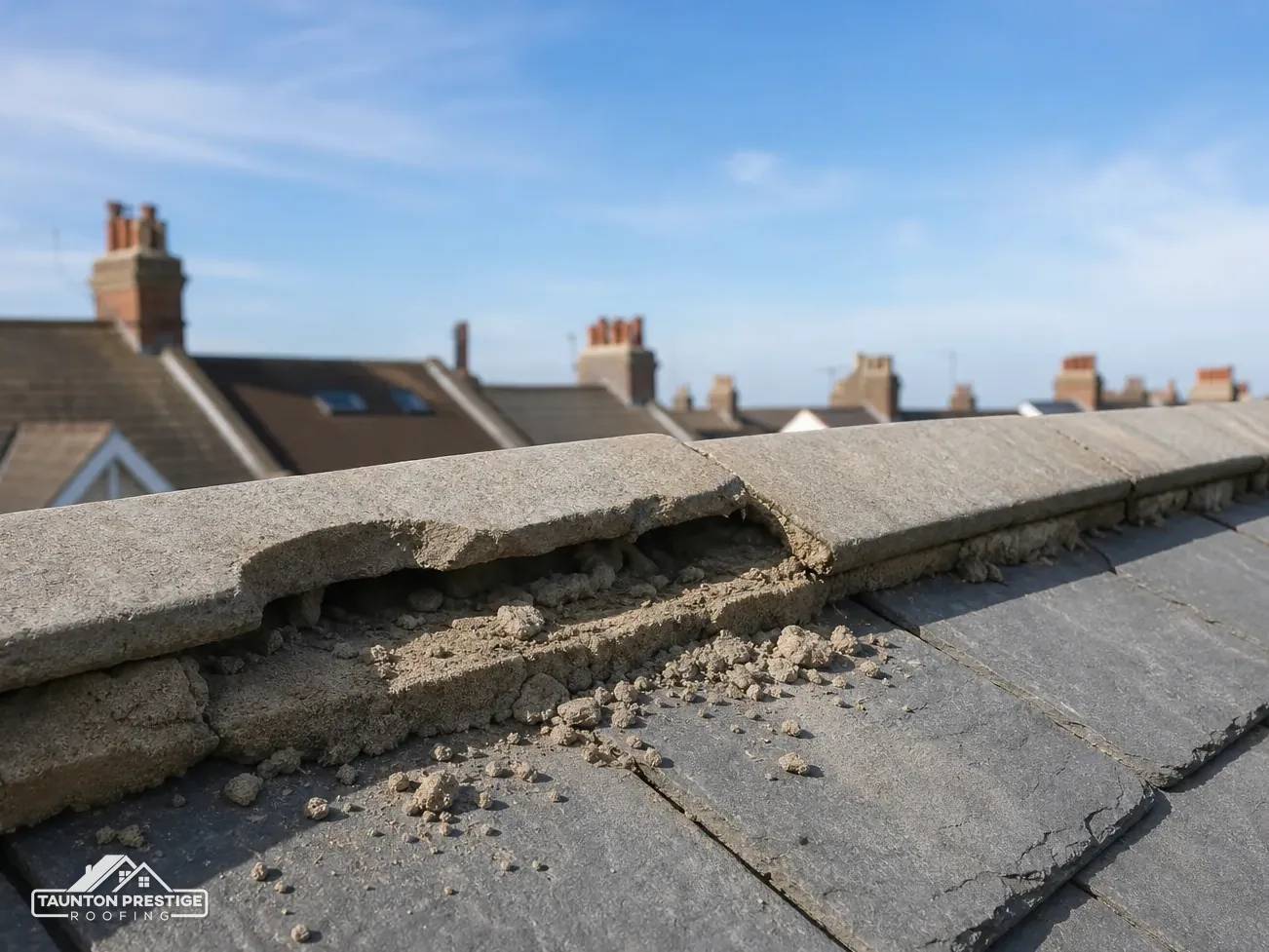
Storm damage has a sensible order: ring your insurer, stop the water coming in with a temporary repair, and photograph everything while keeping every receipt. According to IStructE, the structural engineers' institution, a claim leans on photographs of the damage. Should an insurer treat you badly, the Financial Ombudsman Service takes complaints and charges nothing. Our part is to stop a leak getting worse, then find the cause once things are dry. In MyJobQuote's typical UK range, an emergency call-out comes to £150 to £300 and storm repairs to £1,200 or more (Oct 2026), so the cause and the extent of damage set the final figure.
What decides the price
Scaffold over a public road falls under the licensing of the highway authority, which in Odcombe is Somerset Council, and Somerset Council states that its highway scaffold permits are issued to accredited contractors only, while the form itself is filled in by whichever contractor is appointed. The charge is £124.60 for each 28-day period (April 2026), an overrunning job needs its permit extended at extra cost, and the council's minimum notice is 10 working days.
Citizens Advice suggests written quotes from at least 3 different traders before you decide. GOV.UK sets 20% VAT on repair and re-roof work to existing homes, so check that each quote says if VAT is included, whether scaffolding is in, and which covering it names. Ours is one written sum, issued once the survey is done and backed by photographs of your roof, and we clear the waste ourselves. If you sign at home after our survey, 14 days are yours to cancel in, except for an urgent-repair visit that you asked for. The Citizens Advice consumer helpline on 0808 223 1133 can explain the rules. Name the Odcombe road or lane, say what looks wrong, and a visit gets scheduled.
Walked the roof?
When you have read the checks, we walk the roof and show you the photos.
Yes, if the work alters what makes the row special. Numbers 1 to 4 carry a Grade II listing, and Somerset Council grants listed building consent. Putting back the same covering is the gentler case, though the council has the last word on your address. Our survey supplies slope-by-slope photographs for its planning team.
Listed Grade II* and still used for Anglican services, the church goes through the faculty system, not the council. The parish applies for it. Because the tower base is from the 13th century and most of the building was rebuilt in 1874, the specification will name what is original.
Ring your insurer, hold back the weather with a temporary fix, and file photographs and receipts somewhere safe. No roofer can promise what an insurer will pay. If you are unhappy with how a claim is handled, the Financial Ombudsman Service looks at complaints once the insurer has given its final response, and charges the complainant nothing.
That is usually condensation, where warm damp air meets a cold roof underside. Marley sets eaves ventilation by pitch and underlay type, and insulation pushed against the boards blocks it. Photograph the loft after a cold night, and send us the pictures with your address, so we arrive knowing what to check.
Tell us which Odcombe roof is troubling you and why, then pick a survey date.