Hendford Manor, Grade II*
Listed Grade II* on 8 September 1970, in the district where the medieval borough grew.
A medieval borough, a glove-making past and three conservation areas
Yeovil grew from a medieval borough around Hendford into a market and industrial town. Each roof gets a close look first, then one written total.
Listed Grade II* on 8 September 1970, in the district where the medieval borough grew.
Listed at Grade I on 19 March 1951; Anglican worship continues, so its roof work goes by faculty.
In 1791 Collinson described more than twenty streets and lanes, with many good stone and brick sashed houses.
Street map of Yeovil with East Coker, West Coker, Odcombe, Tintinhull marked around it, and Taunton.
East Coker and West Coker lie to the south-west of Yeovil, with Odcombe to the west, while Tintinhull and Ilchester sit to the north-west, and Stoke-sub-Hamdon west.
About 21 miles east of Taunton, Somerset Council (unitary).
Four checks in a market town
Four things to establish on a house, shop or unit in Yeovil, and the way each answer feeds into the method and the price.
The planning dataset lists three conservation areas close to the centre of Yeovil: Yeovil, Yeovil The Park and Hendford Hill. What matters for a roof is plainer: which side of a boundary your gutter line falls on. The boundaries sit with Somerset Council's planners, so an address that might change appearance goes to them before it goes into a price.
Boundaries on a map hide a practical point, because a line can run between two neighbours. We record the front and rear slopes separately and keep dated pictures with the survey, so if the council ever asks what the roof looked like before work, the answer is on file.
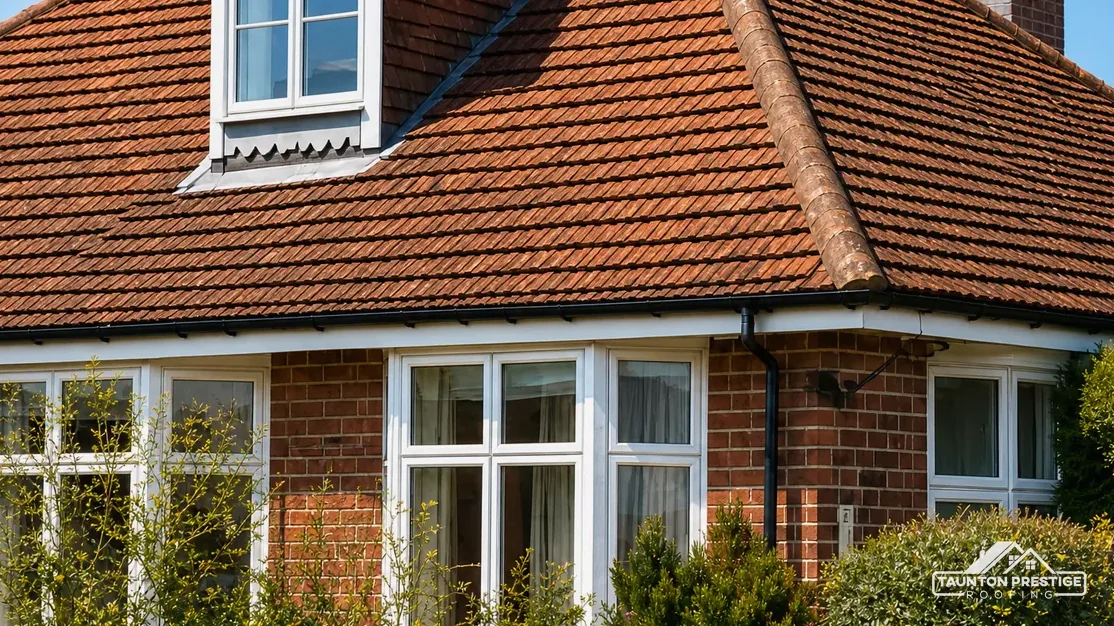
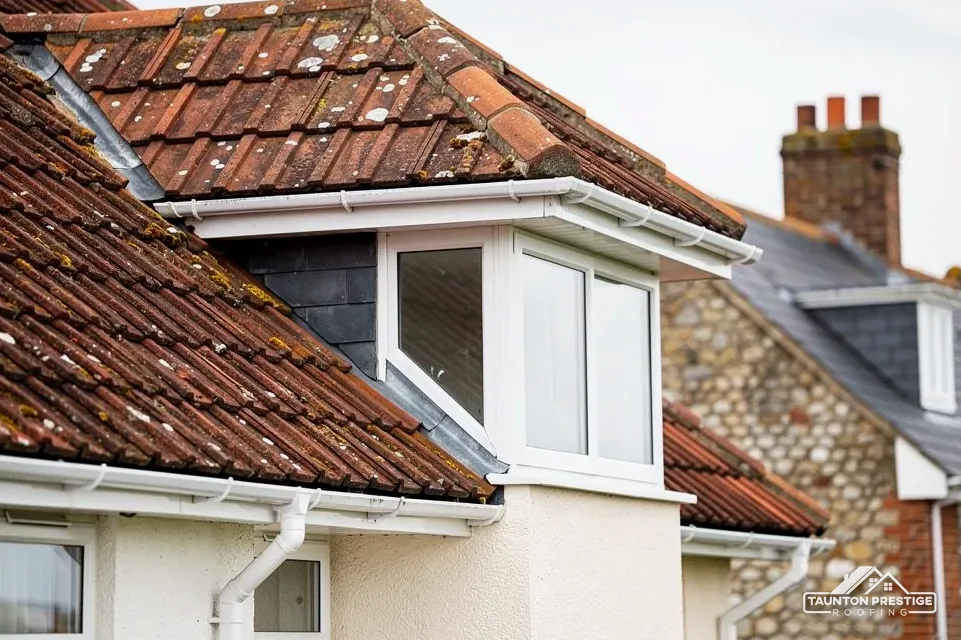
Anything that alters the roofscape seen from the road, a dormer above all, is for Somerset Council's planners to judge before it is built. Their view of the street decides how much change a house can take, so a rear slope and a front slope are each worth asking about separately. A repair in matching material, such as refixing the same slates or laying clay tiles back in the old pattern, is routine. A switch to a different covering is where questions begin, which is why we record the existing slopes before offering alternatives. The wider planning rules are on our page about roof planning; this check is the local part.
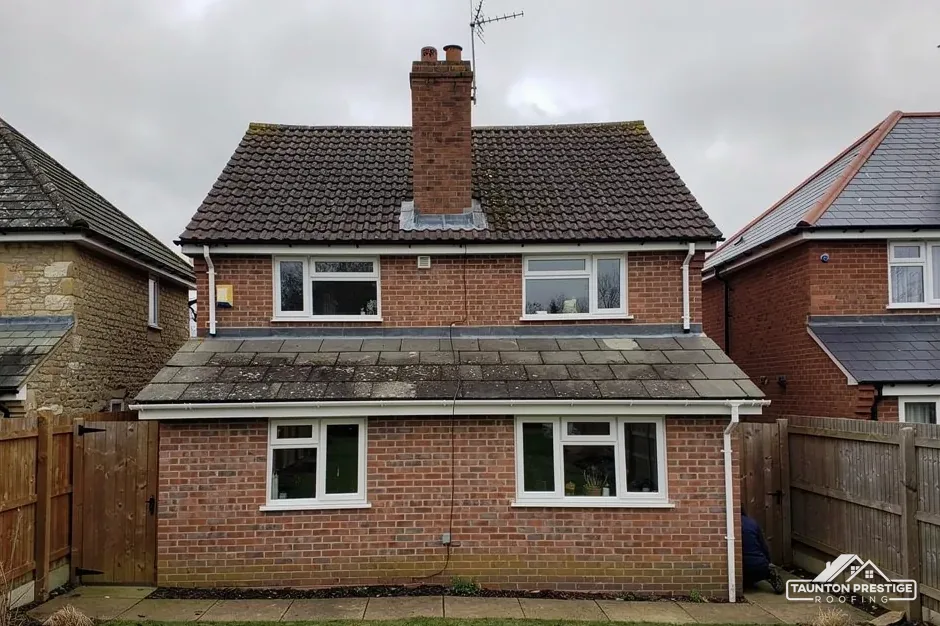
Historic England's list gives Hendford Manor Grade II*, dated 8 September 1970, and puts 1 and 2, Court Ash and 1 and 3, Princes Street at Grade II. Listing is separate from a conservation area, and it brings its own requirement: listed building consent for works touching the building's character. Ask the council, then tell us what it says, and our survey notes will follow its answer.
Look for
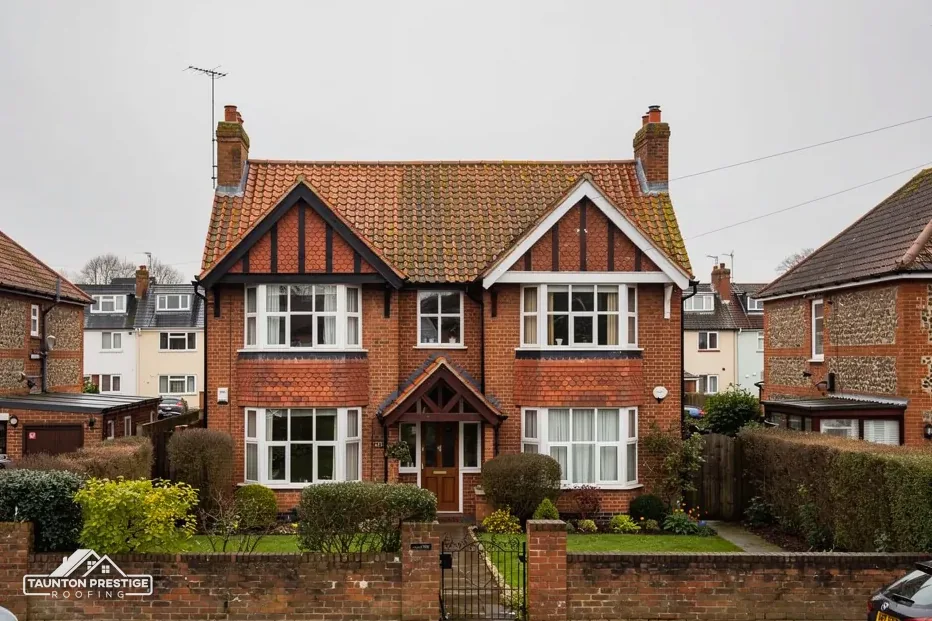
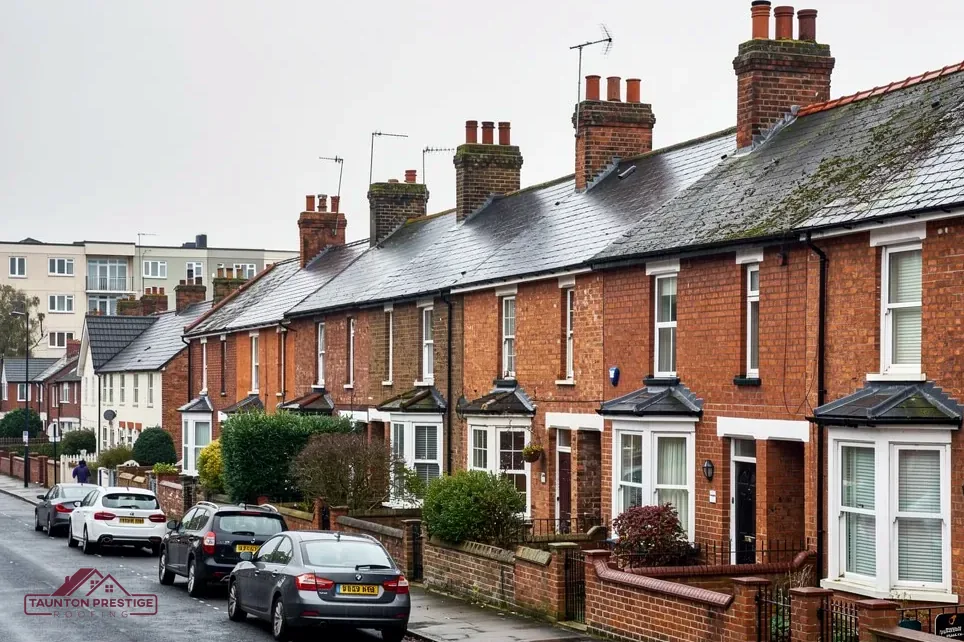
Yeovil's history reads like a list of rebuilds. The urban survey records a major fire in 1449, after which the town still prospered on its markets and its woollen and linen trades, and further fires and plague in the 17th century. By the late 18th century it was a centre of glove-making, and in 1791 Collinson described a populous place of more than twenty streets and lanes. Roofs of every age therefore stand side by side, and a repair has to match its neighbour in more than colour.
Beneath all this sits much older settlement. The most elaborate early site known is the Roman one at Westland, west of the later centre beside the main Roman road, once read as a villa and now more often called a small town. For a roofer the lesson is modest: buildings here have layers, and a wall under a new roof may be older than it looks, so we check the junction with the neighbour before cutting or fixing anything.
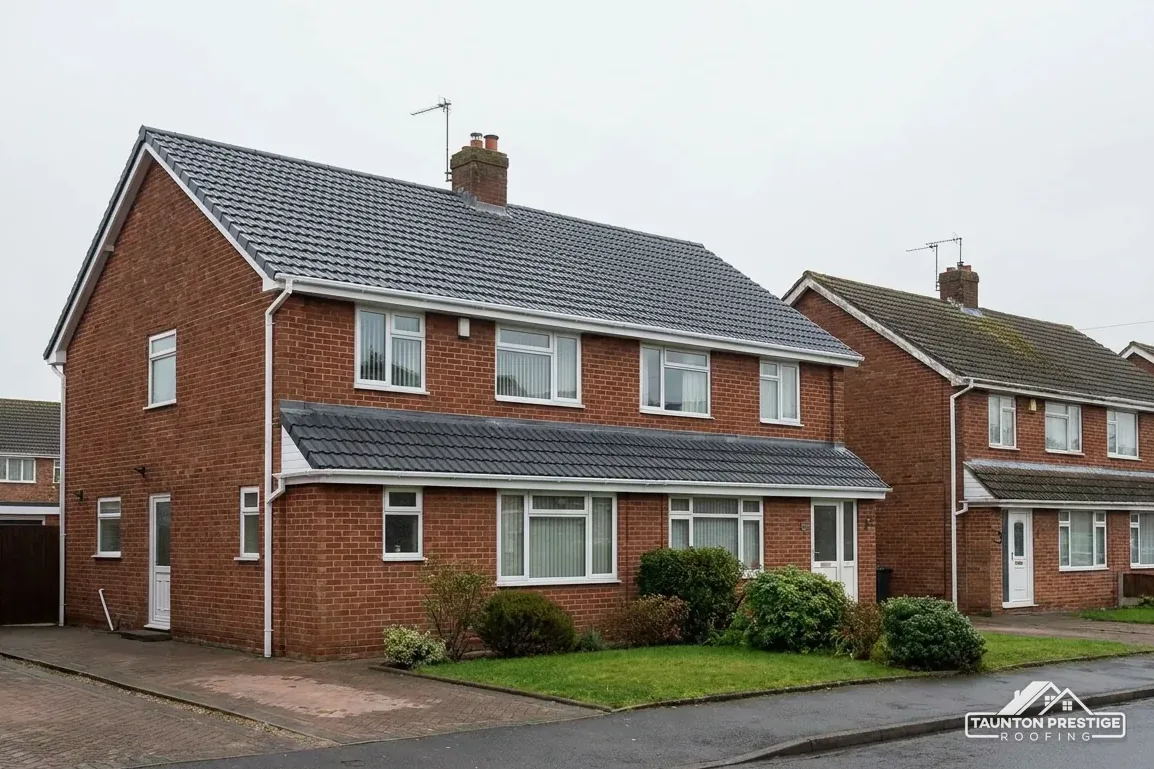
Roofs of every age stand side by side here, so every junction is matched rather than assumed.
What decides the price
Historic England's list gives the church Grade I status from 19 March 1951. St John's is Yeovil's Church of England parish church, with Sunday services on Church Street, so roof work goes through the faculty system rather than Somerset Council's listed building consent. Parish officers apply, and the contractor keeps within the approval; external development that needs planning permission is handled separately.
MyJobQuote (Oct 2026) gives typical UK figures of around £7,800 for an average new slate roof and £150 to £200 for replacing five tiles, with a full re-tile of 80 square metres at £3,000 to £8,000. Treat these as national yardsticks and not as a quotation from us. Where a pattern or size has to match, the hunt for matching pieces adds time, which is why our price waits for the survey.
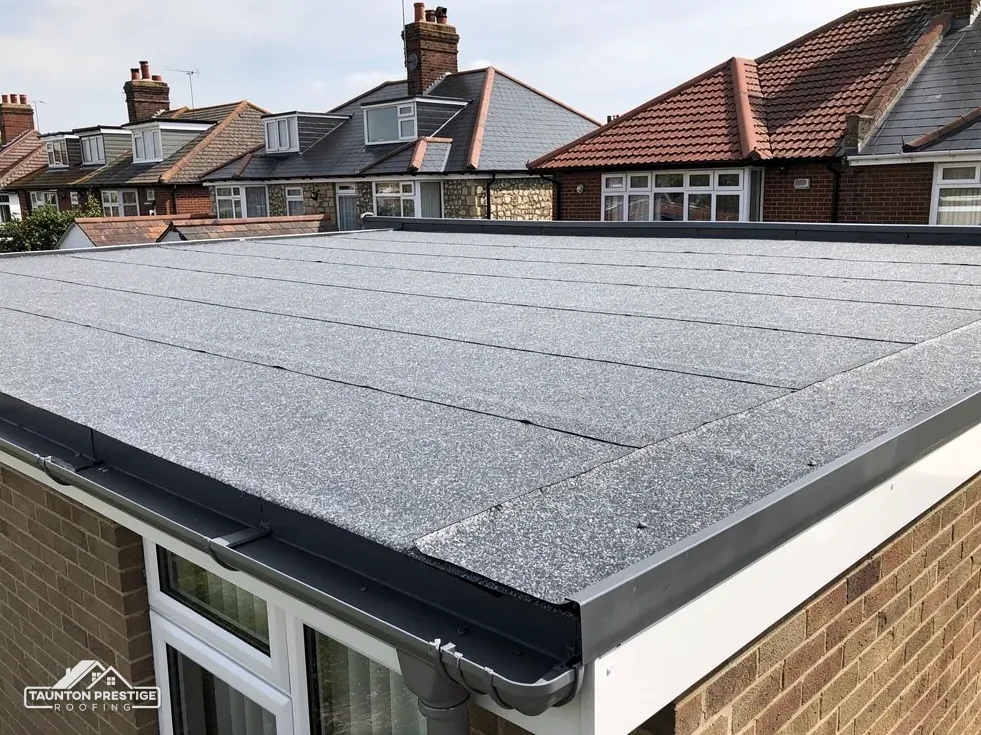
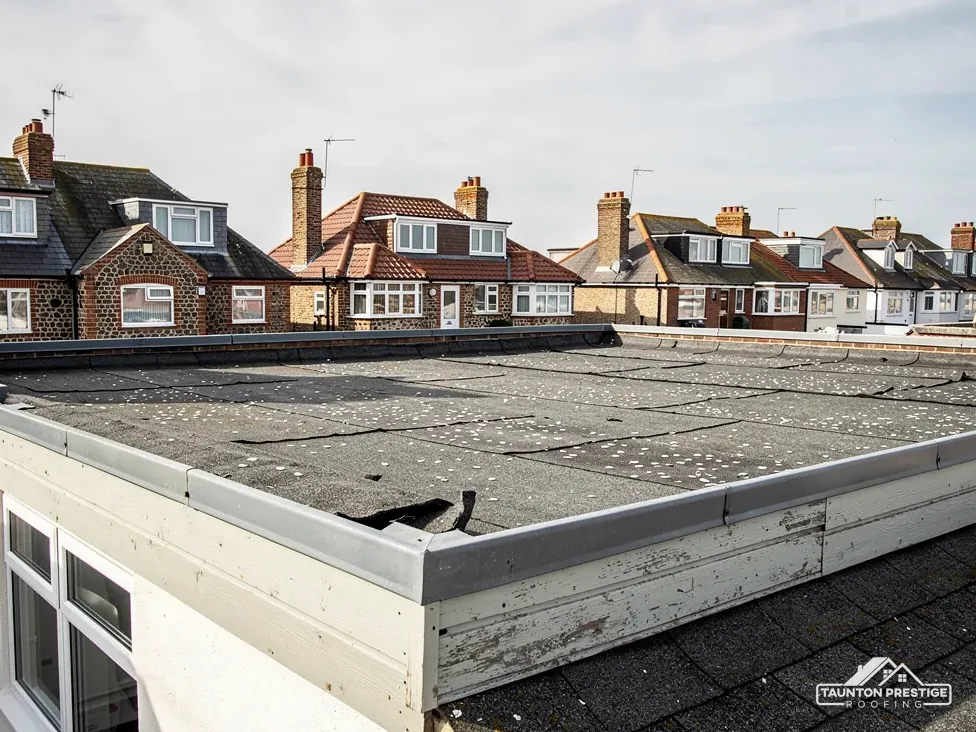
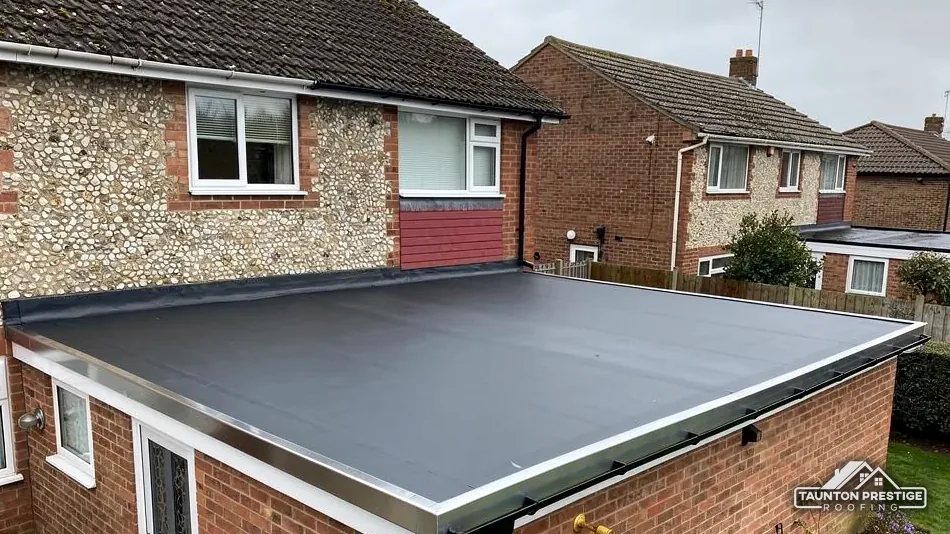
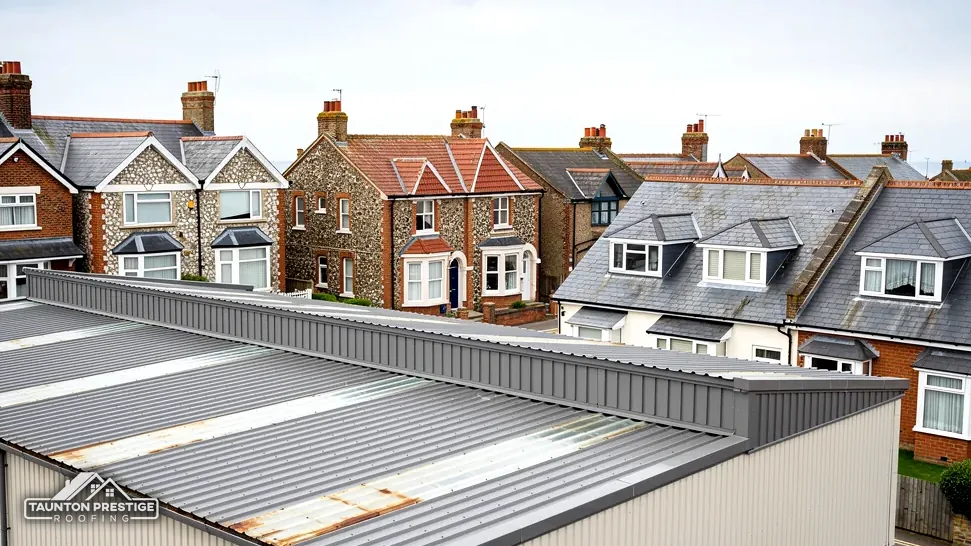
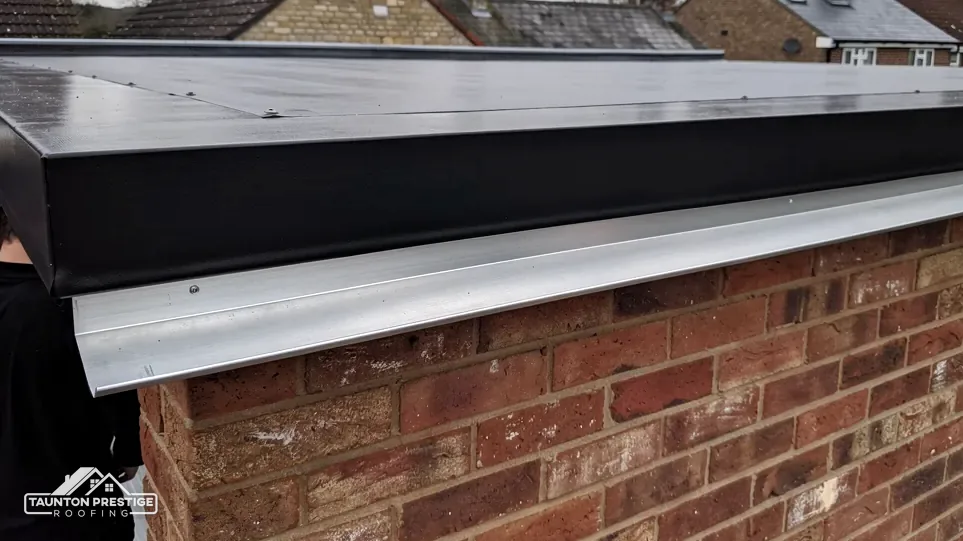
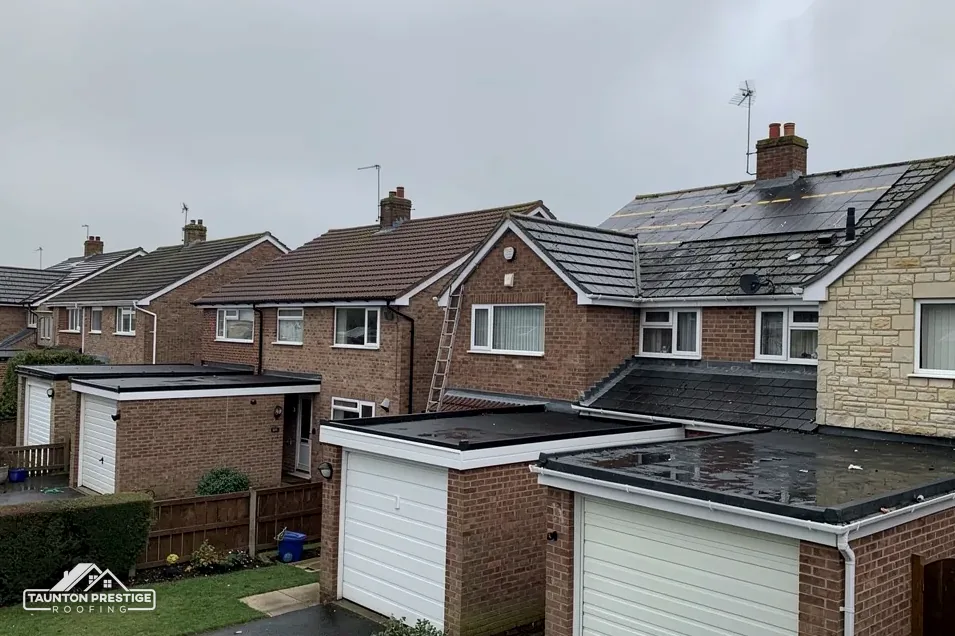
The heritage record calls Yeovil a market and industrial town, and shops, workshops and units bring roof types of their own: flat membranes, profiled sheeting, the odd parapet gutter. Each has its own way of failing, so the survey looks at the type before the symptom. Small faults grow fastest on the flat roof behind a shop or over a rear extension: a lifted edge trim, a split seam, a blocked outlet. On a unit, how we reach the roof shapes the job as much as what goes on top of it.
BS 6229:2025 keeps a minimum finished fall of 1:80, and IKO advises designing for 1:40. For torch-on felt Less gives a span of 10 to 20 years: a careful job can reach 20, a careless one can fall short of 10. GRP is put at 25 to 40. For EPDM, a synthetic rubber sheet, GreenSpec says 20 to 30 years and Less 30 to 50. These are typical lives and never promises. Area, access and deck condition set the price, and the survey comes before the written total. See flat roofing and commercial roofing.
HSE's starting assumption for anything constructed or refitted before 2000 is that asbestos is there; a proper check can overturn that. Cement roof sheets can be taken off by careful hands without a licence provided they are not broken up. Smashing them substantially turns the job into notifiable non-licensed work. Because such sheets are fragile throughout their life, no one should step on them, and the removed material travels with a consignment note instead of going in a skip. MyJobQuote (Sep 2026) gives around £2,750 as an average for removal. Our garage and asbestos roofs page has more.
Under section 169 of the Highways Act 1980, poles on a footway or carriageway need the highway authority's licence, so ordering it is a legal step as well as a practical one. Inside a front garden or a yard, the poles are on private ground and the licence question does not arise. In Yeovil the highway authority is Somerset Council, which grants these only to accredited contractors, so the application is the appointed contractor's to complete. Notice runs to at least 10 working days, the fee is £124.60 for each 28-day period (April 2026), and an overrun means paying for an extension. Our Somerset scaffold licence answer goes further.
What decides the price
Somerset Building Control serves the former South Somerset district among others, and it names no percentage for re-roofing in its own right. The Planning Portal's figures therefore govern. Under that test an application is normally unnecessary only if the work touches less than 25 per cent of the building envelope and less than 50 per cent of the roof. Separately, Building Regulations approval is needed where the new covering weighs 15 per cent or more above the old one. Where a re-roof is notifiable, the fee falls under the heading of renovating a thermal element. The helpline is 0300 303 7790.
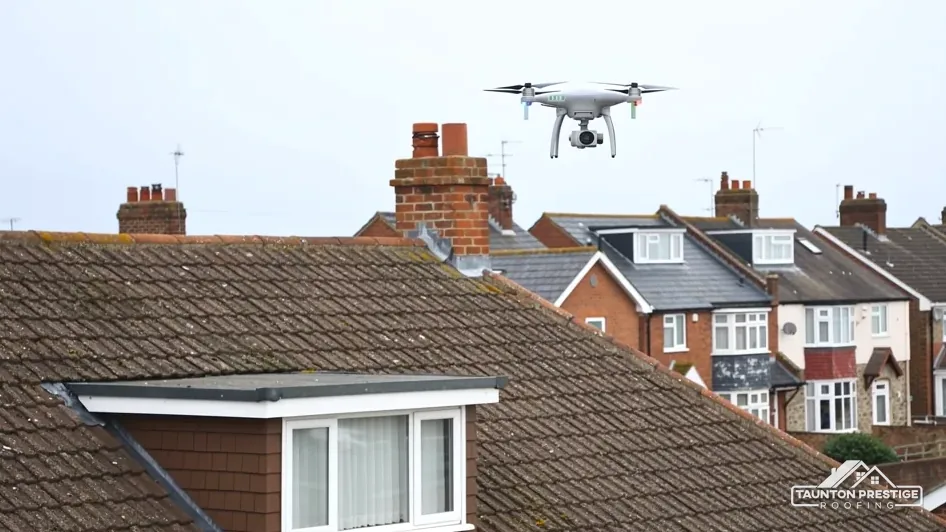
Dated pictures of your slopes, numbered by slope so an agent or surveyor can follow them without us in the room, a note of what we found and one total, in writing. Ask any trader whether a figure includes VAT and scaffolding, and expect ours to say what it covers. If the roof belongs to a business, say so when you write, because access outside opening hours changes how the visit is planned. Give us the address of the Yeovil roof and describe the fault, and a survey date comes next.
Walked the roof?
When you have read the checks, we walk the roof and show you the photos.
It could. HSE's guidance is to assume it is present in buildings from before 2000, and cement roof sheeting is a named example. Those roofs are fragile, so stay off them. The survey is where we raise it, and we explain what careful removal would involve before you commit to any work.
St John the Baptist is the Church of England parish church for Yeovil and still holds Sunday services, so its roof repairs are approved through a faculty, not through Somerset Council's listed building consent. The parish starts the application. Any outside development that needs planning permission is a separate question for the council.
Somerset Building Control names no percentage of its own, which leaves the Planning Portal's figures to apply: an application is normally unnecessary only if less than 25 per cent of the building envelope and less than 50 per cent of the roof is involved. A heavier covering, 15 per cent or more above the old, needs approval. Ring 0300 303 7790 to confirm your case.
Ask each trader for a written total and check whether it includes VAT and scaffolding. Citizens Advice's own tip is to gather at least 3 written quotes from separate traders. Judge them on the covering, the area it spans and what each survey found, not just the bottom number. Ours is one written price after the survey.
Send the address of your Yeovil roof with a few words on the fault, and the visit is booked.