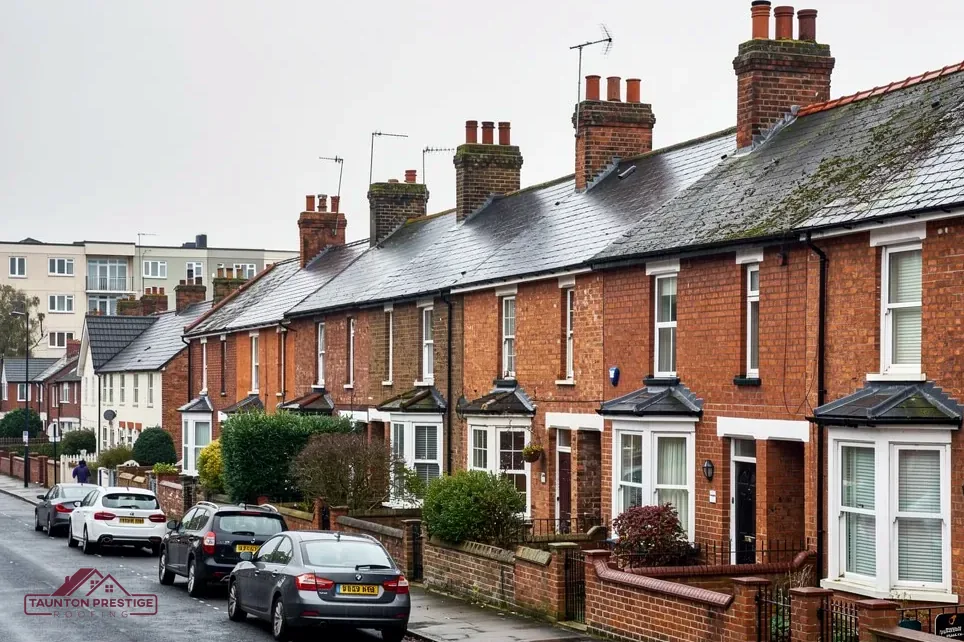
The Mead terraces
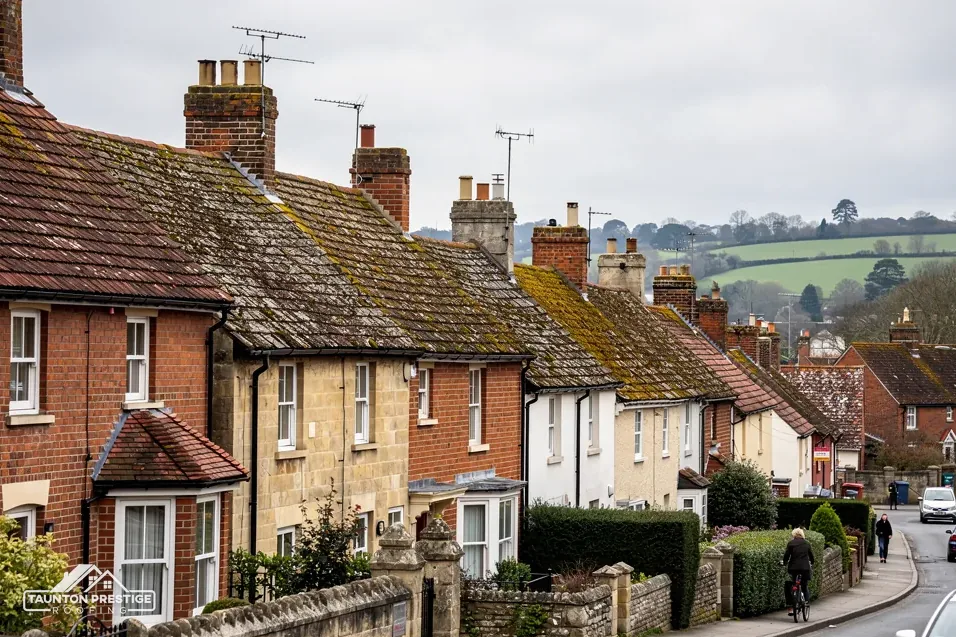
Built in 1818 and 1819 of lias, with dark-red tiled roofs and brick chimneys, says the Victoria County History.
The Mead's red-tiled terraces and two Grade II* churches on the Yeo
Ilchester lies on the south bank of the River Yeo, with a conservation area and 46 listed buildings within 500 metres. A survey comes before every price.
Built in 1818 and 1819 of lias, with dark-red tiled roofs and brick chimneys, says the Victoria County History.
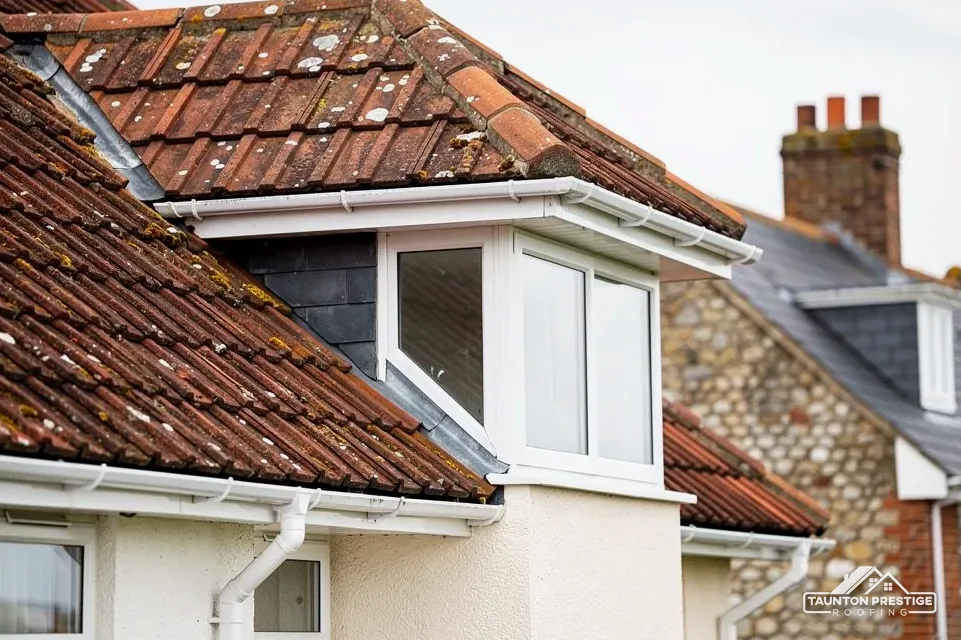
Listed Grade II*, with a chancel of the earlier 13th century and a nave whose roof line has been lowered.
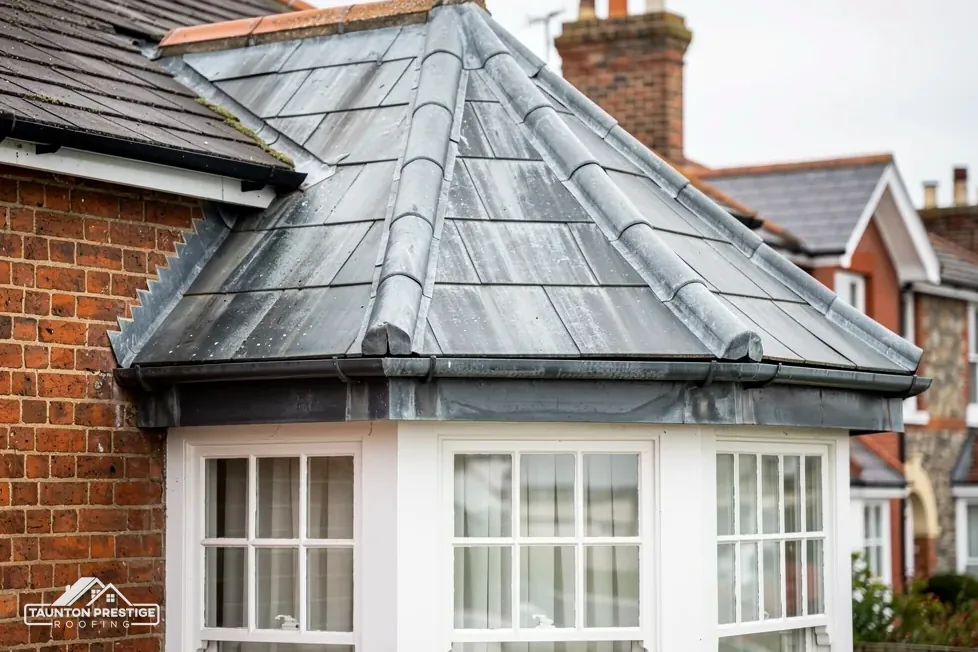
Numbers 21 and 22 are both listed Grade II, among 46 listed buildings within 500 metres.
Street map of Ilchester with Tintinhull, Long Sutton, Somerton, Martock marked around it, and Taunton.
Tintinhull lies south-west of Ilchester and Martock further south-west, with Long Sutton and Somerton to the north-west. Odcombe is south and Yeovil south-east.
About 18 miles east of Taunton, Somerset Council (unitary).
Four checks beside the River Yeo
Which consent suits which building, how clay tile ages, what low ground asks of a drainage system, and how building control and a quote fit together.
Ilchester probably owed its early importance to a river crossing. The Victoria County History says roads converged north of the Yeo, a settlement grew up south of the ford in the 1st century AD, and the place was Romanised soon after. Today two of its churches carry a Grade II* listing, both first listed on 19 April 1961: St Andrew and St Mary Major. St Mary Major has a chancel of the earlier 13th century and a massive west tower, square at the base and octagonal above, and its nave roof line has been lowered. A roof altered once before repays a look from the loft side as well as from a ladder. With 46 listed buildings inside 500 metres, every survey here begins by asking what a building is and what protects it. Historic England's list entries give a grade and a date but say nothing about the state of the roof, and that is what the survey supplies.
It turns on denomination and on use. Where the Church of England still holds services, the faculty system governs the roof. Catholic, Methodist and URC congregations use their own approval systems while they still worship in the building. Baptist buildings do too, but only when a Schedule 1 trust corporation holds them. Any Unitarian or Quaker meeting house, any closed church and any converted chapel goes to the council for listed building consent. Which of these fits St Andrew depends on who worships there, so its parish or trustees should say before any contractor is booked.
The conservation area reaches to within about 0.75 km of the village centre, and Somerset Council holds the exact boundary. Numbers 21 and 22 High Street are each listed Grade II. If your own house is listed, any change to its character needs listed building consent, and our answer on listed building roof consent walks through the steps.
Look for
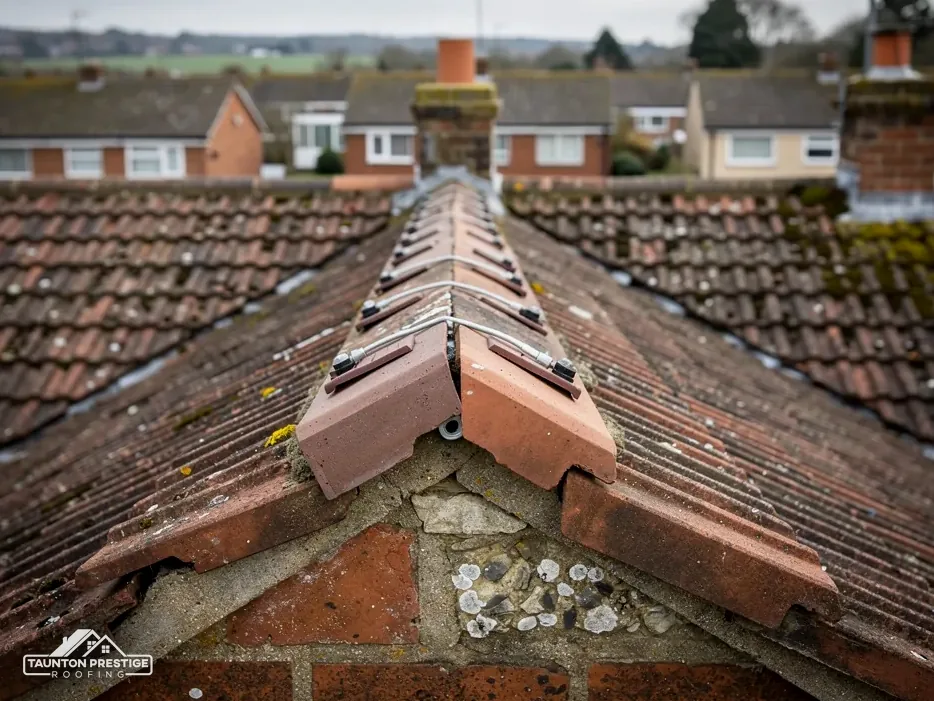
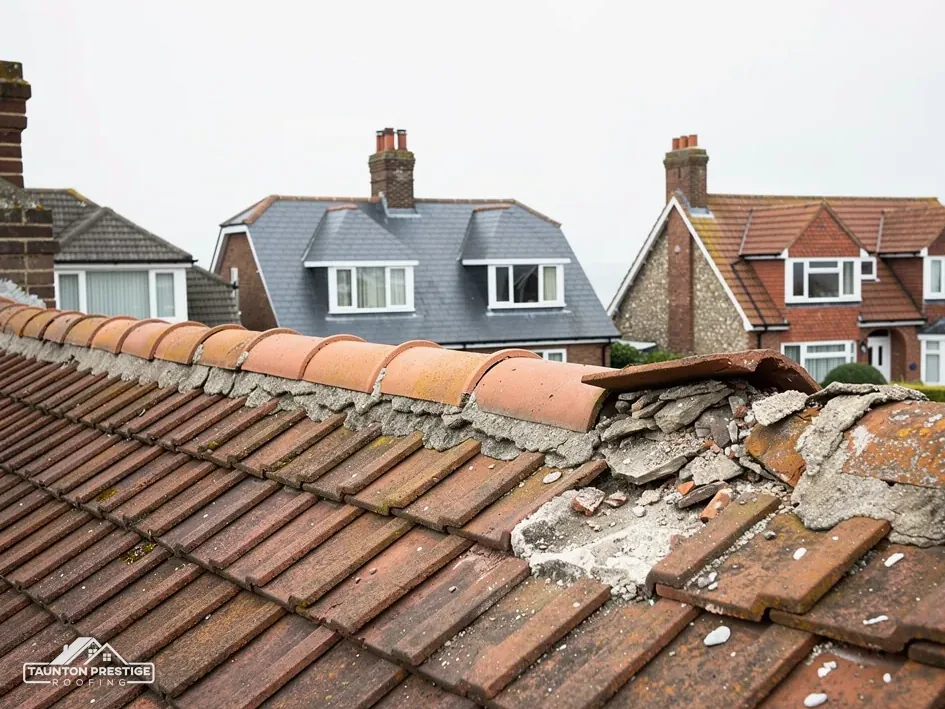
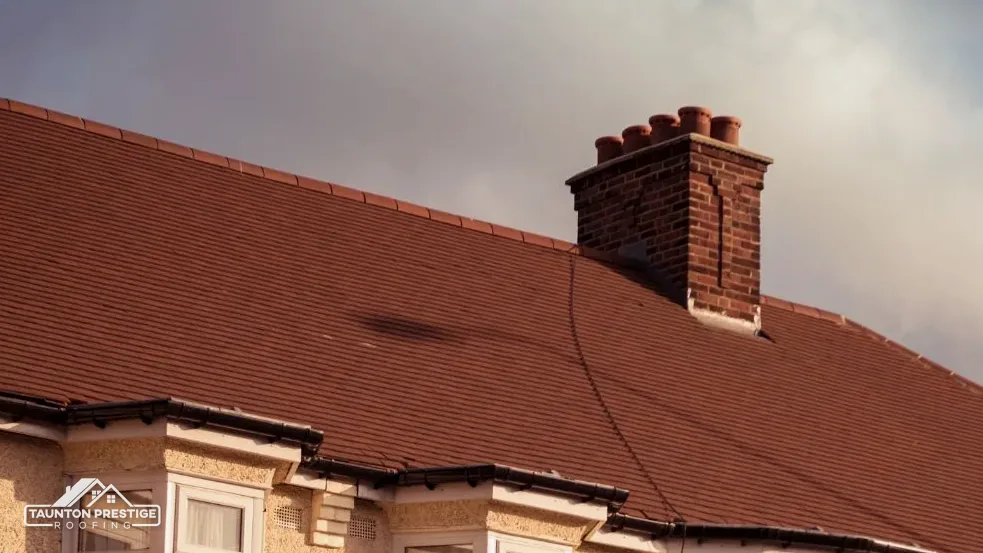
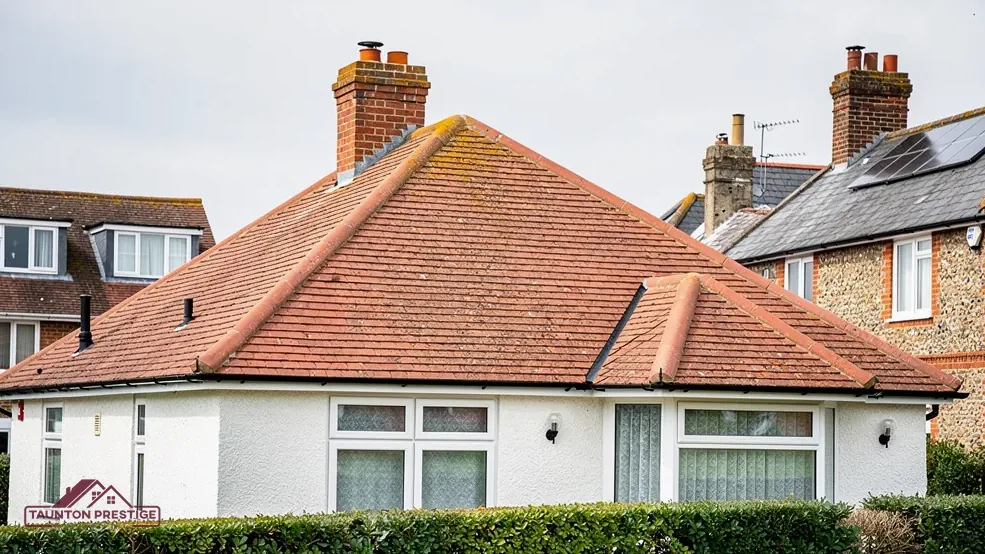
The Victoria County History describes The Mead, a group of 61 dwellings put up by Lord Darlington in 1818 and 1819, as two terraces at right angles, plainly built of lias with dark-red tiled roofs and brick chimneys. A terrace shares one roofline from end to end, so a patch in a different shade is visible from the road for years. New tiles sit differently beside old ones until a few seasons of weather close the gap. Reclaimed tiles of the right age and colour often blend best, and the survey photographs the whole slope so you can see what is being matched.
What decides the price
Marley quotes the BRE's 60-year minimum life expectancy, a clay-only figure. For old peg tile, Building Conservation calls the 60-year figure an unreliable guide. Marley expects concrete tile to last around 60 years as well, while stressing that this is no warranty. Age is a poor judge in either direction: a veteran roof may still be tight while a newer one gives up at one fixing. So the survey reads laps, fixings and cracks and ignores the calendar. At the ridge, Marley adds that BS 5534 stopped trusting mortar by itself on ridge tiles, so a re-bedded clay ridge also carries mechanical fixings. A salmon-orange replacement beside dark-red tiles would show at once.
MyJobQuote's typical UK range is £150 to £200 for replacing five tiles, £200 to £275 for ten to twenty, and £3,000 to £8,000 for a full re-tile of 80 square metres (Oct 2026). Those are national guides. Your own price depends on the area, the tile, the access and what lies under the battens, the timber strips the tiles hang from, and a full re-tile is a different job from a patch. See our pitched roofing page.
Ilchester sits on the southern bank of the River Yeo, on low-lying alluvium over lias. The Environment Agency's Flood Map for Planning puts it within about 250 metres of Flood Zone 3, and GOV.UK's Check for flooding and Check your long term flood risk services let you test a single address. A flood map belongs to the land. A roof's own task is to shift rain to the drains briskly, which makes gutters and downpipes the parts to get right.
A stain indoors after a downpour may begin in the gutter, and the stain itself gives few clues.
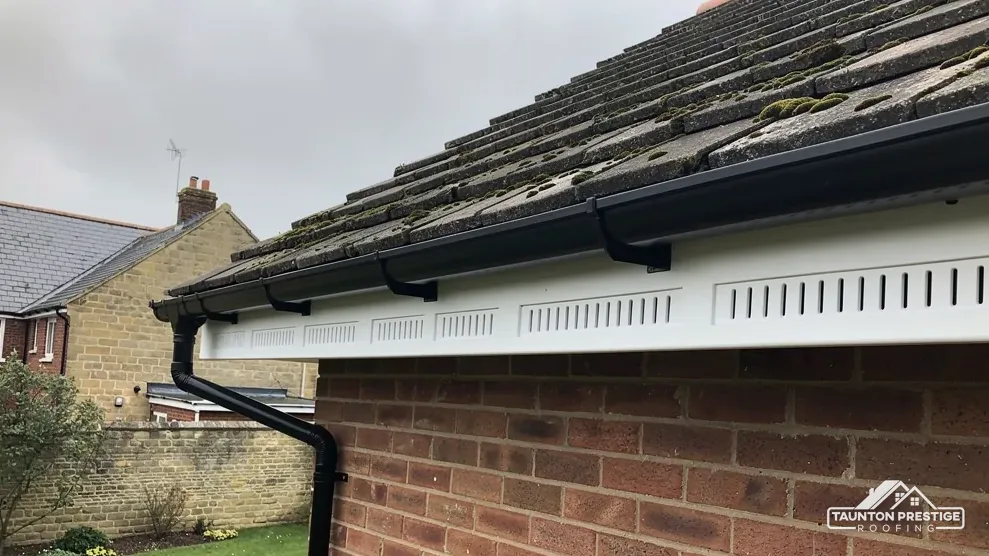
Look for a dark streak down the wall below a joint, a drip at the eaves in a downpour or a run of moss along the fascia. The fascia is the board that carries the gutter brackets, and beneath the overhang sits the soffit panel. Rainwater that keeps spilling at the same spot rots that timber from the outside in. MyJobQuote gives a typical UK range of about £1,000 to £1,600 for new guttering (Oct 2026), and mending a few joints costs far less than renewing a run. Our gutters, soffits and fascias page sets out the options.
Walk round after a heavy shower. Note which downpipes run and which stay dry, and whether water pools at the foot of the wall or drains away. Take photographs of any streaking or standing water, since we can read a lot from them before we visit. Where tall brick chimneys stand above a terraced roofline, as at The Mead, we study the lead and the pointing on the stack at the same time, because a leaking stack mimics a failed gutter from inside. Our chimney repairs page explains that side. An extension with a flat roof is another place water collects, and BS 6229:2025 calls for a finished slope of 1:80 or steeper, so that water leaves the surface instead of lingering.
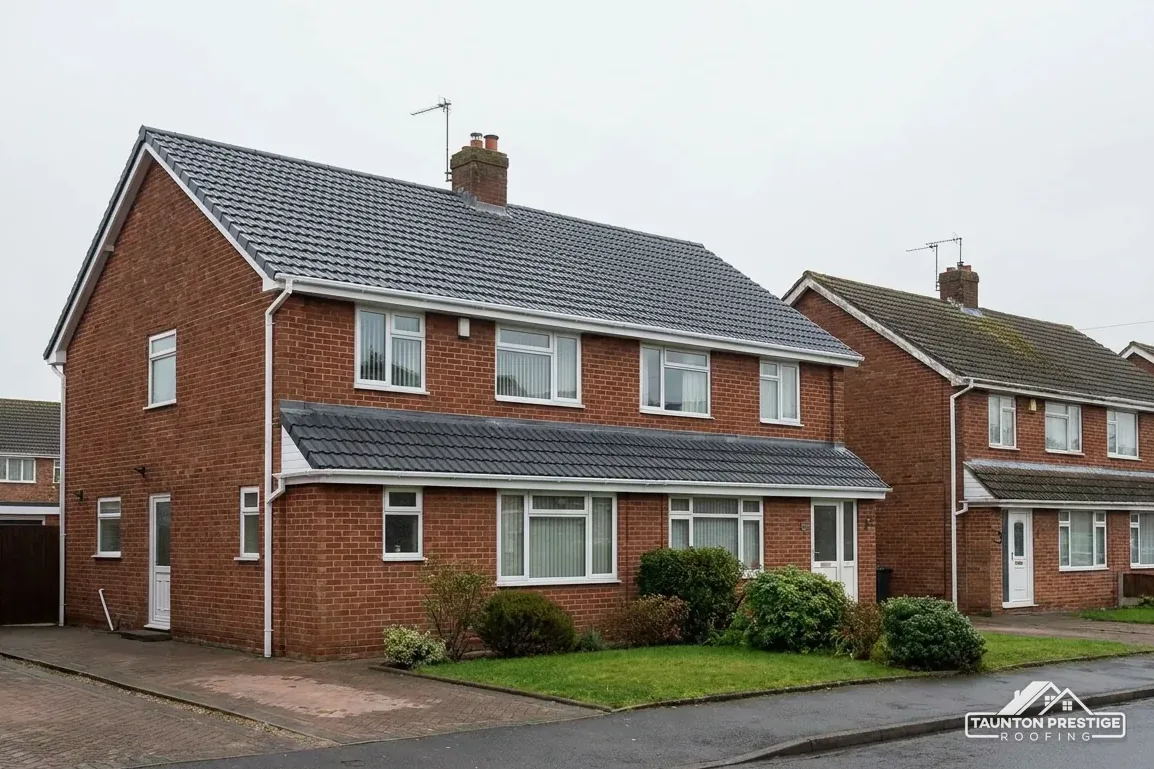
Somerset Building Control covers the former South Somerset district that includes Ilchester, and it answers on 0300 303 7790. Somerset Building Control has no re-roof threshold of its own, so the Planning Portal's yardstick governs: under 25 per cent of the building envelope and under 50 per cent of the roof usually means no building control application. When one is needed, the fee schedule files it under renovation of a thermal element. Approved Document L (2021 edition) then gives a roof threshold of 0.35 and an improved value of 0.16, with paragraph 4.13 allowing less where an upgrade cannot be done technically, or would take more than 15 years to pay back.
What decides the price
Section 169 of the Highways Act 1980 puts scaffold over a pavement or road behind a highway authority licence, and in Ilchester that authority is Somerset Council. Somerset Council deals only with accredited contractors here, and the contractor you appoint fills in the application, so no forms land on your doormat. The council's fee is £124.60 for each 28-day period (April 2026), and it asks for at least 10 working days' notice, so the start date we propose has that wait built in.
Yes. Photographs of your roof come out of the survey, and a single written sum follows for everything. Other quotes you gather should say plainly whether VAT and scaffolding are in.
HSE's advice is to treat a building built or refurbished before 2000 as one that contains asbestos. Asbestos cement taken off carefully and unbroken is non-licensed work, whereas smashing it up substantially turns the job into notifiable non-licensed work. Asbestos insulating board in soffits is often licensed work, depending on HSE's risk assessment rules, so that gets checked first. Asbestos waste travels on a consignment note. Give us your road in Ilchester and one note on what looks wrong, and the survey is booked.
Walked the roof?
When you have read the checks, we walk the roof and show you the photos.
Often, yes. Sound reclaimed tiles of a similar age and colour tend to blend better than new ones, which look different until they weather. We photograph the whole slope at the survey so you can judge the match. If your house is listed or in the conservation area, ask Somerset Council's planning team first.
Both churches are listed Grade II*, first listed in April 1961. Where the Church of England holds services, a faculty is needed, while other denominations have their own systems or need the council's listed building consent. Which route fits St Andrew depends on who worships there, so ask its parish or trustees directly.
Historic England runs an online list of listed buildings, searchable by address, and 46 of them fall within 500 metres of the village, among them 21 and 22 High Street. The conservation area is a separate designation, and Somerset Council holds its map. We check both at the survey and tell you what we find.
The flood map describes the land and not the roof. What it does mean is that clear gutters, working downpipes and sound flat roof outlets matter, because they carry rain away from the walls. GOV.UK's flood-risk checker covers a single address, and our survey looks at how the roof sheds water.
Send the Ilchester road name and a short description, and a visit date follows.