The Cobb, rebuilt after 1824
First recorded in 1295, rebuilt in ashlar between 1825 and 1829 after gales wrecked much of its walls.
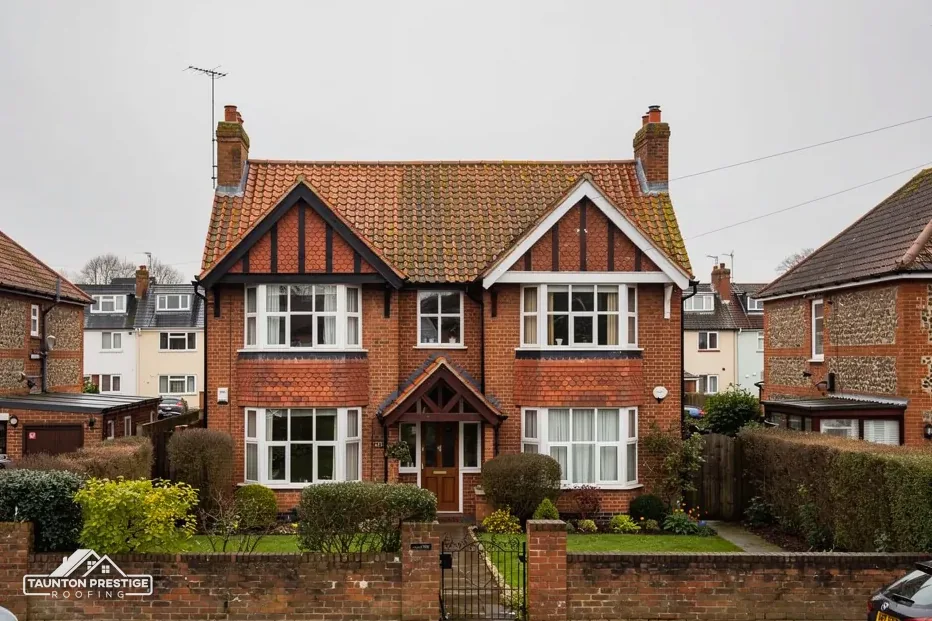
A Cobb rebuilt after the gales, slate gables and a listed centre
Lyme Regis has eight conservation area records, a Grade I church and a National Landscape on its doorstep. Each roof gets a survey, dated pictures and one written price.
First recorded in 1295, rebuilt in ashlar between 1825 and 1829 after gales wrecked much of its walls.
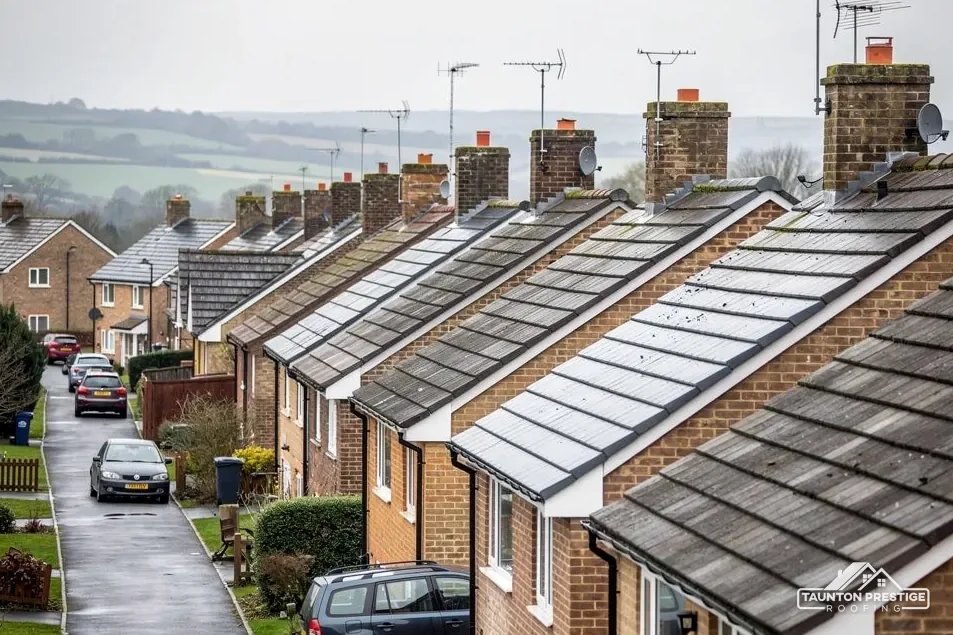
Largely rebuilt in 1647 and later: rubble walls, partly rendered, under gable-ended slate roofs.
The church is Grade I and Belmont Grade II*, two of 207 listed buildings within 900 metres of the centre.
Street map of Lyme Regis with Uplyme, Charmouth, Axminster, Colyford marked around it, and Taunton.
Colyford lies to the west, while Uplyme is north-west of Lyme Regis, Charmouth north-east and Axminster further north-west.
About 21 miles south of Taunton, Dorset Council (unitary).
Four checks by the Cobb
Questions worth settling before a ladder goes up in Lyme Regis, and what each answer does to the consent route and the price.
Council-supplied boundaries record eight Lyme Regis conservation area entries, and the planning data finds the first within about 0.75 km of the centre, touching the second and third too. Dorset Council's heritage record says the area was first designated in 1970, extended in 1993 and had its boundary altered in 2004. A boundary that has been redrawn more than once is reason enough to check your plot instead of guessing where its edge runs, so that is our first job on any address in the town.
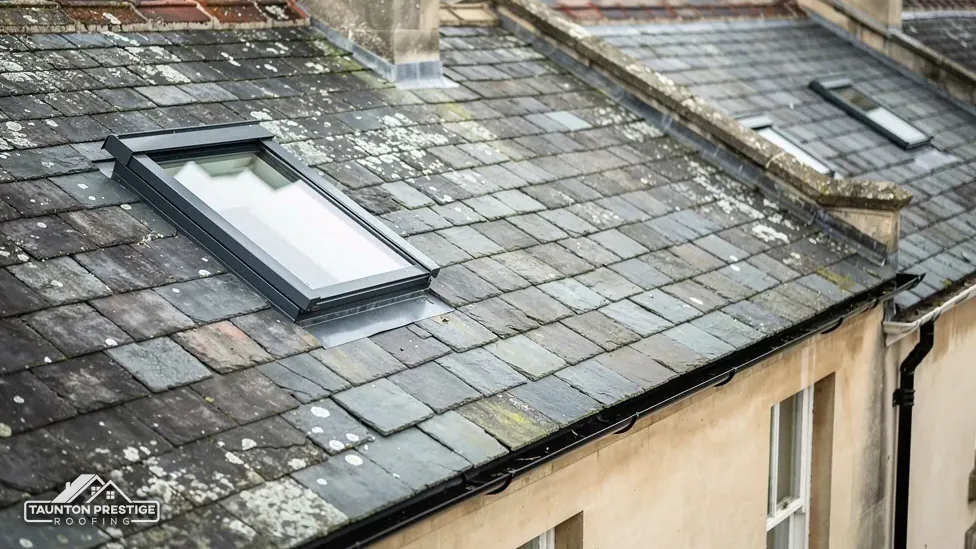
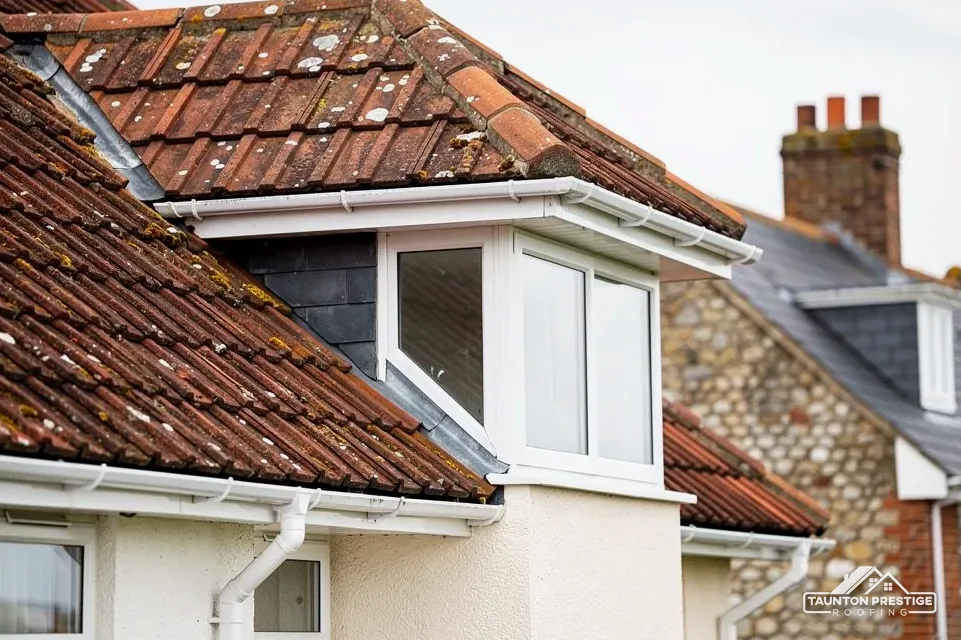
Roof windows are the usual surprise. A skylight looks small from the road, but it alters the look of the slope, and inside a conservation area a street-facing one draws attention. Before we measure anything we ask where the window will face and whether the slope can be seen from a public road. Dormers get the closest look of all. If your plan involves either, tell us at the survey and we will set out the order of questions with you: designation, then consent, then the method and the price.
Look for
The planning data places Lyme Regis partly inside the Dorset National Landscape, which the law still treats as an area of outstanding natural beauty. Dormers face tighter planning limits there, as in a conservation area, so put any dormer idea to Dorset Council's planners early. Our page on planning permission for roof work covers the wider rules.
Ask Dorset Council's planners whether an Article 4 direction affects your address, and what it covers, ahead of any new covering, roof window or chimney work. Our survey logs what is on every slope, which gives that conversation a factual start, and a repair in the existing material is priced as a repair.
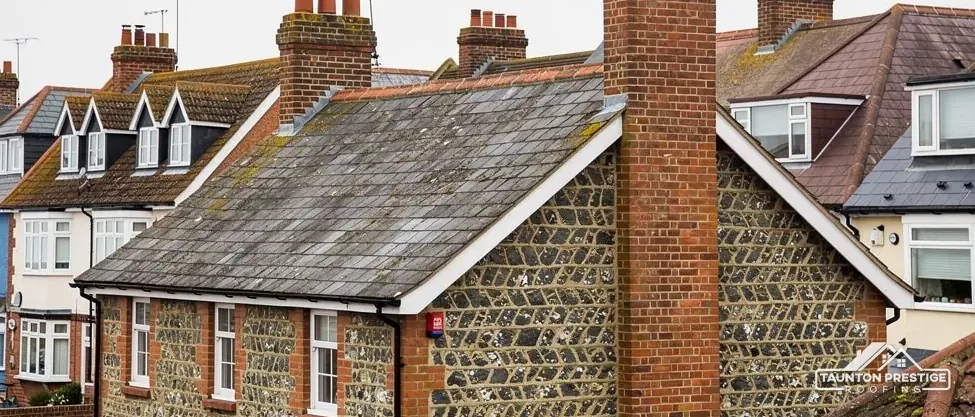
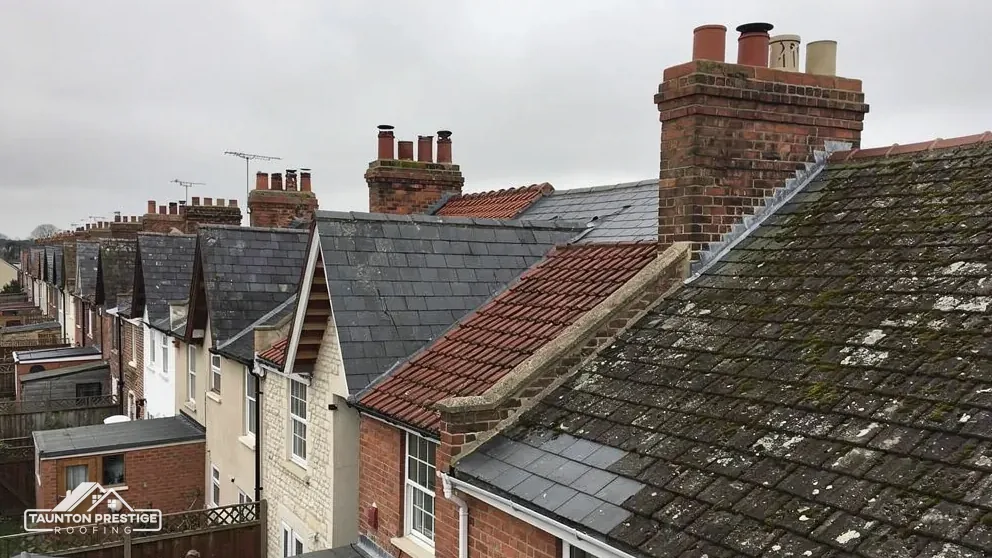
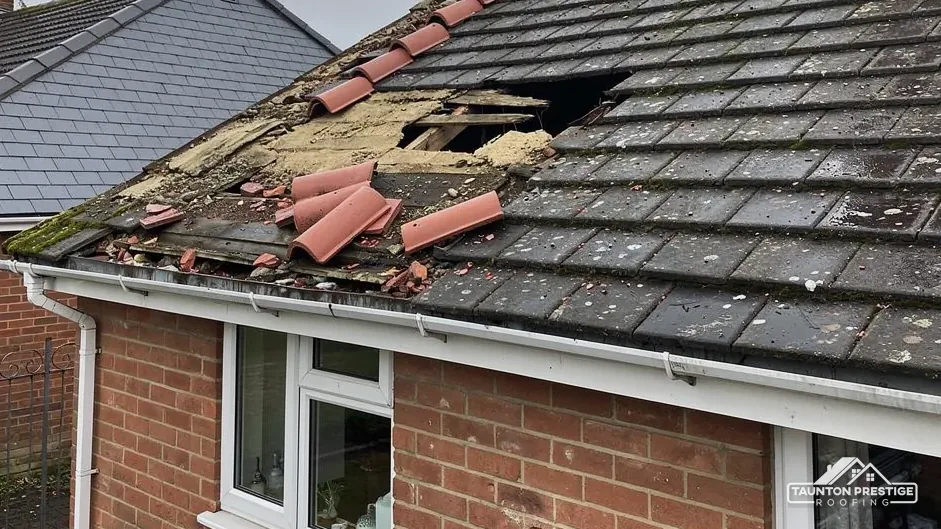
The Cobb has been a lesson in weather since 1295, when a document records it as la Cobbe. Gales in 1824 wrecked much of its walls, and the town rebuilt them in ashlar between 1825 and 1829. A structure rebuilt after a gale tells a roofer where the weather comes from. Slate, laid properly, copes with that. Valleys, the channels where two slopes meet, collect water from both, so a failed valley lining leaves a stain on the ceiling directly below. The Town Mill, with remains from about 1500 and rebuilding in 1647 and in the 18th and 19th centuries, has stone rubble walls, partly rendered, under gable-ended slate roofs.
What decides the price
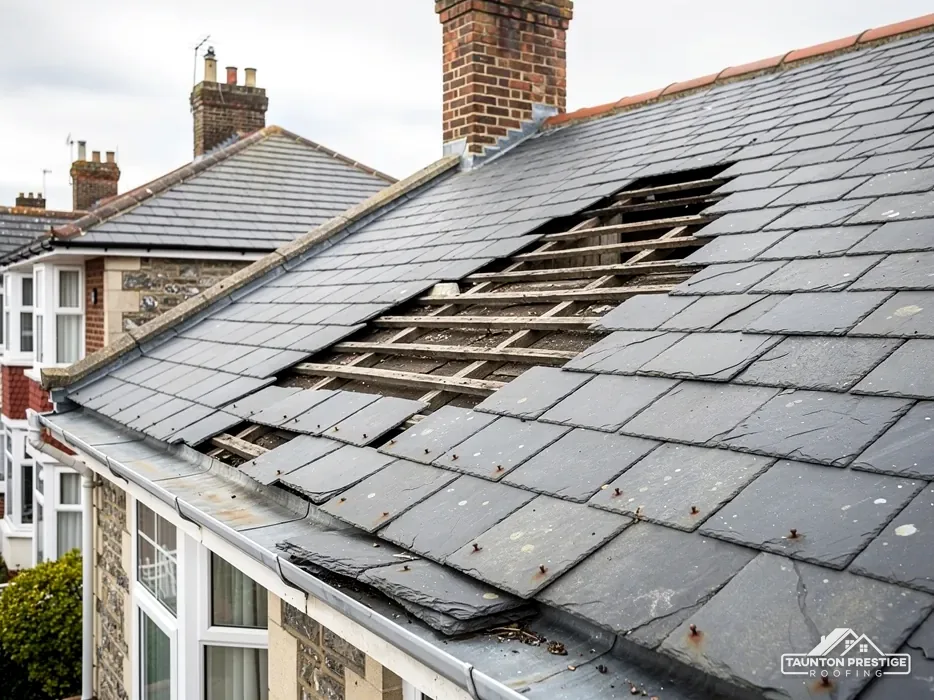
Each slate hangs from a nail or hook on a batten, the cross-timber it is hung from, and wind loosens that fixing before the slate itself wears. On roofs shallower than 25 degrees, Cupa advises against hooks as the fixing, and it notes that BS 5534 puts the lowest pitch for natural slate at 20 degrees. A slipped slate leaves the underlay, the sheet beneath, to take the rain. One loose slate is a small job, while a dropped row says the fixings along that course are tired.
Where a house is old or stands in the conservation area, the covering is part of how it looks, so we keep slate as slate and match size and colour. Past the century mark is realistic for well-kept slate, in the view of the Confederation of Roofing Contractors, though that describes the material and never promises your roof; fixings and battens often give out first. Our slate roofing page sets out repair, partial re-slate and full replacement, so you can see where your roof falls between them.
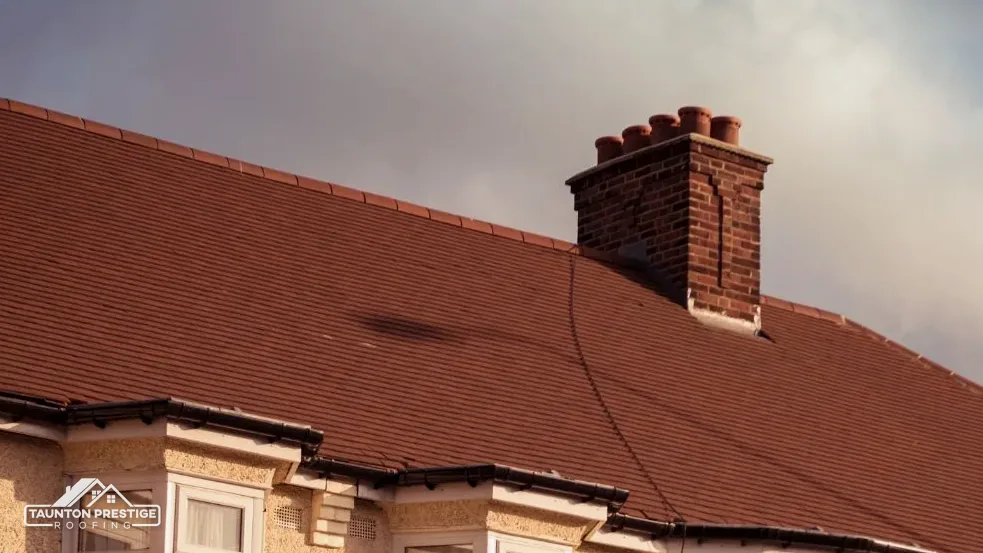
St Michael's parish church was listed Grade I on 23 April 1952, and Belmont was listed Grade II* on 27 October 1953. Around them the planning data counts 207 listed buildings within 900 metres of the centre. In a town like that a roof is rarely just a roof: the chimney stack, the flashings and the ridge may all belong to a listing, and we find out which before the first price is written down. Looking up from the street you can often see the clues: a stack that leans, lead that has curled away from the brick, moss where a gutter has overflowed for years. A phone photograph of each stack, taken from the street on a clear day, gives us a useful first look before the survey visit.
Listing covers the whole building, so the chimney you repair may need the same consent as the house.
What listing adds is listed building consent for anything that bears on the building's special character, and Dorset Council grants that consent. St Michael's follows another path: the Church of England's faculty jurisdiction applies, so the parish seeks a faculty.
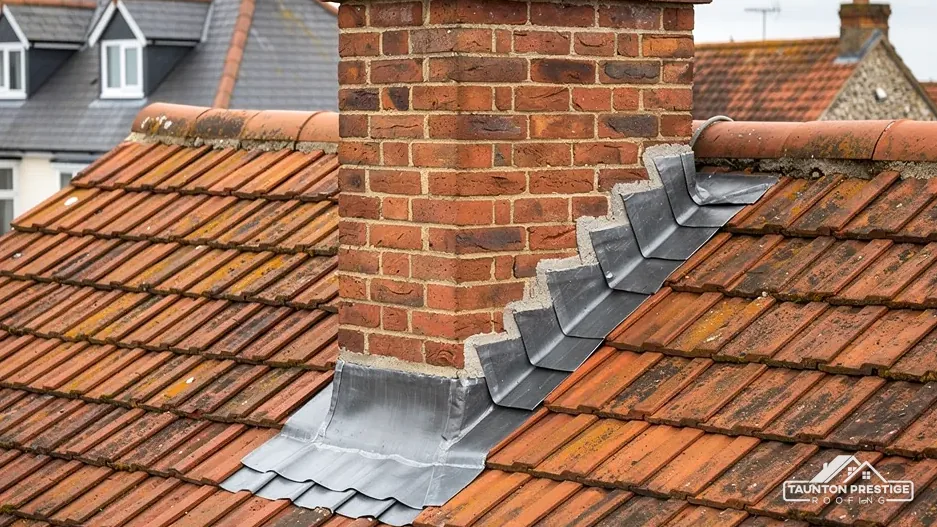
Repair differs from rebuild. Flaunching is the mortar cap bedding the pots; the lead strip that seals the stack against the slope is the flashing; replacing either in the same material counts as repair. MyJobQuote cites over 80 years as the least old lead flashing can last, so old lead is often worth keeping. Pulling down a stack or reshaping it can alter how a listed house looks, which brings consent into play, and taking out a chimney breast always means Building Regulations approval. Where the chimney sits on a party wall, notice must be served two months before work starts under the Party Wall etc. Act 1996. Our chimney repairs page covers the detail.
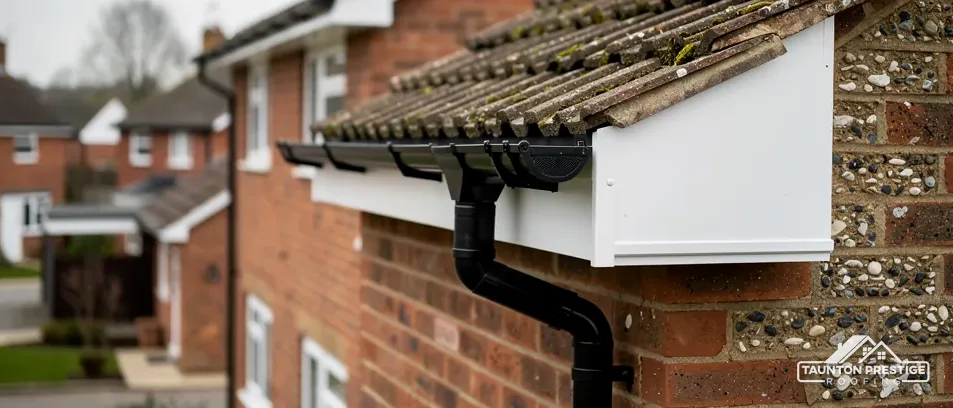
The Environment Agency's Flood Map for Planning puts Lyme Regis within about 250 metres of Flood Zone 3. That describes land, and one address can be tested on GOV.UK's flood-risk service for the long term. A roof can do its own part by moving rain away quickly, which makes the state of the gutters and the board behind them worth a proper look before the next wet winter. Rotten timber behind a gutter is easy to miss from the ground, because the front of a fascia can look sound while its top edge, hidden by the gutter, has gone soft. We probe that hidden edge during the survey and record what we find in the pictures.
What decides the price
MyJobQuote's October 2026 guide quotes roughly £1,000 to £1,600 for new guttering, as a typical UK range, and about £800 on average for capping fascias and soffits (September 2026), which means new uPVC fitted over the old boards. These figures come from national guides and are not our prices. If the old boards are sound, capping saves a strip-out; if they are soft, they come off first. Our gutters, soffits and fascias page explains each option.
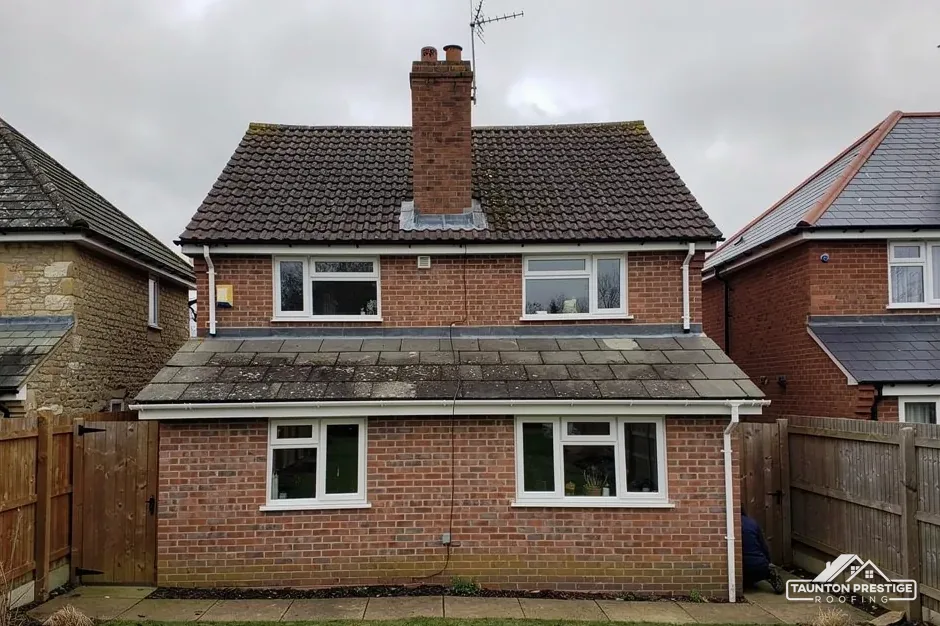
Where poles would take up pavement or carriageway, the licence from the highway authority has to be in place first, and it pays to ask who applies before you sign anything. The scaffolder and we sort out the licence together, and we fix a start date only once we know how much notice the authority wants. The Planning Portal sets the bar for building control: building control normally wants no application for a re-roof touching under 25 per cent of the building envelope and under 50 per cent of the roof. The visit ends with dated pictures of your slopes, and a written total comes after. Send your Lyme Regis address and we will book it.
Walked the roof?
When you have read the checks, we walk the roof and show you the photos.
Not as a rule. The planning data places part of Lyme Regis in the Dorset National Landscape, where dormers face tighter limits than roof windows. A conservation area, a listing or an Article 4 direction can still change the position, so ask Dorset Council's planning team about any window at your address before you order it.
Well-kept slate can pass 100 years in the Confederation of Roofing Contractors' view; that describes the material and never promises your roof. On an exposed slope the nails, hooks and battens often tire first. A survey tells you which applies: a few slipped slates may need a repair, while a tired slope may be better stripped and relaid.
Tell the insurer first, then have a temporary fix made to stop further damage, keeping photos and receipts throughout. The Institution of Structural Engineers stresses that photographs are vital evidence for a claim, so record the damage before and after the temporary repair. If a claim goes badly, the Financial Ombudsman Service handles complaints about insurers.
St Michael's is a Grade I parish church where Anglican worship continues, so the faculty system governs its roof and the council's listed building consent does not apply. A listed house is different and does need that consent. Either way, an accurate record of the existing roof comes first, and we make one.
Pass on your Lyme Regis address plus a word on the fault, and a survey slot is found.