Old Church of Saint Nicholas
Grade II* since 19 May 1983; a Churches Conservation Trust church, so roof work needs listed building consent.
Grade II* church and manor, windmill remains and a North Somerset address
Uphill has an old church and a manor, both Grade II*, a conservation area, and North Somerset Council as its planning authority. We survey the roof before pricing it.
Grade II* since 19 May 1983; a Churches Conservation Trust church, so roof work needs listed building consent.
Listed, like the church, on 19 May 1983, so any change to its roof starts with listed building consent.
Listed alongside the remains of a windmill; a cottage roof here needs a consent check before any change.
Street map of Uphill with Weston-super-Mare, Bleadon, Hutton, Lympsham marked around it, and Taunton.
Weston-super-Mare lies north of Uphill, with Bleadon south-east and Hutton east, while Lympsham and Berrow sit south. East Brent lies further off, beyond Bleadon.
About 22 miles north of Taunton, North Somerset Council (unitary).
Four checks for an Uphill roof
Four checks for an Uphill house, and what each one changes about consent, working method and cost.
Uphill's address says Somerset, yet its planning authority is North Somerset Council, a separate unitary council from the Somerset Council that covers Taunton. That matters before a single tile moves. Planning questions, listed building consent and conservation area queries all go to North Somerset, and what you read on Somerset Council's pages does not apply here. Two buildings anchor the village's heritage: the Old Church of Saint Nicholas and Uphill Manor, both Grade II* since 19 May 1983.
A conservation area lies within about 0.75 km of the centre of Uphill, and the mapping query also reaches into the neighbouring Uphill North area. With designations sitting that close together we do not guess which one covers your road. We ask North Somerset's planning team to confirm it, and we photograph the roof slope by slope, so that anything sent to the planners describes each slope accurately, with a photograph beside it. In a village of this kind the roofs of one street can have very different histories. Seven listed buildings stand within 500 m of the centre, and a listed neighbour does not make your own house listed. The only sure way to know is to check the address, and that is the first thing we do.
Listed building consent covers work to the manor that alters its special interest, and it is needed alongside whatever planning permission a job requires. The Old Church sits outside the faculty system. It is in the care of the Churches Conservation Trust, and a building vested in the Trust falls under the ordinary secular controls, so its roof work needs listed building consent from North Somerset Council. The Trust's own team arranges that, and any Uphill roofer builds to what is approved. Our guide to listed building roof consent compares the routes.
Look for
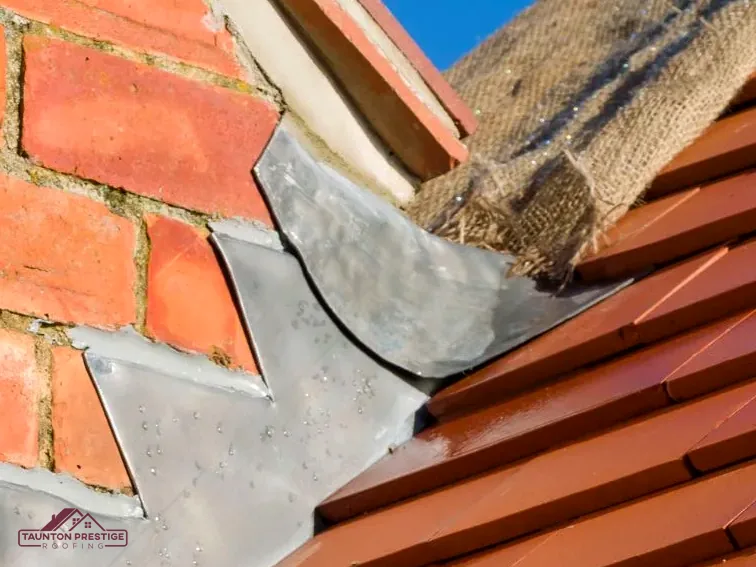
Few lines on a roof are as leak-prone as the valley, and few are as often patched with the wrong material. Two slopes tilt towards one another there, and both shed their rain into a single narrow channel, usually lined with lead or with a trough set beneath the slates. MyJobQuote (Sep 2026) lists a full valley replacement at around £540, a typical UK average. Our total for your roof would turn on valley length, access and whatever the old lining has been hiding. Where earlier repairs used sealant or bitumen, the photographs show it, and we explain what proper lead dressing would involve instead.
Sound or needs work
What decides the price
Sight along the line. A dark stripe, slates sitting proud of their neighbours, or moss growing thicker in one line all suggest water is lying there. Inside, a stain on the ceiling directly beneath is the late warning. We confirm it from the roof, where the lining shows its true state and leaves, grit and moss can be lifted out before they dam the channel. A valley that has overflowed for a winter often leaves the batten ends beneath it soft, and those are checked before any new lining goes in.
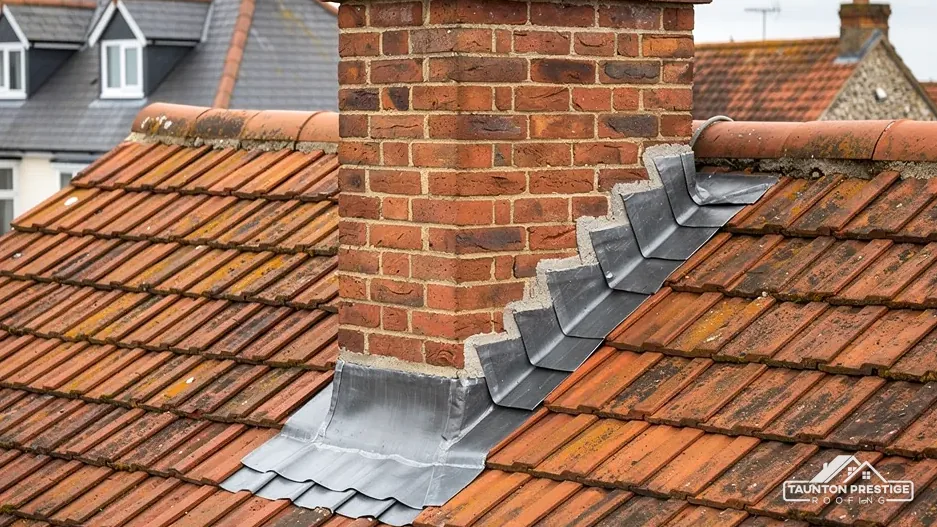
At an abutment, where a slope butts against a wall, a soaker (a small sheet of lead dressed under each course) and a stepped flashing keep the joint dry. Lead can last for over 80 years, so what fails is often the pointing that holds the flashing in, and a chase re-cut and re-wedged will cure it. On a listed house, new lead in a different pattern still counts as a change. Lead comes in numbered codes, which are thickness grades, and the choice of code depends on where it goes: a flashing and a valley lining are not the same job. Our lead work page explains the codes and the dressing.
A green or black film on a roof looks alarming, but it is mostly cosmetic until it thickens, and the first job is to find out how thick it is. Thick moss holds water against the covering, lifts the edges of tiles when frost gets into it, and drops into the gutters in clumps. Whether to remove it is a judgement about the covering underneath, and the right answer differs between a sound slate roof and a tired concrete one. We look at the edges of the tiles first, because moss that has lifted them is doing damage already, and moss lying flat on a sound surface may be left for another season.
A roof can look worse than it is, and a harsh wash can make it worse.
Marley does not recommend jet washing at high power: a hard blast can scar slate or tile and wear away years of its working life. We take that seriously, so we reach for brushing and an approved treatment instead. HSE's line is that a biocide made for professional users is not for householders to apply, and using any product without approval is an offence, so a spray picked up in a hurry may be the wrong tin.
MyJobQuote (Sep 2026) gives around £475 for a pressure wash of a semi, but Marley does not recommend that method, so read the figure as a market guide only. Moss returns wherever shade and damp persist, and it loves the north-facing slope, so cleaning buys a few seasons and not a cure; a roof under overhanging branches will green up sooner than one in the open. Cleaning also tells us things, because a clean roof shows cracked tiles and open joints that moss had hidden. The gutters are cleared on the same visit, and we report any tile that has gone porous or crumbly. Our roof cleaning and moss removal page explains the process.
Scaffold on the highway in Uphill needs a permit. North Somerset Council wants the application from whoever is carrying out the work, with five working days' notice at the very least, and it grants permits for anything from a single day to 28 days. For a short job on one elevation that is plenty, though a chimney or a valley high on the roof can still push the job towards scaffold. On a full re-roof the permit period is something we plan around from the first day, so the scaffold is not taken down while the roof is still open, and so the permit does not expire halfway through the job. Each morning you hear what the day holds, the household's path stays clear, and rubbish goes off site as we work.
What decides the price
The Planning Portal sets two limits: under 25 per cent of the building envelope and under 50 per cent of the roof. Work that stays inside both normally needs no building control application. A heavier new covering changes things, because at 15 per cent or more extra weight Building Regulations approval is required. Ask your building control body which route suits the job, and put the completion paperwork in the house file. Our chimney repairs page covers the stack work that often sits behind that decision.
A written total is easiest to judge when you know what drives it, which comes down to how large the roof is, which covering is chosen and how hard the roof is to reach. Before you compare two totals, make sure both treat VAT and scaffold alike, either included or left out. Once we have been up on the roof, photographs and one written price reach you. Send your Uphill address and tell us which part of the village you are in, and the survey is booked.
Walked the roof?
When you have read the checks, we walk the roof and show you the photos.
North Somerset Council, because Uphill sits in North Somerset and not in the Somerset Council area, whatever the postal address says. Uphill Manor has been listed Grade II* since 19 May 1983, so listed building consent is needed for anything that changes its special interest. Our survey photographs go with the application.
A conservation area lies within about 0.75 km of the centre, and the mapping query also reaches into the neighbouring Uphill North area. That is too close to guess from a distance. North Somerset's planning team can say which, if any, covers your address, and we pass on the photographs from the survey to support the question.
Not the covering. The Environment Agency maps the middle of Uphill as Flood Zone 3, a line drawn for Uphill's ground rather than any single roof. For your own address, GOV.UK offers a flood risk checker covering the long term. What we examine is how gutters and downpipes carry rain clear of the walls.
It can. Marley advises against powerful jet washing, because the blast can damage the surface. Brushing the moss off and applying an approved treatment is gentler. HSE says members of the public should never use biocides intended only for professional users, so an Uphill owner is wise to leave the treatment to us.
Give us the street and the symptom you have noticed on your Uphill roof, and a survey date follows.