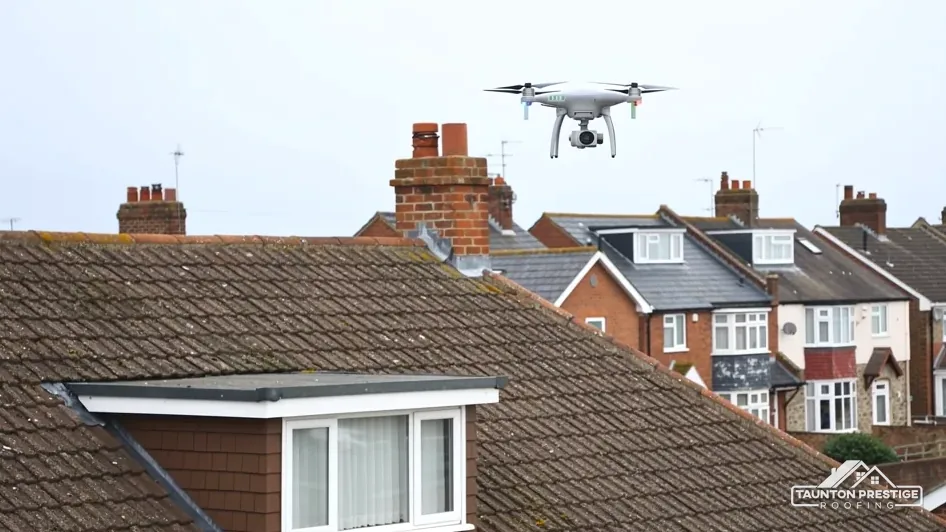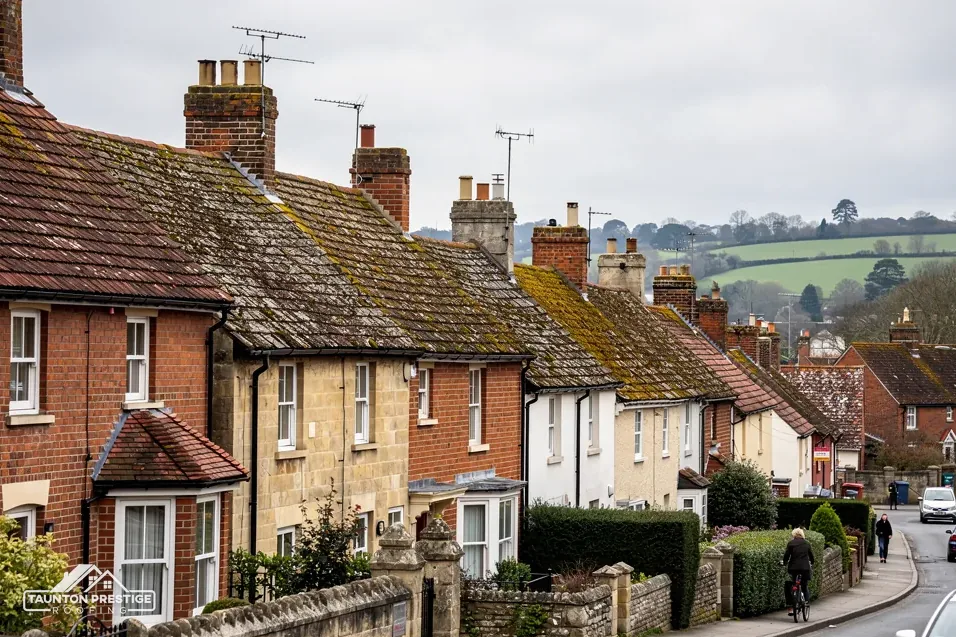
St Michael's, Grade I
Listed on 8 May 1967. As a church in use, its roof repairs follow the faculty system.
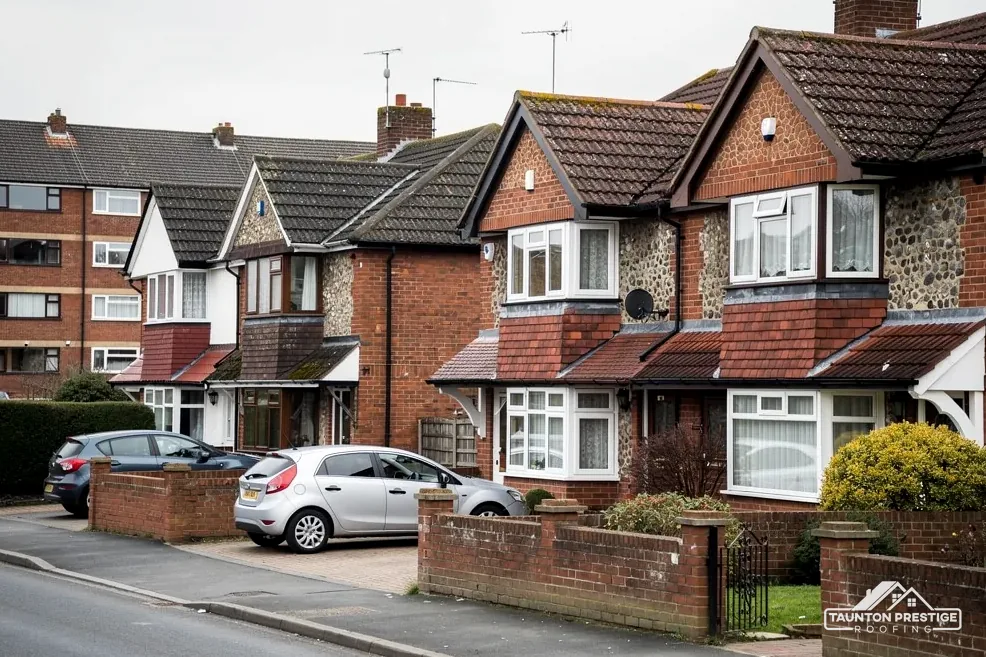
A Blackdown Hills village: Grade I church, farmhouse, barn
Stockland lies inside the Blackdown Hills National Landscape, formerly an AONB, with a conservation area, a Grade I parish church and Townsend Farm House at Grade II*. Survey first.
Listed on 8 May 1967. As a church in use, its roof repairs follow the faculty system.
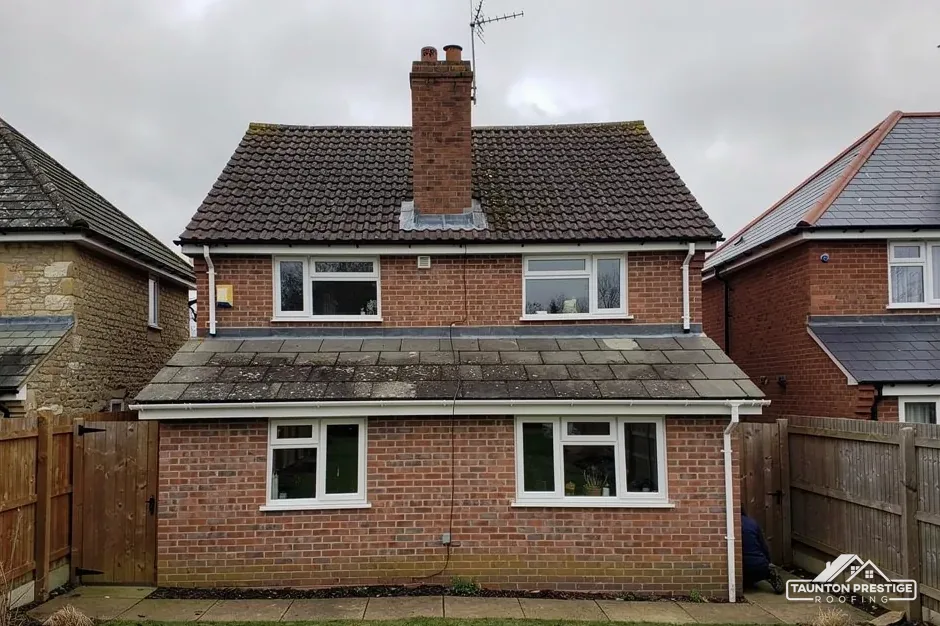
Also listed on 8 May 1967, with a Grade II barn immediately north-west of the farmhouse.
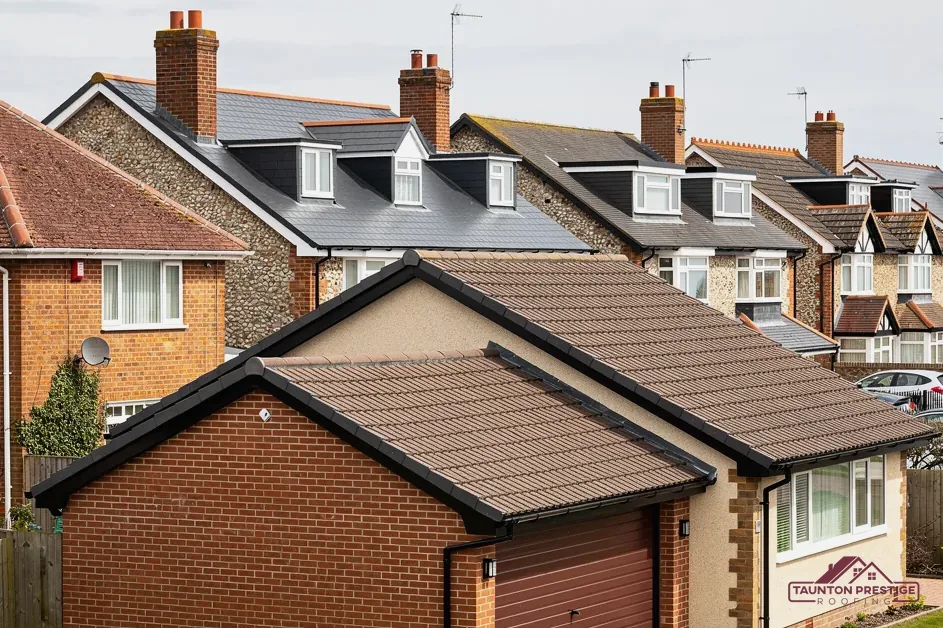
Church Cottages are listed Grade II, so roof changes that alter their character need consent.
Street map of Stockland with Upottery, Chardstock, Kilmington, Axminster marked around it, and Taunton.
Upottery lies north-west of Stockland, with Chardstock to the east, Kilmington to the south and Axminster to the south-east, and Churchinford beyond Upottery.
About 12 miles south of Taunton, East Devon District Council and Devon County Council.
Four checks in the Blackdown Hills
A Devon village in a National Landscape: consent, farm buildings, valleys and verges, and the scaffold licence.
Stockland sits inside the Blackdown Hills National Landscape, which was an AONB (area of outstanding natural beauty) until its rename in November 2023. The planning data also shows a Stockland conservation area reaching to within about 0.75 km of the centre, and the village has listed buildings from the church to its farms. A farmhouse and its barn can carry their own entries, so one yard may need two sets of answers. The planning authority is East Devon District Council, whose planning team should hear about any change of appearance. That makes three layers: a National Landscape, a conservation area and individual listings, and a single roof can sit in all three, which is why the first job on a Stockland survey is to find out which apply, and why we never assume the answer from the road.
Re-laying the existing covering in its original pattern is repair, not new development. Anything that adds to the roof, a dormer say, or a new window in a slope, is a question for East Devon District Council's planning team before it is a question for us, and our guide to planning permission for roof work sets out the wider rules. Renaming did not alter the law, and the legislation still says area of outstanding natural beauty.
Townsend Farm House is listed Grade II*, and the barn immediately north-west of it is Grade II. Church Cottages are Grade II too. St Michael's is a Grade I church, listed from 8 May 1967, and as it is in regular parish use it follows the faculty system. Listed building consent applies to work that alters what makes a listed house or barn special, and a change of covering can be enough to trigger it.
Our survey photographs the roof slope by slope, so any application is built on a record of what is there today.
Look for
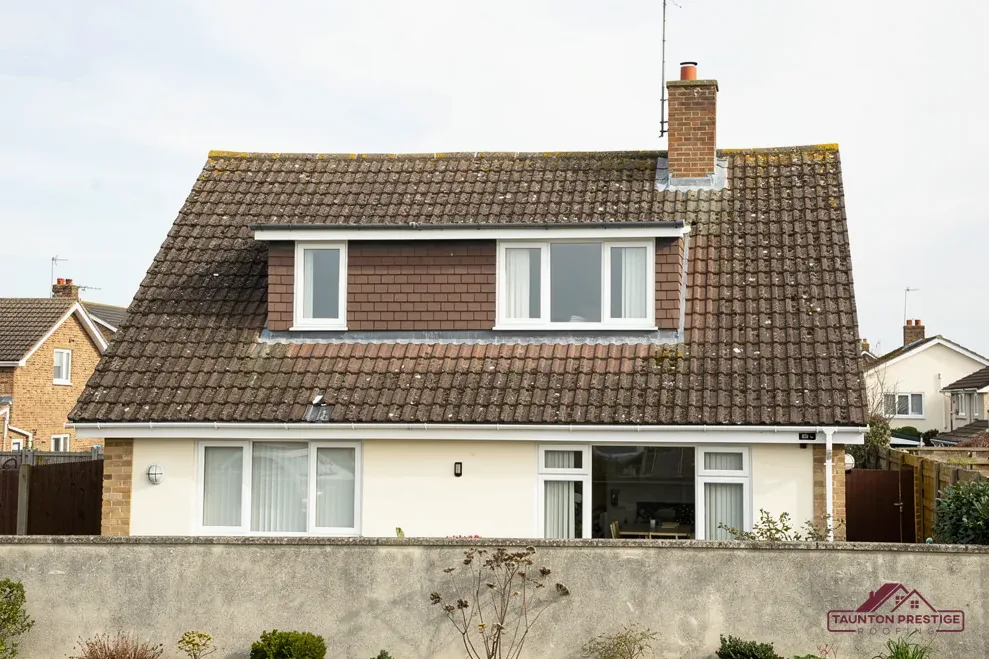
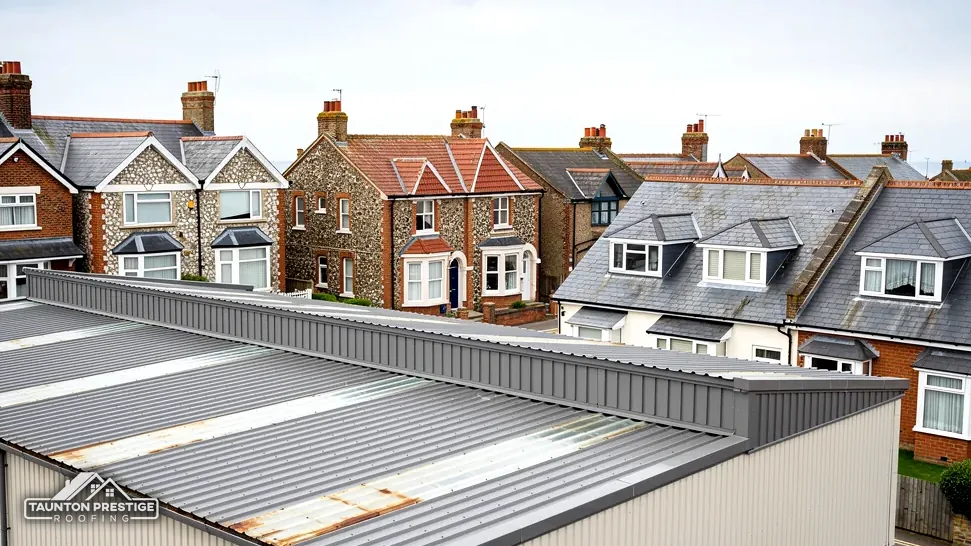
Not every roof in a farming parish is slate or tile. Barns, stores and garages anywhere may carry corrugated sheet, and HSE's advice is to presume asbestos is present wherever a structure predates 2000 or had a refurbishment before then. HSE's guidance A14 is blunter still: asbestos cement roofs are always fragile. A sheet that looks sound can give way under a person's weight, so the first rule for an owner is to stay off it and ask for a survey from below, with a ladder or tower set up against the wall.
What decides the price
HSE treats careful removal, without breaking the sheets up, as non-licensed work. Smashing them substantially, or dropping a whole roof, makes it notifiable non-licensed work, with a 40-year health record. Asbestos waste goes double-bagged with labels and travels under a consignment note, never to a skip. Where a garage or outbuilding is involved, the same rules apply to a few sheets as to a barn full. Typical UK figures from MyJobQuote (Sep 2026): around £2,750 to remove an asbestos roof, about £325 for an asbestos survey. See our garage and asbestos-cement roofs page and, for bigger farm buildings, commercial roofing.
The Habitats Regulations 2017 make it an offence to damage or destroy a bat roost, with no need to prove intent. The Wildlife and Countryside Act 1981 covers disturbing bats or blocking their way in when done intentionally or recklessly. A re-roof is work that can affect them, so we look for droppings and gaps at the survey, and if we find any, nothing moves until we have talked it through with you. Farm building roofs are large and high, so access is a big part of the job, and a platform or scaffold may be needed even for a modest repair.
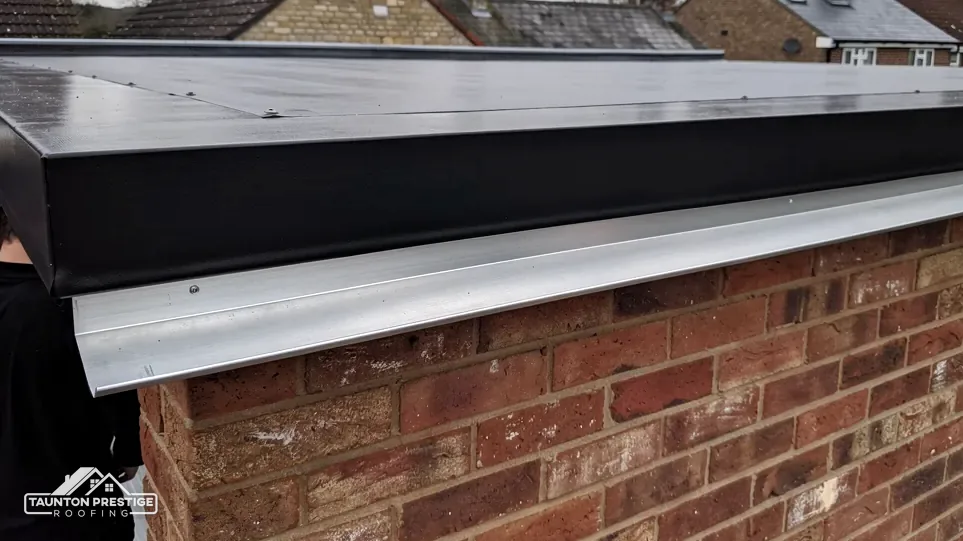
The joints and edges of a roof do the hard work. A valley is the inward-corner channel formed where two roof slopes join, and it gathers rain from each side. A verge finishes the roof edge where it meets a gable wall. A farmhouse or cottage that has been extended can have several of each, wherever an old roof meets a newer one, and every one is a joint that has to stay tight in a gale as well as in a shower.
A verge cracked by movement will drop tiles in the next gale, whatever the weather forecast says.
When a valley leaks, the cause is usually a split in the lining, a build-up of leaves or moss, or tiles that have slipped at the edge of the channel. The cure runs from clearing it out to relining it, and the survey photographs show which end of that range you are at. Lead lasts a long time: MyJobQuote says it can last for over 80 years. A lined valley is dressed to the shape of the channel, with its edges lapped under the covering, which is why it is a job for someone practised in leadwork. MyJobQuote's valley guide (Sep 2026) puts a typical full valley replacement at about £540, though the scaffold or tower needed to reach it changes the total.
A mortar-bedded verge cracks as the roof moves, and the tiles at the gable edge can work loose. A dry verge system fastens the gable-edge tiles with clips and a trim, leaving the mortar out. Such systems are tested to BS 8612. MyJobQuote (Oct 2026) gives a typical UK range of £500 to £2,000, with an average of about £1,000. If the access is up for a valley anyway, the verge and the ridge can be done on the same visit, which saves a second set-up. Hill villages can mean steep drives and soft ground at the base of a scaffold, so we ask about both when we book. Our dry ridge and verge page explains the systems.
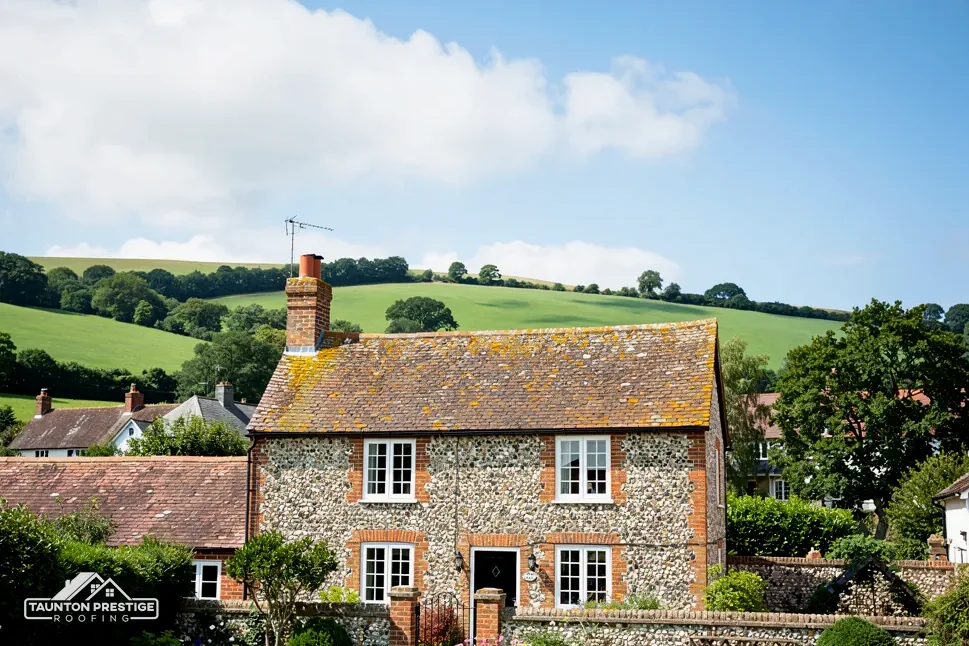
A ladder or tower suits many repairs, and we pick the least intrusive access that is still safe. Re-roofing is another matter. Scaffold on a public road or verge needs a highway licence, and the highway authority in Stockland is Devon County Council. Devon County Council takes applications only from scaffolding companies, made on the customer's behalf, and never from the householder. The licence costs £158 and needs at least 10 working days' notice, which is one more reason to book the survey early. An emergency application costs £238, and a site visit adds £103.95.
Look for
Building control here means the district council's building control team or a registered building control approver, and either can tell you whether your job is notifiable. Whether you need it depends on the Planning Portal's test: below 25 per cent of the building envelope and 50 per cent of the roof, normally nothing is required. A covering 15 per cent or more heavier needs Building Regulations approval, and the Planning Portal recommends asking a surveyor first.
Ask whether VAT at 20% (GOV.UK) and the scaffold are in the figure, who applies for any licence, and how long the roof stays open. Ask also whether the quote names the covering, because a tile that looks similar can weigh differently and change the Building Regulations answer. You have 14 days to cancel a contract agreed at home after our survey. Urgent repairs you specifically called us out for fall outside that right, so ask before you sign what applies.
After the survey you get photographs and one written price, and when the work ends the site is cleared. Tell us which building in Stockland the roof belongs to, and what covers it, and we will book that visit.
What decides the price
Walked the roof?
When you have read the checks, we walk the roof and show you the photos.
It depends on the barn's own status. A listed barn, like the Grade II one next to Townsend Farm House, needs listed building consent where work would alter its character. An unlisted barn can still fall inside the conservation area or the National Landscape, so ask East Devon District Council's planning team, and have any old sheeting checked for asbestos first.
Mostly it affects additions. Like-for-like repairs on a house are not new development, while additions such as dormers, new windows in a slope or a changed profile are matters to raise with the planners before anything else; our planning guide explains the routes. The designation was an AONB until November 2023, and the legislation still uses the old name. East Devon District Council is the authority to ask.
As a parish church still in use, and listed Grade I, St Michael's is dealt with under the Church of England's faculty system rather than listed building consent. The parish arranges the faculty, and the work follows the specification it approves. A church no longer used for worship would be a council matter instead, under listed building consent.
They can pause it. Roosts are protected, and a re-roof is exactly the kind of work that can disturb bats. If the survey shows signs of bats, we pause and discuss it with you before anything is lifted, and the job is planned around the roost. Nothing is lifted until we have a plan that you have agreed.
Tell us which building in Stockland the roof belongs to and describe what you have noticed; a visit follows.