A chimney breast is the block of brickwork that projects into a room from the wall, carrying the flue up through the house to the stack on the roof. Many Somerset homes have one in the living room and another upstairs, and many owners want one gone. The room feels bigger, a wall comes back, and a fireplace nobody uses stops taking up space.
It is less simple than it looks. A chimney breast is not just a bulge in the wall. It can be holding up the stack above it and the breasts on the floors higher in the house, and it may be built into the wall you share with next door. Three separate processes follow: Building Regulations approval for the structure, a party wall notice where a neighbour is involved, and the roofwork needed when the stack above is shortened or taken down. This guide explains each one in turn and where a roofer fits. It forms part of our chimney repairs pages for Taunton and the surrounding villages.
Building Regulations approval always applies
The Planning Portal states the position without hedging: "Building regulations approval will always apply when removing chimney breasts as they are part of the building's structure." There is no size limit and no exemption for a small job, so a breast removed without approval is a problem waiting to surface at the sale.
Who do you ask in Taunton?
In Taunton and the rest of the county, Somerset Building Control handles applications for Somerset Council, and its remit takes in what used to be four separate district areas, Taunton's among them. You can reach the team on 0300 303 7790. A private registered building control approver is the other route; private building control existed before 2024, and what came in on 6 April 2024 was the registration regime. Either way, ask what they want to see before you order any work.
What do they usually look at?
The questions are about support. If the breast is removed at ground level, what carries the part that remains above, and how is the weight spread? A beam or a set of steel supports, sometimes called gallows brackets, may take the load of a stack or an upper breast, and an engineer's calculations normally accompany the application. On a full plans submission, Somerset Building Control quotes 10 working days for an initial response and five weeks for a normal decision. A building notice is the quicker route on paper, though it gives you less advance sight of the design, which is a risk when the structure is involved.
What if the breast has already gone?
Work finished after 11 November 1985 without approval may still be put right through a regularisation application. Our guide to regularisation covers how the process runs. Keep any completion certificate, because buyers' solicitors ask for it and Somerset Building Control keeps copy records for 15 years.
It also pays to ask early whether the removal changes anything else. Our guide to planning permission for chimney removal deals with the separate question of whether the exterior is affected.
Party walls and the two-month notice
In terraces and semi-detached homes, the breast frequently stands against the wall you share with next door. The Party Wall etc. Act 1996 deals with that. Section 2(2)(g) lets the building owner cut a projecting chimney breast, jamb or flue out of a party wall, along with any footing.
When must the notice go out?
Section 3(2)(a) of the Act fixes the period: the party structure notice goes out two months, or longer, ahead of the planned start date. GOV.UK names taking chimneys out of a party wall as notifiable work. The notice is served on the neighbour, not on building control, and the two timelines run separately.
What if the neighbour does not reply?
GOV.UK is clear that a lack of reply is not consent. Silence starts a dispute rather than ending it. Where the two of you cannot settle it, GOV.UK says a surveyor has to be appointed to resolve the matter.
Who can advise?
Party wall questions go to a party wall surveyor, not to building control, because the Act is separate from the Building Regulations and the two run on their own timetables. A surveyor can explain what must go in the notice, how an agreed award is recorded, and how a disagreement gets settled. Our guides to party wall roof work and the party wall and chimneys explain how the notice, the surveyor and the award fit together.
Neighbours are often relaxed when told early and clearly. A friendly word, followed by the formal notice with a plain description of what will be removed and when, avoids most trouble. Lead time matters, though: if you plan work for next month and a notice has not been served, the programme moves.
What happens to the stack and the roof
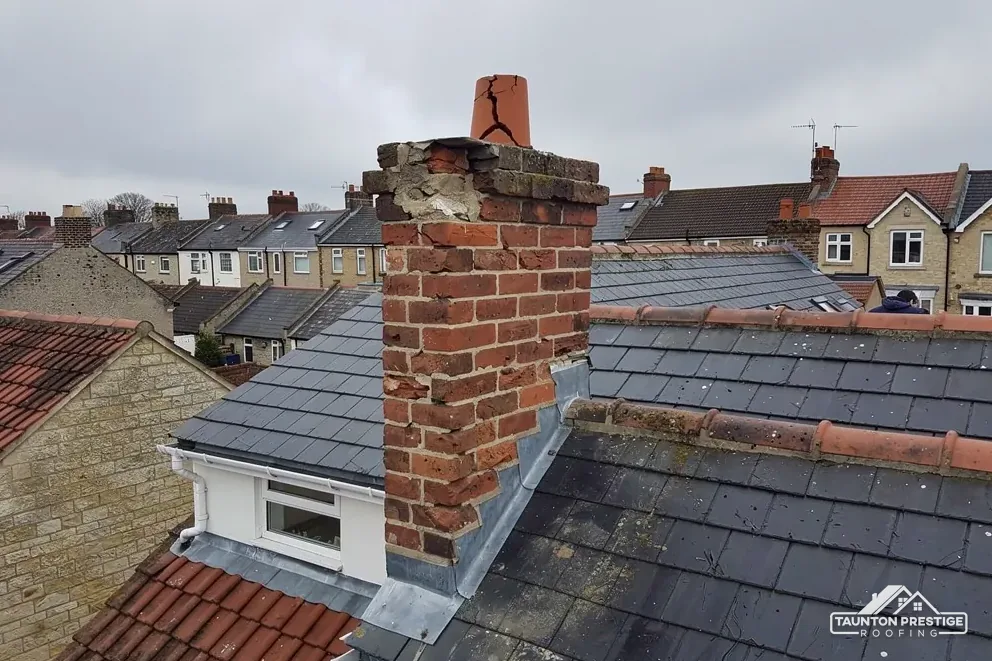
Removing a breast inside the house does not always mean the stack outside goes too. There are three common arrangements. The breast may come out on the ground floor only, with the stack and the upper breasts kept and supported. The stack may be taken down to roof level and the roof closed over. Or the whole chimney may come out from the ground floor to the ridge. Each has a different effect on the roof.
What does the roofer do?
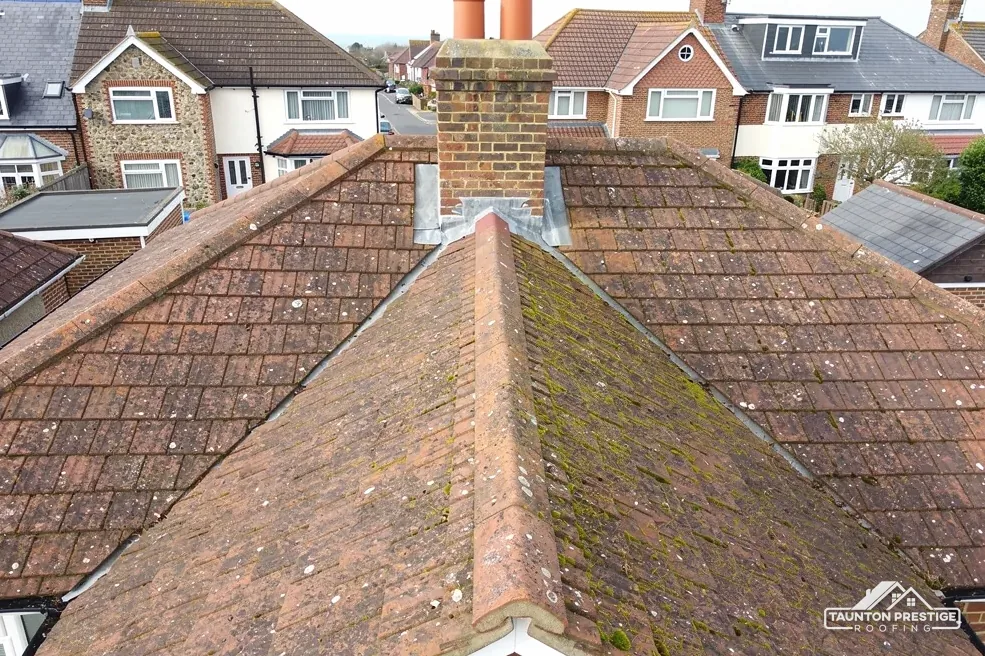
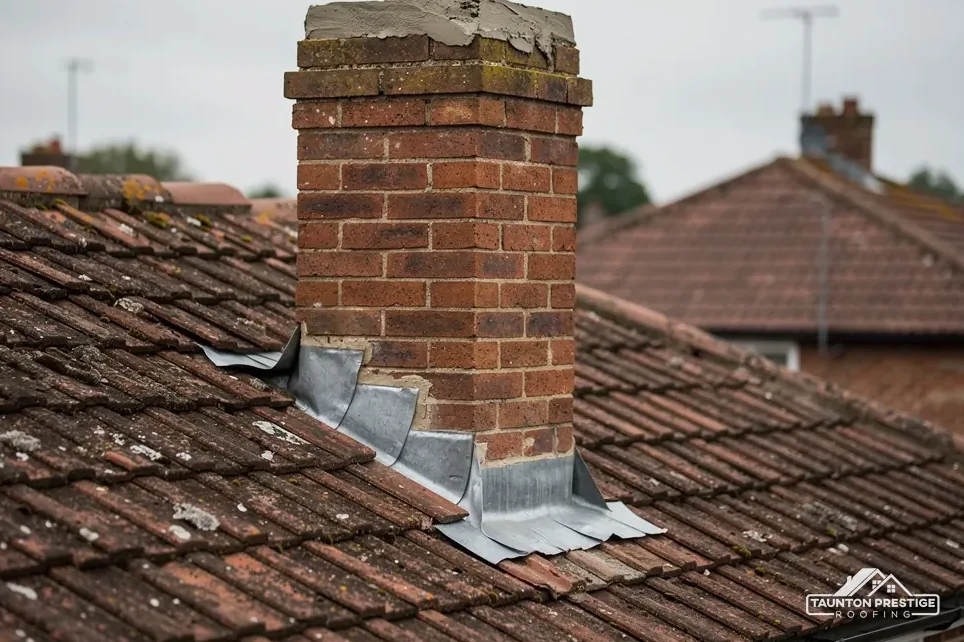
Where the stack is taken down below the roof line, the slates or tiles around it are removed, the hole is framed and decked, and the covering is made good. Lead flashings that sealed the chimney are taken out, and the new roof surface must tie into the old. On a hip or ridge, the surrounding tiles are re-bedded or clipped. Our guide to chimney stack removal covers that work, and chimney work during a re-roof shows how it combines with a new covering.
Is taking down the stack separate from removing the breast?
It is a separate job with a separate set of risks. A stack takes the worst of the weather, may lean, and needs scaffold or other safe access. If that scaffold obstructs the pavement, the Somerset Council licence is applied for by whichever contractor holds the appointment. See scaffolding for chimney repairs.
Should an unused flue be kept ventilated?
If any flue stays in the house, a vented cap and a low vent keep it dry. That matters when part of a stack stays. We explain it in capping a disused chimney.
Plan the order of work with the builder: roofwork first or last changes how the loft is protected, and the person removing the breast needs to know whether the stack stays. A roofer and a builder who talk before the first brick comes out save the owner a second scaffold hire.
What decides the cost
MyJobQuote (Aug 2026) puts chimney breast removal in a typical UK range of £1,200 to £3,500, with an average of £2,500. Treat that as a guide to scale. Your figure depends on what is being taken out and what must be done around it.
Which factors move the price?
- How many floors the breast runs through, and whether the stack above stays.
- The support needed for what remains, whether a beam, brackets or both.
- Fees for the engineer's calculations and the building control application.
- Party wall costs, if a surveyor is needed.
- Rubble removal, plaster repair and decoration, which many people forget.
- Roof access and the roofwork where the stack comes down.
Is it worth leaving the breast alone?
Sometimes. If the stack is sound and the only reason for removal is space, a shallower breast may be an option, or a partial removal that keeps the part carrying the stack. The cheaper approach on paper is not always cheaper once the support is priced. Our approach is to survey the roof and stack first, then tell you what the exterior needs, and the builder can price the inside.
One caution on older properties. HSE advice for premises built or refurbished before 2000 is to presume asbestos is present. Flue linings, boards and old fire surrounds are among the materials to check before demolition begins, so ask for an asbestos check before the first hammer swings.
What do you pay us for?
If the roof side of the job is ours, the price covers the stack, the roof closing and the scaffold access. We give one written total price after a survey, with photographs of the stack as it stands today. The quote form is the way to start.
Listed homes, conservation areas and sequencing
Listed building consent is a separate question from Building Regulations. Section 7 of the Planning (Listed Buildings and Conservation Areas) Act 1990 bars works that would affect a listed building's character unless they are authorised, and a chimney breast, stack and pots are often part of the character. A listed house that wants a breast out should ask the planning team at Somerset Council before any work, including the inside. Our guide to listed building consent for chimneys gives the details.
Does a conservation area change anything?
It can, for the stack. The stack is seen from the street, and the planning team may care about a chimney removed from a Victorian terrace in a conservation area. Class C permitted development covers alterations to a dwelling's roof, but check before acting. Taunton has several conservation areas, and our conservation areas guide lists them.
What is the sensible order of work?
- Check the building: who owns the wall, whether the house is listed, and where the flues run.
- Serve any party wall notice at least two months ahead.
- Agree the plans with building control, and any consent with the planning team.
- Arrange the scaffold, with the licence in place if it stands on the highway.
- Take down the stack and close the roof, then take out the breast and make good inside.
- Ask building control to inspect, and keep the completion certificate.
Skipping a step rarely saves time. A job that starts before the notice period ends, or before the plans are agreed, can be stopped part way, with the roof open and the stack half down. A sensible schedule is slower on paper and faster in practice.
Chimney breast queries
Is it possible to remove my chimney breast without notifying anybody?
No. The Planning Portal says Building Regulations approval always applies, because a breast forms part of the building's structure. If it forms part of a shared wall, your neighbour is owed a party structure notice, sent two months or more before the first day on site.
Do I have to remove the chimney stack on the roof as well?
Not necessarily. The stack can stay if it is supported properly, or it can be taken down to roof level and the roof closed over. Which route suits you depends on the structure, the state of the stack and what the building control body requires.
Who should I ask about the party wall side?
A party wall surveyor, not building control. The Party Wall etc. Act 1996 sets out the notice and the dispute route. GOV.UK says silence from the neighbour does not mean agreement, and that a surveyor must be appointed when the two of you cannot agree.
More on this subject: Chimney repairs in Taunton